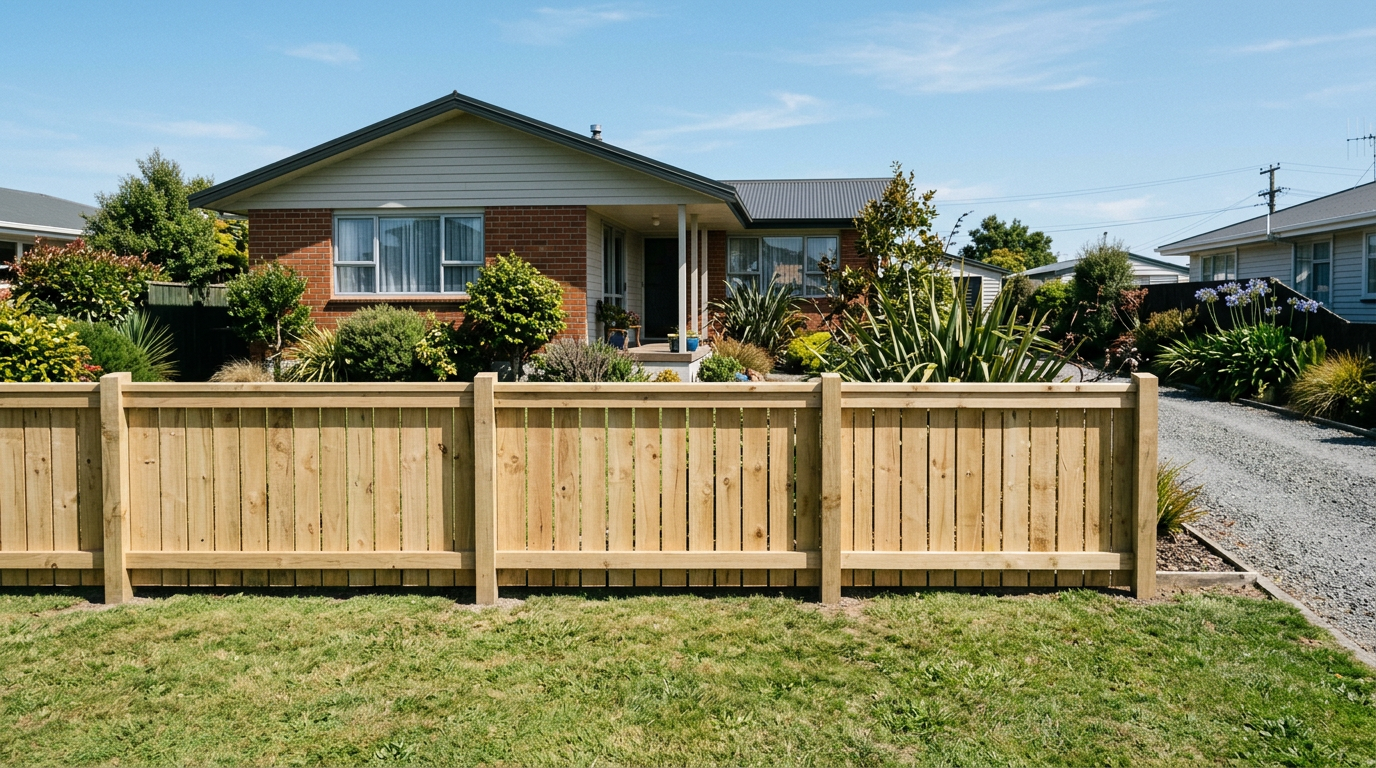
Yes, you can use a hand auger to dig fence post holes in clay — but it's one of the more demanding DIY jobs you'll tackle in a NZ backyard. Clay soil is heavy, sticky, and can grip an auger blade like a vice. Whether it's worth the effort depends on how many holes you need, how deep they must go, and how wet or dry the clay is on the day.
What Is a Hand Auger?
A hand auger (sometimes called a post-hole borer or earth auger) is a manual tool with a helical blade that you twist into the ground to remove soil. They're widely available for hire or purchase at Bunnings and Mitre 10. Blade diameters typically range from about 100 mm to 200 mm — match the diameter to your post size (a common rule of thumb is to bore a hole roughly 2–3 times the post width).
How Deep Do Fence Post Holes Need to Be in NZ?
Post depth matters for both structural performance and compliance. As a general guide based on standard fencing practice:
- For a 1.2 m fence, posts are typically set at least 450–500 mm deep.
- For a 1.8 m fence, aim for at least 600 mm, and often deeper in loose or clay soils.
- For retaining or boundary fences carrying significant load, your local council may require a building consent — always check with your council before you start.
Deeper holes mean more effort with a hand auger in clay, so factor this in before you begin.
The Challenge of Clay Soil
Clay presents a few specific problems:
- Suction and sticking — wet clay clings to the auger blades, making it hard to withdraw the tool and slowing progress dramatically.
- Smearing — the auger can smear the hole walls, creating a glazed surface that reduces the grip of concrete or compacted backfill around the post.
- Seasonal hardness — in summer, NZ clay (especially in Auckland, Waikato, and Hawke's Bay) can bake rock-hard. In winter it becomes waterlogged and heavy.
- Hidden rocks and tree roots — clay areas often conceal obstacles that stop a hand auger dead.
Tips for Using a Hand Auger in Clay
Choose the Right Conditions
Dig when the soil has had light rain but isn't saturated — slightly moist clay is far easier to work than bone-dry or waterlogged ground. Avoid digging in clay after heavy rain if you can.
Use the Right Technique
- Turn the auger clockwise in short bursts of 2–3 rotations, then pull it out to clear the blades before continuing.
- Pour a small amount of water into the hole if the clay is very dry — this softens it and reduces friction.
- Use a clamshell (post-hole) digger alongside the auger to scoop out loosened clay from the bottom of the hole.
Keep Blades Sharp
A blunt auger in clay is miserable. Check the blade condition before you start and sharpen or replace worn blades.
Consider a Two-Person Job
For holes deeper than 500 mm in clay, two people — one turning, one steadying — makes the job much safer and faster.
Hand Auger vs. Powered Auger in Clay
| Factor | Hand Auger | Petrol/Electric Powered Auger |
|---|---|---|
| Cost | Low (buy or hire cheaply) | Higher hire cost (~$80–$180/day as a guide) |
| Effort | High — physically demanding | Much lower |
| Speed | Slow in clay | Significantly faster |
| Maneuverability | Good in tight spaces | Bulkier, needs clearance |
| Best for | 1–4 holes, shallow depth | 5+ holes or deep holes |
For more than four or five holes in heavy clay, a petrol-powered auger (available from most hire centres) is well worth the extra cost. Two-person powered augers are common on NZ hire yards.
Concrete or Compacted Backfill?
Once your hole is dug, you'll need to decide how to set the post. In clay, concrete is generally recommended because clay's movement with moisture changes can shift compacted backfill over time. Use a bagged rapid-set concrete mix and follow the manufacturer's instructions. Make sure the post is plumb before the concrete sets.
Note that treated timber posts are essential in NZ ground contact — look for H5-treated timber for in-ground use. Check with your timber supplier or PlaceMakers to confirm the correct treatment level for your application.
Building Consent and Boundary Fences
Most standard residential fences under 2 m high are exempt from building consent under Schedule 1 of the Building Act 2004, but there are exceptions — particularly for retaining walls, fences on boundaries with height restrictions, or fences in special character zones. Always confirm with your local council before starting. For guidance on the NZ Building Code, visit MBIE Building Performance.
When to Call a Professional
Consider hiring a qualified fencer if:
- You have more than 10 posts to set — the labour cost of hand augering in clay adds up fast.
- The ground contains large rocks, old tree roots, or buried services (always call Before U Dig on 0800 248 344 to locate underground services before digging).
- You need a retaining fence or structural boundary fence that may require engineering input or a building consent.
- You're not confident working with heavy manual tools — hand augering in clay is physically demanding and can cause strain injuries.
A professional fencer will have access to tractor-mounted or powered augers that make light work of even the toughest NZ clay. You can find qualified local fencers on tradedirectory.co.nz.
Sources & Further Reading
- MBIE Building Performance – Building Act and consents
- BRANZ – Fencing and ground conditions guidance
- PlaceMakers – Treated timber and post products
- Bunnings – Augers, post-hole borers and concrete
- WorkSafe NZ – Manual handling and strain injury prevention
- Standards NZ – NZS 3604 Timber-framed buildings





