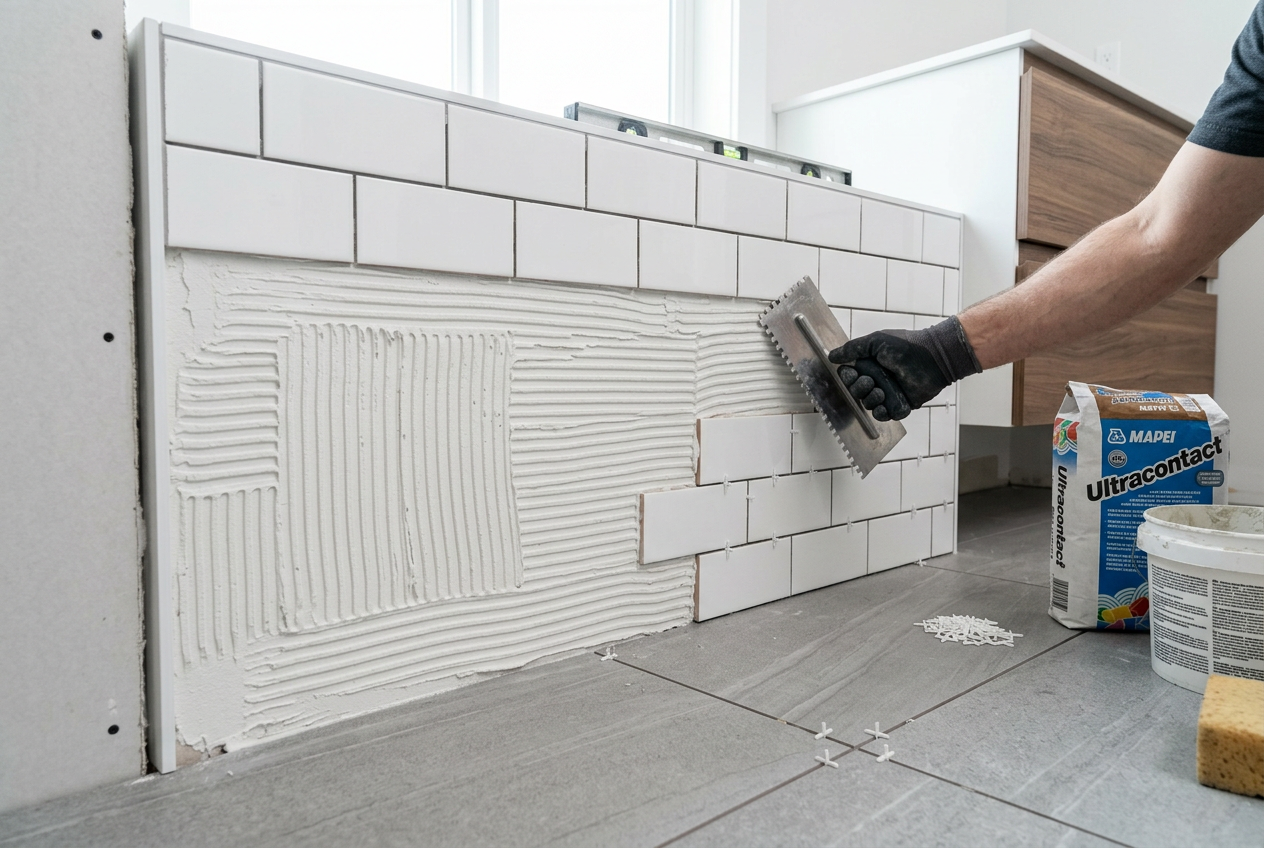
Yes, an angle grinder can be a practical tool for cutting tiles at home — particularly for curved cuts, notches, and awkward shapes that a standard tile saw struggles with. That said, it comes with real risks if used incorrectly, including tile shattering, serious cuts, and harmful silica dust. With the right blade, proper personal protective equipment (PPE), and a steady technique, most capable DIYers can use one safely.
Choosing the Right Blade
The single most important factor is fitting the correct blade for the job. Never use a standard metal-cutting or abrasive disc on tiles — these can shatter the tile or the disc itself.
- Diamond continuous rim blade – Best for porcelain and ceramic tiles. The smooth, continuous edge gives a clean, chip-free cut.
- Diamond segmented blade – Faster cutting, suited to thicker or harder materials like natural stone, but can chip glazed tiles.
- Turbo rim blade – A middle ground: faster than continuous rim with less chipping than segmented.
Always check the blade's maximum RPM rating matches or exceeds your grinder's speed. Blades and grinders are widely available at Bunnings and Mitre 10. Buy a quality blade — cheap blades wear quickly and can be dangerous.
Essential Safety Gear
Angle grinders are one of the most injury-prone power tools in the home workshop. WorkSafe NZ consistently lists angle grinder injuries among common serious workshop accidents. Before you switch it on:
- Eye protection – Full-face shield plus safety glasses underneath. Tile fragments travel fast.
- Hearing protection – Grinders are loud; prolonged exposure causes hearing damage.
- P2 respirator (dust mask) – This is critical. Cutting ceramic and porcelain tiles generates respirable crystalline silica (RCS) dust, which causes silicosis — a serious, irreversible lung disease. A standard paper dust mask is not sufficient.
- Cut-resistant gloves – Protect against tile shards and accidental blade contact.
- Long sleeves and closed-toe footwear – Tile fragments scatter widely.
- Angle grinder guard – Never remove the blade guard. It is there to deflect fragments away from you.
Silica Dust — A Serious Hazard
Engineered stone and some porcelain tiles have very high silica content. Wet cutting (using water to suppress dust) is the safest method. If you must dry-cut, work outdoors or in a very well-ventilated area, use a P2 respirator, and keep bystanders well clear. WorkSafe NZ has specific guidance on silica dust in the construction industry — take it seriously.
Setting Up for a Safe Cut
- Secure the tile firmly – Clamp it to a stable workbench or use non-slip matting. A tile that shifts mid-cut is dangerous.
- Mark your cut line clearly – Use a pencil or tile marker and a straight edge.
- Score before cutting (optional) – A light scoring pass before the full cut can reduce chipping on glazed tiles.
- Let the blade do the work – Apply gentle, consistent forward pressure. Forcing the blade causes overheating and increases the risk of kickback.
- Keep the grinder moving – Dwelling in one spot can crack the tile or overheat the blade.
- Wet cutting – If your grinder supports a water attachment, use it. Alternatively, have a helper apply a light trickle of water ahead of the blade. Keep water away from the motor and power source.
- Curved and notch cuts – Make a series of straight relief cuts up to (but not through) the cut line, then carefully nibble away the waste.
Angle Grinder vs. Other Tile-Cutting Methods
| Method | Best for | Finish quality | Cost (approx. guide) |
|---|---|---|---|
| Angle grinder | Curves, notches, on-site cuts | Moderate (needs tidying) | Low – tool you may already own |
| Wet tile saw | Long straight cuts, volume work | Excellent | Medium–high to hire or buy |
| Tile scorer & snap | Straight cuts in ceramic | Good | Low |
| Oscillating multi-tool | Tight notches, small cuts | Good | Medium |
For large tiling projects with many straight cuts, hiring a wet tile saw from a tool hire shop will give better results and is often safer for volume work.
NZ Building Code Considerations
Most domestic tiling work — such as a bathroom or kitchen splashback — does not require a building consent under Schedule 1 of the Building Act. However, if your tiling project involves waterproofing in a wet area (shower, bathroom floor), the work must comply with NZ Building Code clause E3 (Internal Moisture). Waterproofing membranes and their installation are critical; poor workmanship here leads to costly water damage. Always confirm consent requirements with your local council before starting. See MBIE Building Performance for guidance.
When to Call a Professional
While cutting tiles with an angle grinder is not restricted work under NZ law, there are situations where hiring a qualified tiler from tradedirectory.co.nz makes good sense:
- You're tiling a large area and need consistent, professional results.
- The project involves wet-area waterproofing, where incorrect application can void warranties and breach the Building Code.
- You're working with expensive natural stone or large-format porcelain tiles where a mistake is costly.
- You're uncomfortable using an angle grinder — there's no shame in that. These tools demand respect.
- Any associated work involves electrical wiring (e.g., in-floor heating) or plumbing alterations, which are restricted trades in NZ. Electrical work must be carried out by a registered electrician (EWRB) and plumbing by a licensed plumber (PGDB).

 Site Safe
 SiteWise


 BCITO Qualified