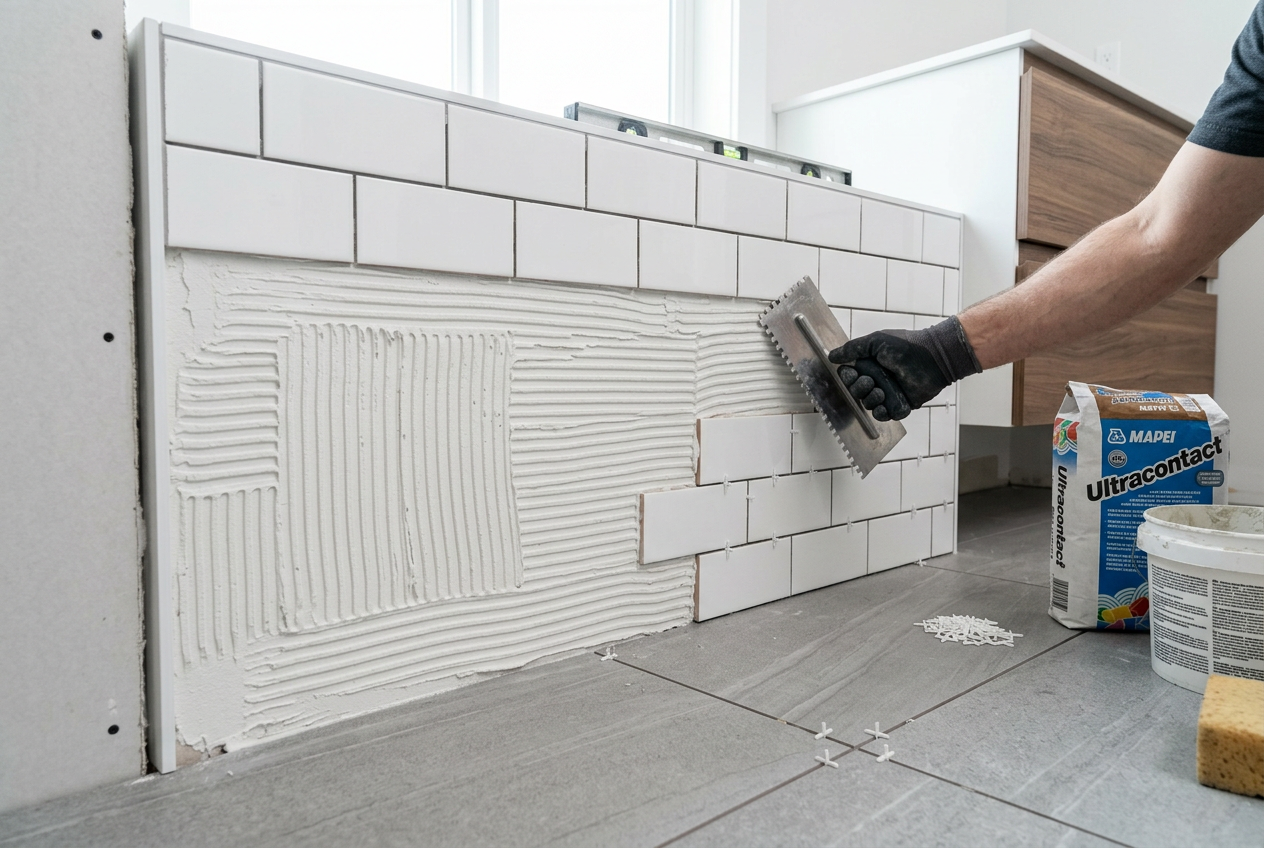
Tiling over an existing vinyl floor is sometimes possible, but it's not always the right call. The short answer is: it depends on the condition of the vinyl, what's underneath it, and where in your home the floor is located. Get it wrong and you risk cracked tiles, failed adhesive, and a costly redo.
When Tiling Over Vinyl Is Acceptable
A qualified tiler will assess several factors before deciding whether to tile over vinyl or rip it out. Generally, tiling over vinyl may be acceptable when:
- The vinyl is single-layer (not multiple layers stacked up)
- It is fully bonded to the subfloor — no lifting, bubbling, or soft spots
- The surface is flat and level (within 3 mm over a 1.8 m straightedge is a common industry tolerance)
- The subfloor beneath is structurally sound and rigid — excessive flex will crack grout and tiles
- The vinyl is clean, dry, and free of wax or polish
- Adding tile thickness won't cause problems at doorways, transitions, or appliances (dishwashers, ovens, etc.)
If all of those boxes are ticked, tiling over vinyl can save time and reduce waste. However, if any one of them fails, removal is the safer path.
When You Must Remove the Vinyl First
There are clear situations where the vinyl needs to come out before a single tile goes down:
- Multiple vinyl layers — each layer adds flex and instability
- Loose, bubbled, or damaged vinyl — adhesive won't bond properly to an unstable surface
- Cushioned or foam-backed vinyl — this type compresses underfoot and will cause tiles to crack over time
- Wet areas (bathrooms, laundries) — MBIE Building Performance guidelines and NZ Building Code clause E3 (Internal Moisture) require wet-area floors to be properly waterproofed; tiling over vinyl may prevent you from achieving a compliant waterproofing membrane
- Suspected asbestos — vinyl and vinyl adhesives installed before the mid-1980s may contain asbestos. Do not sand, scrape, or disturb this material. Contact a licensed asbestos assessor and check guidance from WorkSafe NZ before doing anything
- Subfloor movement or rot — no amount of prep will fix a failing subfloor
Subfloor and Structural Considerations
Tiles are rigid, and they need a rigid base. In New Zealand, many homes — particularly older weatherboard houses — have suspended timber floors that flex more than a concrete slab. Even if the vinyl looks fine, a bouncy timber floor will cause grout to crack and tiles to delaminate within months.
As a guide, the subfloor deflection should comply with the requirements referenced in NZS 3604 and the tile manufacturer's specifications. If you're unsure, a tiler or builder can assess the floor's stiffness. Additional fibre-cement sheeting (such as products from James Hardie) is sometimes installed over a timber subfloor to create a stable tile base — this is a common and effective solution.
Surface Preparation If You Do Tile Over Vinyl
If the vinyl passes all the checks above, proper prep is still essential:
- Clean thoroughly — remove all wax, grease, and polish. A degreaser or sugar soap works well.
- Sand or scarify the surface lightly — this gives the adhesive something to grip. Don't sand old vinyl aggressively if asbestos is a concern.
- Fill any dips or low spots — use a suitable floor-levelling compound. Products from Ardex or Mapei are widely used by NZ tilers for this purpose.
- Use the right adhesive — check the tile adhesive manufacturer's data sheet to confirm it's rated for use over vinyl. Not all adhesives are.
- Check grout joint sizing — follow the tile manufacturer's recommendations for joint width and movement joints, especially at perimeters.
Tile and Adhesive Selection
Choosing the correct adhesive is critical. A flexible, polymer-modified adhesive is generally recommended when tiling over vinyl, as it accommodates minor movement better than a rigid adhesive. Always read the product technical data sheet and follow it — this is what a professional tiler does on every job.
| Factor | Tile Over Vinyl | Remove Vinyl First |
|---|---|---|
| Single-layer, fully bonded vinyl | ✅ Possible | Optional |
| Cushioned/foam-backed vinyl | ❌ Not suitable | Required |
| Wet area (bathroom/laundry) | ❌ Usually not suitable | Required |
| Multiple vinyl layers | ❌ Not suitable | Required |
| Pre-1980s vinyl (asbestos risk) | ❌ Do not disturb | Specialist removal |
| Timber subfloor with flex | ⚠️ Assess carefully | Often recommended |
When to Call a Professional
Tiling is skilled work, and getting the substrate assessment wrong is the most common reason tile jobs fail. A qualified tiler will know exactly what prep is needed, which products to use, and whether your floor is suitable. For wet areas like bathrooms, waterproofing must comply with NZ Building Code clause E3, and in many cases this work should be carried out — or at least signed off — by a tradesperson who understands compliance requirements.
If your vinyl may contain asbestos, stop work immediately and contact a licensed asbestos professional. WorkSafe NZ has clear guidance on your obligations.
You can find qualified local tilers and related tradespeople on tradedirectory.co.nz.

 Site Safe
 SiteWise


 BCITO Qualified