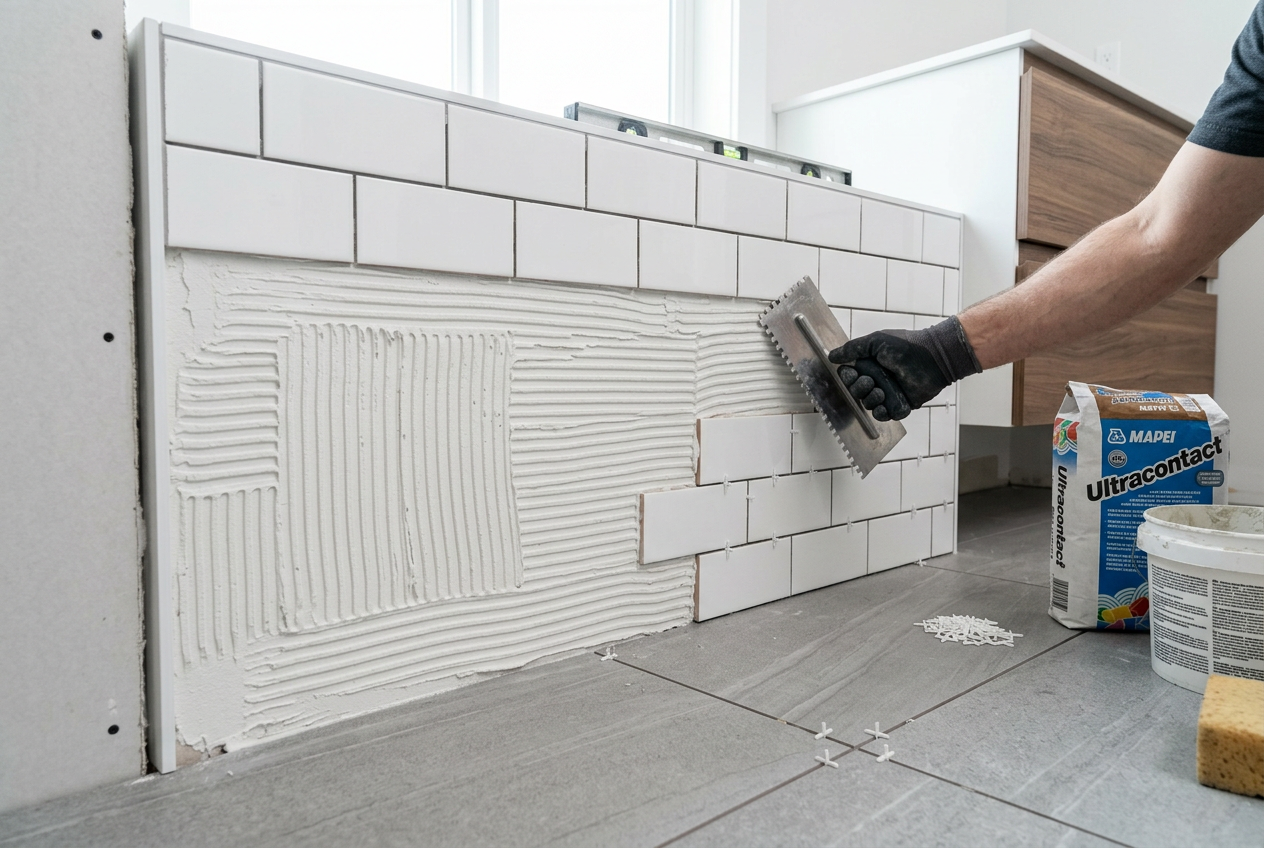
Tiling over a painted concrete garage floor in New Zealand is possible, but the paint layer is the critical variable — get it wrong and your tiles will lift within months. The short answer is: if the paint is well-bonded, sound, and the slab is dry and level, you can tile over it with the right adhesive system. If the paint is peeling, flaking, or moisture is coming through the slab, you'll need to do more work first.
Assess the Existing Paint First
Before you buy a single tile, you need to know what you're working with. Run a few simple checks:
- Adhesion test: Apply a strip of strong tape (gaffer or duct tape), press it firmly, then rip it off quickly. If paint comes away with it, the paint is poorly bonded and must be removed.
- Identify the paint type: Epoxy floor coatings are common in NZ garages and are notoriously difficult for tile adhesives to bond to. If you're unsure what's on your floor, contact the original paint manufacturer or a tiling specialist.
- Check for moisture: Tape a 300 mm × 300 mm piece of plastic sheeting to the bare slab (if you can find an unpainted spot) and seal the edges with tape. Leave it for 24–48 hours. If moisture collects underneath, you have a rising damp issue that must be resolved before tiling. NZ's BRANZ has guidance on moisture in concrete slabs.
When to Remove the Paint Entirely
In many cases, full paint removal is the safest option and gives your tiles the best chance of lasting. You should remove the paint if:
- The tape test shows poor adhesion anywhere on the floor
- The paint is an epoxy or two-pack coating
- The surface is uneven or has multiple layers of old paint
- There is any sign of moisture ingress
Paint removal methods include mechanical grinding (angle grinder with a diamond cup wheel or a hired floor grinder) or shot blasting. Grinding creates a lot of dust — wear a P2 respirator and check WorkSafe NZ guidance on silica dust, which is a serious health hazard when cutting or grinding concrete.
Surface Preparation for Tiling
Whether you remove the paint or tile over it, the slab must be:
- Clean: Free of oil, grease, dust, and contaminants. Degrease with a suitable cleaner and rinse thoroughly.
- Level: Tiles need a flat substrate. Use a long straightedge to check for high and low spots. Hollows greater than about 3 mm over a 1.8 m span should be filled with a floor levelling compound — products from Ardex or Mapei are well-regarded in the NZ trade.
- Structurally sound: Tap the slab with a hammer handle — hollow sounds indicate delamination or soft spots that need repair.
Choosing the Right Tile Adhesive
This is where many DIYers go wrong. Standard wall tile adhesives are not suitable for garage floors. You need:
| Situation | Recommended Adhesive Type |
|---|---|
| Sound, bare concrete | Standard floor-rated cement-based adhesive |
| Painted concrete (well-bonded) | Flexible, polymer-modified adhesive or epoxy adhesive |
| Epoxy-painted surface | Epoxy tile adhesive (after mechanical keying) |
| High moisture risk | Waterproofing membrane + flexible adhesive |
Always read the manufacturer's technical data sheet and follow their recommendations. Brands like Ardex, Mapei, and Sika all produce adhesive systems suited to difficult substrates and have technical support lines if you need advice.
Tile Selection for Garage Floors
Not all tiles are appropriate for a garage. Look for:
- Porcelain or ceramic tiles rated for heavy-duty floor use (check the PEI wear rating — PEI 4 or 5 for garages)
- Slip resistance: A wet garage floor is a hazard. Look for tiles with an R10 or higher slip rating
- Size: Larger format tiles (e.g. 600 mm × 600 mm) can bridge minor undulations but require a very flat substrate
You'll find a good range of floor tiles at Bunnings and Mitre 10, or through specialist tile suppliers.
Grouting and Expansion Joints
Use a grout rated for floors — epoxy grout or grout suited to floor use for narrow joints, and appropriate grout for wider joints — check the manufacturer's recommendations for the joint width. Garages experience temperature swings, so expansion joints (soft joints filled with flexible sealant rather than grout) are important around the perimeter and over any existing control joints in the slab. Bridging a control joint with rigid tile and grout will almost certainly cause cracking.
Building Consent Considerations
Tiling an existing garage floor is generally a Schedule 1 exempt activity under the NZ Building Code and does not require a building consent. However, if you are altering drainage, adding a floor waste, or making structural changes, consent may be required. Always confirm with your local council — rules can vary.
When to Call a Professional
Consider hiring a qualified tiler if:
- The floor has significant moisture issues or structural problems
- You're dealing with epoxy paint and are unsure of the adhesive system
- The area is large or you want a guaranteed, long-lasting result
- You're uncomfortable with grinding or levelling work
A professional tiler will assess the substrate correctly and warranty their work. You can find experienced local tilers on tradedirectory.co.nz. Note that tiling itself is not restricted trade work in NZ, but any associated plumbing (e.g. installing a floor waste) must be carried out by a licensed tradesperson registered with the Plumbers, Gasfitters and Drainlayers Board.
Safety note: Always wear knee pads, eye protection, and a dust mask when tiling or grinding. Use appropriate PPE when handling adhesives and grouts — read the safety data sheets.

 Site Safe
 SiteWise



 BCITO Qualified