Using standard indoor floor tiles on an outdoor deck is not recommended and will almost certainly lead to failure — often within the first winter. NZ's variable climate, UV exposure, and the movement inherent in timber or concrete decks demand a completely different system from what works inside your home. Here's what you need to know before you start.
Why Indoor Tiles Fail Outdoors
Standard indoor tiles are manufactured to handle foot traffic in controlled, sheltered environments. When used on a deck, several problems quickly emerge:
- Frost and freeze-thaw damage: Many indoor tiles are not vitrified (fully fired to low porosity), so they absorb water. In cooler NZ regions — Otago, Southland, Central Plateau, and even frosty inland areas of Canterbury and Waikato — absorbed water freezes, expands, and cracks the tile from within.
- Slip hazard: Indoor tiles are often polished or have a low coefficient of friction (CoF). Outdoors, rain, algae, and moss make these dangerously slippery. WorkSafe NZ guidelines require adequate slip resistance in wet areas, and a deck is always considered a wet area.
- UV degradation: Glazes and colours on indoor tiles can fade, craze, or chalk under direct sunlight.
- Structural movement: Decks — especially timber ones — flex, expand, and contract with temperature and moisture changes far more than an interior concrete slab. Indoor tile adhesives and grouts are not designed for this movement and will crack or debond.
What the NZ Building Code Says
Outdoor decks are covered under NZ Building Code Clause E1 (Surface Water) and E2 (External Moisture). Any tiled deck surface must drain effectively and must not allow water to pond against the house or penetrate the structure below. If your deck is waterproofed (common on concrete or suspended timber decks), the tile system must be compatible with the waterproofing membrane — this is a critical detail. Check MBIE Building Performance for guidance on external moisture management.
For decks over habitable space, a building consent is very likely required for the waterproofing system, even if tiling alone might not trigger one. Always confirm with your local council before starting work.
Choosing the Right Tiles for a Deck
For an outdoor deck, you need tiles that meet these minimum standards:
| Property | Indoor Tile | Outdoor/Deck Tile |
|---|---|---|
| Water absorption | Often >3% | ≤0.5% (fully vitrified) |
| Slip rating (wet) | R9 or lower | R11 or higher recommended |
| Frost resistance | Not required | Required in cold regions |
| Thickness | 8–10 mm typical | 10–20 mm (pavers often 20 mm) |
Porcelain pavers (also called 20 mm porcelain deck tiles) are the most popular choice for NZ decks. They are fully vitrified, frost-resistant, UV-stable, and available in large formats. Look for tiles with a P4 or P5 wet slip rating (per AS 4586), which is the Australian/NZ standard commonly referenced by suppliers.
Natural stone such as bluestone or granite can also work outdoors if it is properly sealed and has a honed or flamed (not polished) finish for grip.
The Right Adhesive and Grout System
Even with the correct tile, the wrong adhesive will cause failure. You need:
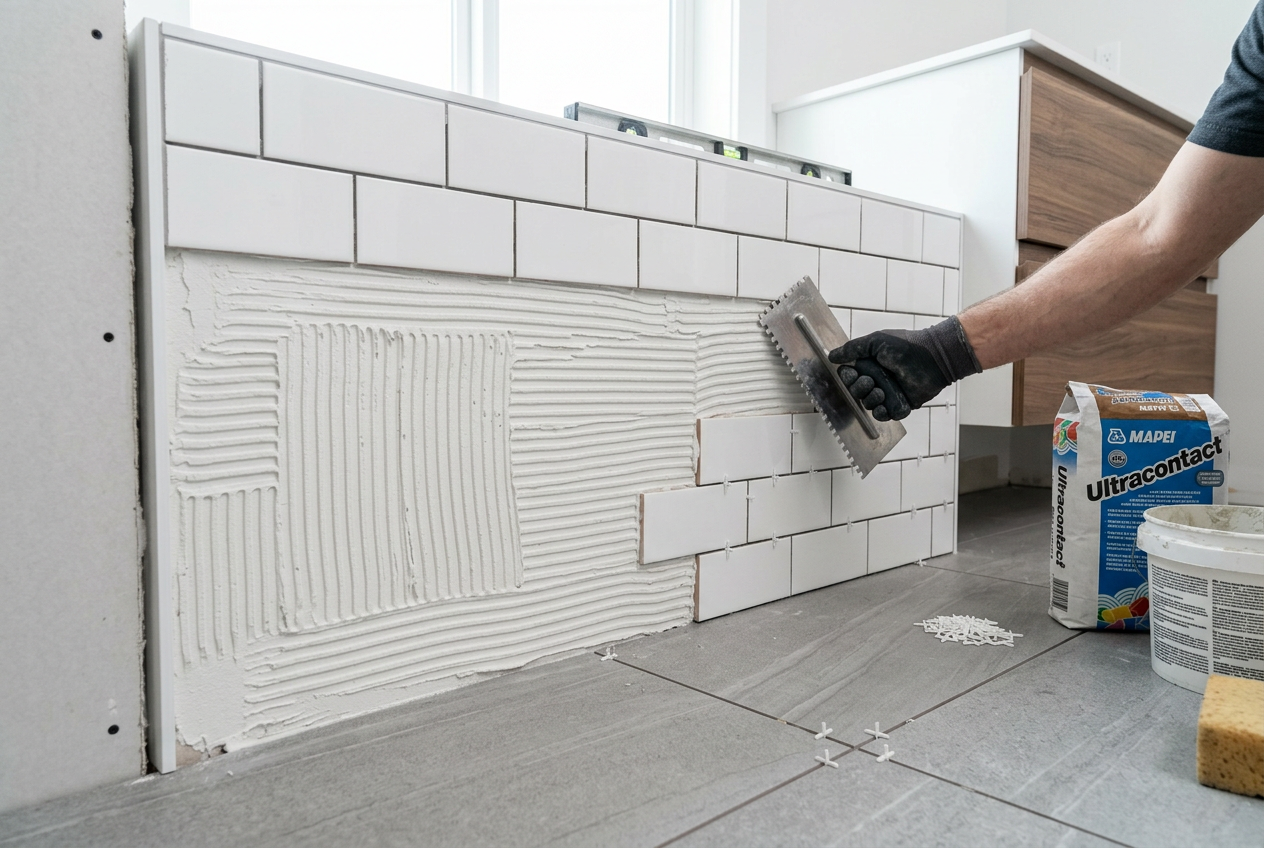
- A flexible, polymer-modified tile adhesive rated for external use. Products from Ardex and Mapei both offer suitable exterior adhesive systems — always check the product's technical data sheet confirms outdoor and wet-area suitability.
- Movement joints (soft joints filled with flexible sealant, not grout) at all perimeters and at regular intervals across the field — typically every 3–4.5 m and wherever the substrate has a construction joint. Skipping movement joints is one of the most common causes of cracked outdoor tiling.
- A flexible, sanded grout or epoxy grout suitable for exterior use. Standard unsanded interior grout will crack and allow water ingress.
If your deck has a waterproofing membrane beneath the tiles, the adhesive must be compatible with that membrane. Sika and Ardex both manufacture integrated waterproofing and tiling systems designed to work together — using mismatched products can void warranties and cause delamination.
Substrate Preparation
The substrate must be:
- Structurally sound and rigid — excessive flex will crack tiles and grout regardless of the products used.
- Correctly sloped to drain — a minimum fall of 1:100 (1 cm per metre) away from the house is generally recommended for tiled outdoor surfaces.
- Clean and primed as specified by your adhesive manufacturer.
Timber decks present particular challenges due to movement. Many tilers recommend a decoupling membrane between a timber substrate and the tile adhesive to manage differential movement. Seek specific advice for your deck construction type.
When to Call a Professional
Tiling a deck is a job where DIY errors are costly to fix — failed tiles must be fully removed, the substrate repaired, and the whole area re-tiled. Consider hiring a qualified tiler if:
- Your deck is over habitable space and requires a waterproofing system (this work may require a licensed waterproofer and building consent).
- You are unsure about substrate suitability or drainage falls.
- The area is large or involves complex cuts around posts and edges.
- You want the work to carry a warranty.
A skilled tiler will specify the correct system for your specific deck type and NZ climate zone. You can find qualified local tilers on tradedirectory.co.nz.

 Site Safe
 SiteWise


 BCITO Qualified





