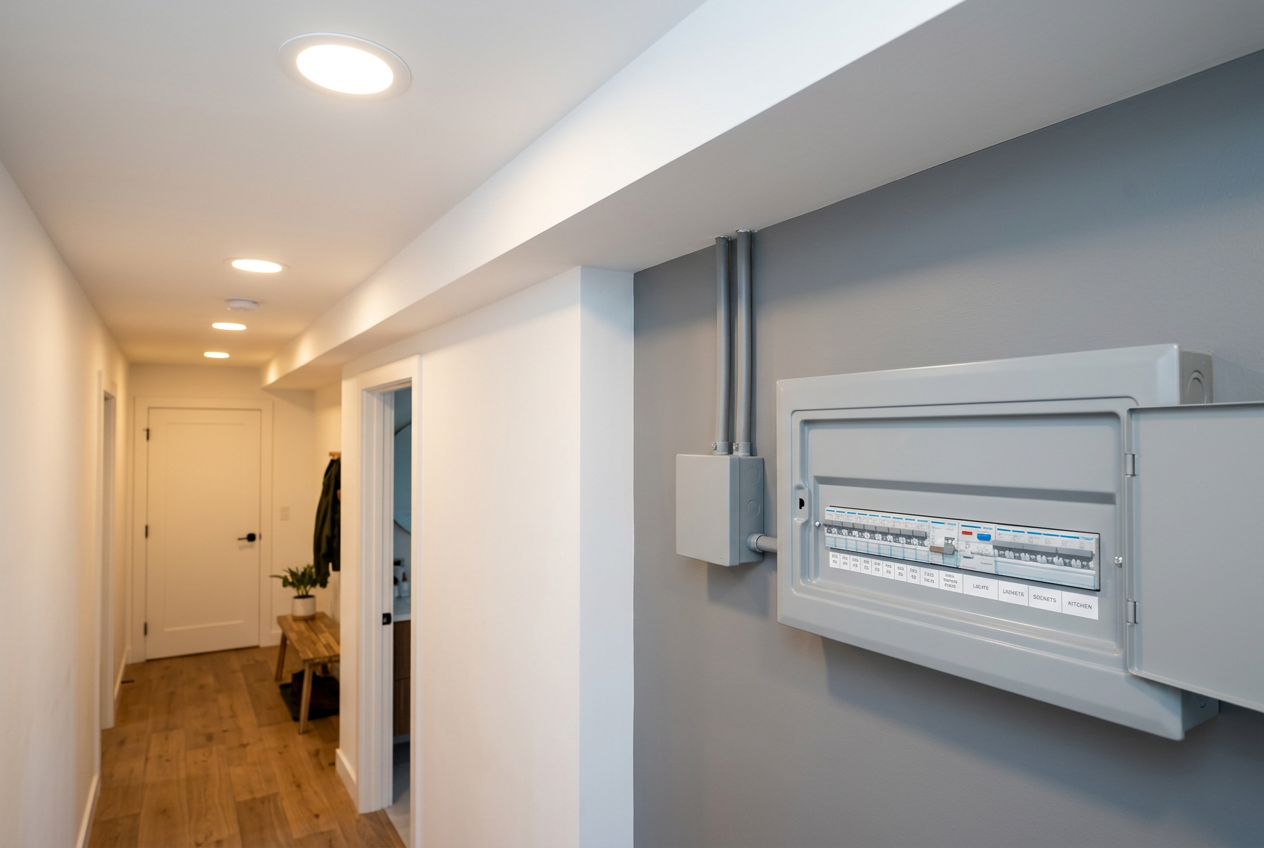
Running a new circuit to your home office is a popular upgrade — especially with more Kiwis working from home — but in New Zealand, this type of electrical work is restricted work under the Electricity Act 1992. That means it must be carried out by a registered electrician. Attempting it yourself is illegal, potentially dangerous, and could void your home insurance.
What Is Restricted Electrical Work in NZ?
Restricted electrical work (REW) covers any work on fixed wiring in your home — including installing a new circuit from your switchboard to a room. Under NZ law, only a person registered with the Electrical Workers Registration Board (EWRB) is legally allowed to carry out, supervise, or certify this type of work.
This includes:
- Installing a new circuit breaker in your switchboard
- Running new cable through walls, ceiling cavities, or under floors
- Installing new power outlets or dedicated circuits
- Any connection to the main switchboard
Once the work is complete, your electrician must issue you a Certificate of Compliance (CoC) — your legal proof that the work meets the NZ Building Code and the relevant standards (primarily AS/NZS 3000, the Wiring Rules).
What Can a Homeowner Do?
While you can't touch the fixed wiring, there are a few things you can legally do yourself:
- Replacing a like-for-like light fitting may still constitute restricted electrical work in some circumstances — check with the EWRB before attempting this yourself.
- Replacing a socket faceplate may still be considered restricted electrical work — confirm with the EWRB whether this is permitted before attempting it yourself.
- Plugging in and using power boards and extension leads
- Planning your office layout and deciding where you'd like outlets positioned
If you're unsure whether a specific task counts as restricted work, check with the EWRB or ask a licensed electrician before you start.
Does a New Circuit Need a Building Consent?
In most cases, adding a new electrical circuit inside an existing home does not require a building consent — it typically falls under Schedule 1 exemptions of the Building Act 2004. However, this depends on the scope of work and your local council's interpretation. Always confirm with your local council before starting any project. Your electrician will also be familiar with what's required in your area.
Why You Shouldn't DIY Electrical Circuits
Beyond the legal issue, there are serious practical reasons to leave this to the professionals:
- Fire risk: Incorrectly installed wiring is a leading cause of house fires in NZ.
- Electrocution: Working near a live switchboard is extremely dangerous without proper training and equipment.
- Insurance: Most home and contents insurers will decline claims if unlicensed electrical work contributed to damage or injury.
- Resale: Uncertified work can cause major headaches when you sell your home, as LIM reports and building inspections may flag it.
WorkSafe NZ provides guidance on electrical safety hazards in the home — it's worth a read to understand the risks involved.
What to Expect When You Hire an Electrician
Hiring a registered electrician to run a new circuit to your home office is a straightforward job. Here's a general idea of what's involved:
| Stage | What Happens |
|---|---|
| Quote | Electrician assesses your switchboard capacity and cable run |
| Installation | New circuit breaker fitted, cable run, outlets installed |
| Testing | Circuit tested to AS/NZS 3000 standards |
| Certification | Certificate of Compliance issued to you |
As a rough guide only, a single new circuit installation (excluding any major switchboard upgrades) might range from a few hundred dollars upward depending on complexity, cable run length, and your location in NZ. Always get at least two or three quotes.
For a home office specifically, your electrician can also advise on:
- Dedicated circuits for high-draw equipment (e.g. laser printers, desktop computers)
- USB outlets or data-friendly fittings
- Whether your existing switchboard has capacity, or needs an upgrade
Healthy Homes and Rental Properties
If your home office is in a rental property, note that any electrical upgrades must still comply with the Healthy Homes Standards and be carried out by a registered electrician. Landlords cannot ask tenants to carry out electrical work.
When to Call a Professional
You should always call a registered electrician for:
- Any new circuit installation
- Switchboard upgrades or additions
- Relocating or adding power outlets
- Any work involving fixed wiring
You can find qualified, local electricians on tradedirectory.co.nz — look for someone with EWRB registration and good reviews. Don't be afraid to ask to see their registration before work begins.
Safety note: Never attempt to work on your switchboard or fixed wiring yourself. Always switch off at the main before any work near electrical fittings, and let a professional handle anything beyond basic plug-in tasks.

 Site Safe
 Licensed Electrical Inspector







