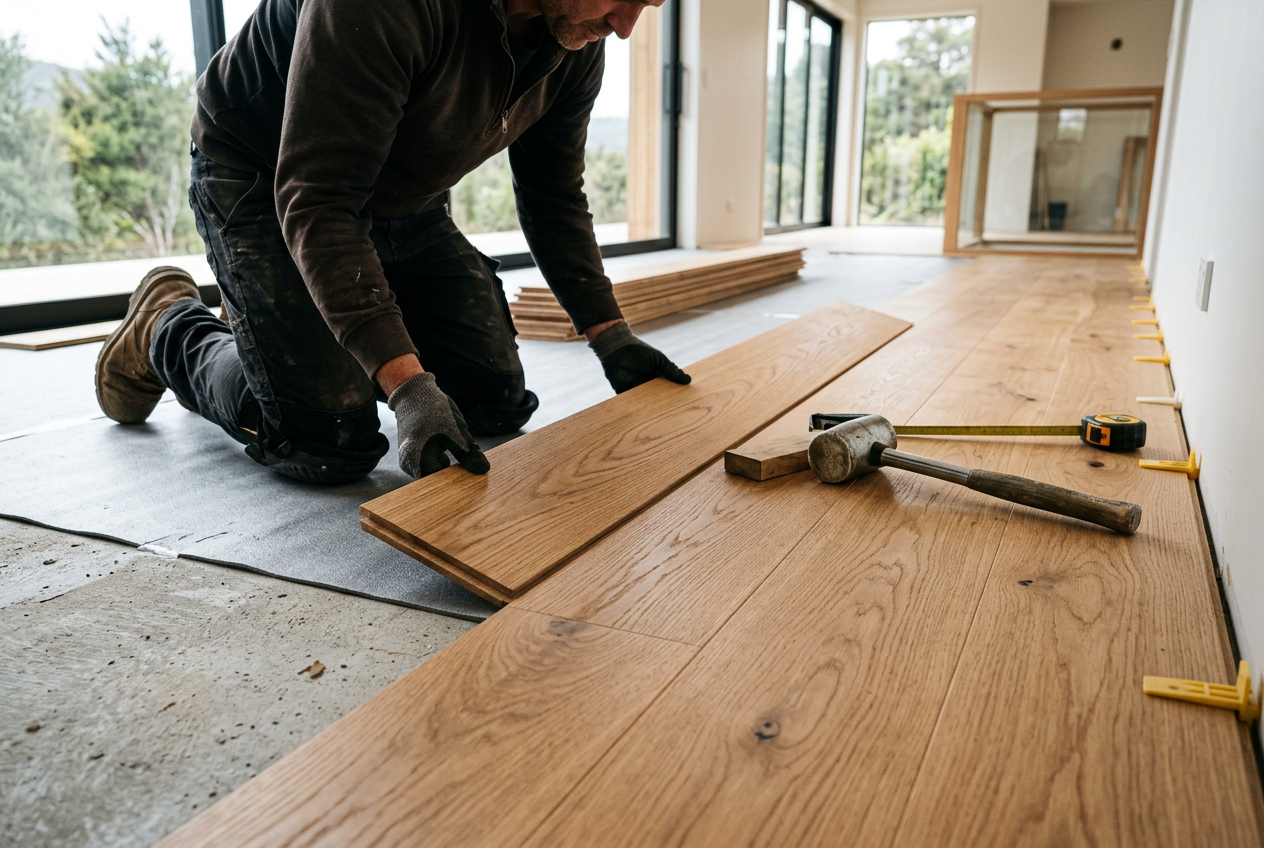
Technically, yes — but only after you've brought the subfloor within the flatness tolerances required by the flooring manufacturer. Laying vinyl plank (also called LVP or luxury vinyl plank) over a subfloor that's too uneven will cause planks to flex, click-joints to fail, and visible ridges or dips to telegraph through the finished floor. The good news is that most timber subfloor issues are fixable with the right preparation.
Why Flatness Matters So Much
Vinyl plank flooring — whether it's a floating click-lock system or a glue-down product — is relatively thin and semi-rigid. Unlike thick carpet or solid timber, it won't bridge gaps or humps; it simply follows whatever surface is underneath it. Most manufacturers specify a flatness tolerance of 3 mm over a 1.8 m straightedge (sometimes written as 3 mm per 1800 mm). Always check your specific product's technical data sheet, as some premium rigid-core products allow slightly more tolerance while thinner flexible vinyl may require less.
How to Assess Your Timber Subfloor
Before you buy a single plank, spend time assessing the subfloor:
- Straightedge test: Lay a long spirit level or a 1.8 m straightedge across the floor in multiple directions. Slide a feeler gauge or ruler into any gaps to measure high and low spots.
- Check for movement: Walk the floor and feel for bounce, flex, or squeaks. Loose sheets or boards need to be re-fixed before anything else.
- Look for damage: Rot, delamination (in plywood or particleboard), swelling from moisture, or old adhesive ridges all need addressing.
- Moisture testing: Timber subfloors in NZ can be affected by subfloor humidity, especially in older homes with poor underfloor ventilation. Use a moisture meter — most manufacturers specify a maximum moisture content (commonly around 14–16% for timber). Check BRANZ guidance for NZ-specific moisture management advice.
Common Timber Subfloor Problems and How to Fix Them
Squeaky or Loose Boards/Sheets
Re-fix loose floorboards or sheet flooring using construction screws rather than nails — screws pull the substrate tight and won't work loose over time. Countersink screw heads slightly below the surface.
High Spots
High spots on timber can be sanded or planed back. A belt sander or hand plane works well for individual boards that have cupped or raised. Always wear appropriate dust protection — WorkSafe NZ recommends a P2 respirator when sanding older floors that may contain lead paint or other hazardous materials.
Low Spots, Dips, and Gaps
This is where a floor-levelling or patching compound comes in. Products such as those in the Ardex or Mapei ranges include formulations suitable for timber subfloors — make sure you select one rated for use over timber (not just concrete), as timber moves and a rigid compound can crack if the wrong product is used. Follow the manufacturer's mixing and application instructions carefully, feathering the compound out to a thin edge.
Old Adhesive or Embossing
If you're laying over existing sheet vinyl or old adhesive residue, the texture can telegraph through. Use an embossing leveller to skim over the surface and create a smooth base.
Subfloor Thickness and Structural Considerations
In NZ, timber-framed floors are commonly built to NZS 3604 for light timber framing. If your subfloor sheets are thin (under 17 mm) or joist spacings are wide, you may get excessive flex — which will stress click-lock joints over time. Adding an additional layer of plywood can stiffen the deck and give you a fresh, flat surface to work from. Stagger the joints of the new layer from the existing subfloor joints.
Choosing the Right Vinyl Plank Product
Not all vinyl plank is equal when it comes to subfloor tolerance:
| Product Type | Typical Thickness | Subfloor Tolerance | Notes |
|---|---|---|---|
| Flexible/thin LVP | 2–4 mm | ±3 mm / 1.8 m | Least forgiving; shows imperfections |
| Rigid core (SPC/WPC) | 5–8 mm | ±3–5 mm / 1.8 m | More forgiving; better for NZ conditions |
| Glue-down LVP | Varies | ±3 mm / 1.8 m | Requires very flat, clean surface |
Rigid-core SPC (stone plastic composite) products are popular in NZ for their stability in our variable humidity conditions. Check with your supplier — Bunnings and Mitre 10 both stock a range of LVP products with technical data sheets available in-store or online.
Acclimation and Installation Tips
- Acclimate the planks in the room for at least 24–48 hours before laying (check your product's instructions).
- Maintain the expansion gap around the perimeter (typically 8–10 mm) as specified — timber subfloors move seasonally.
- For floating floors, a suitable underlay may be required if not pre-attached; check whether your product already has underlay bonded to it, as double-layering can void warranties.
When to Call a Professional
If your subfloor has significant structural movement, widespread rot, or moisture problems, it's worth getting a professional flooring installer or builder to assess the situation before you invest in new flooring. A qualified flooring installer can identify issues that aren't obvious to the untrained eye and ensure the finished result meets manufacturer warranty requirements. You can find experienced local flooring installers on tradedirectory.co.nz. If subfloor work involves structural repairs to joists or bearers, you may need a Licensed Building Practitioner (LBP) — and depending on the scope, a building consent may be required. Always check with your local council.







