In most NZ homes, you can lay new insulation over existing pink batts — but only after checking the old insulation is dry, undamaged, and free of hazards. Simply piling new material on top of compromised batts can trap moisture, reduce performance, and in older homes, create a health risk. Here's what you need to know before you head up into the ceiling.
Check the Condition of Your Existing Batts First
Before adding anything on top, get up into the ceiling space with a torch and have a good look around. You're checking for:
- Moisture or mould — wet or discoloured batts must be removed, not covered over. Trapped moisture can cause structural damage and poor air quality.
- Pest damage — rodent nesting, droppings, or insect activity means the old batts should come out.
- Compression or displacement — batts that have slumped, shifted, or been crushed lose their R-value and won't perform well as a base layer.
- Asbestos — homes built before the mid-1980s may have loose-fill insulation containing asbestos. Do not disturb it. If you're unsure of the age or type of existing insulation, contact a licensed asbestos assessor before doing anything. WorkSafe NZ has guidance on identifying and managing asbestos safely.
If the existing batts are in good shape — dry, intact, and sitting flat between the joists — topping up is generally fine.
Understanding R-Values and the NZ Building Code
The R-value is the measure of thermal resistance. The higher the R-value, the better the insulation performs. New Zealand's Building Code clause H1 sets minimum energy efficiency requirements, and the required R-value depends on your climate zone.
NZ is divided into six climate zones. Auckland (Zone 1) has lower requirements than Queenstown or Christchurch (Zones 5–6). As a rough guide:
| Climate Zone | Example Locations | Minimum Ceiling R-Value (H1:2021) |
|---|---|---|
| Zone 1 | Northland, Auckland | R3.3 |
| Zone 2 | Hamilton, Tauranga | R3.3 |
| Zone 3 | Wellington, Nelson | R3.3 |
| Zone 4 | Palmerston North | R3.3 |
| Zone 5 | Christchurch | R6.6 |
| Zone 6 | Queenstown, Central Otago | R6.6 |
Note: Always confirm current requirements with your local council or MBIE Building Performance, as standards are updated periodically.
When you add new insulation on top of old, the R-values stack — so if your old batts are R1.8 and you add R2.6 on top, you get approximately R4.4 total. This is a cost-effective way to bring an older home up to modern standards.
Healthy Homes Standards — Rental Properties
If your property is a rental, you have legal obligations under the Healthy Homes Standards. Ceiling insulation must meet a minimum R-value — check Tenancy Services for the current requirement, as the figure depends on your climate zone and whether insulation is new or existing. Topping up old batts is a perfectly valid way to meet this requirement, provided the existing insulation is in acceptable condition.
How to Top Up Ceiling Insulation — DIY Steps
Topping up ceiling insulation is generally not restricted work under the Building Act, so homeowners can do it themselves. However, working in ceiling spaces carries real risks — follow these steps carefully.
Safety First
- Wear a P2 respirator mask, safety glasses, gloves, and long sleeves. Fibreglass fibres irritate skin, eyes, and lungs.
- Use a torch or head lamp and never step between joists — always walk on boards or crawl boards laid across the joists.
- Work in the cool of the morning — ceiling spaces get dangerously hot in summer.
- Ensure the ceiling space is well ventilated and never work alone.
Choosing Your Top-Up Insulation
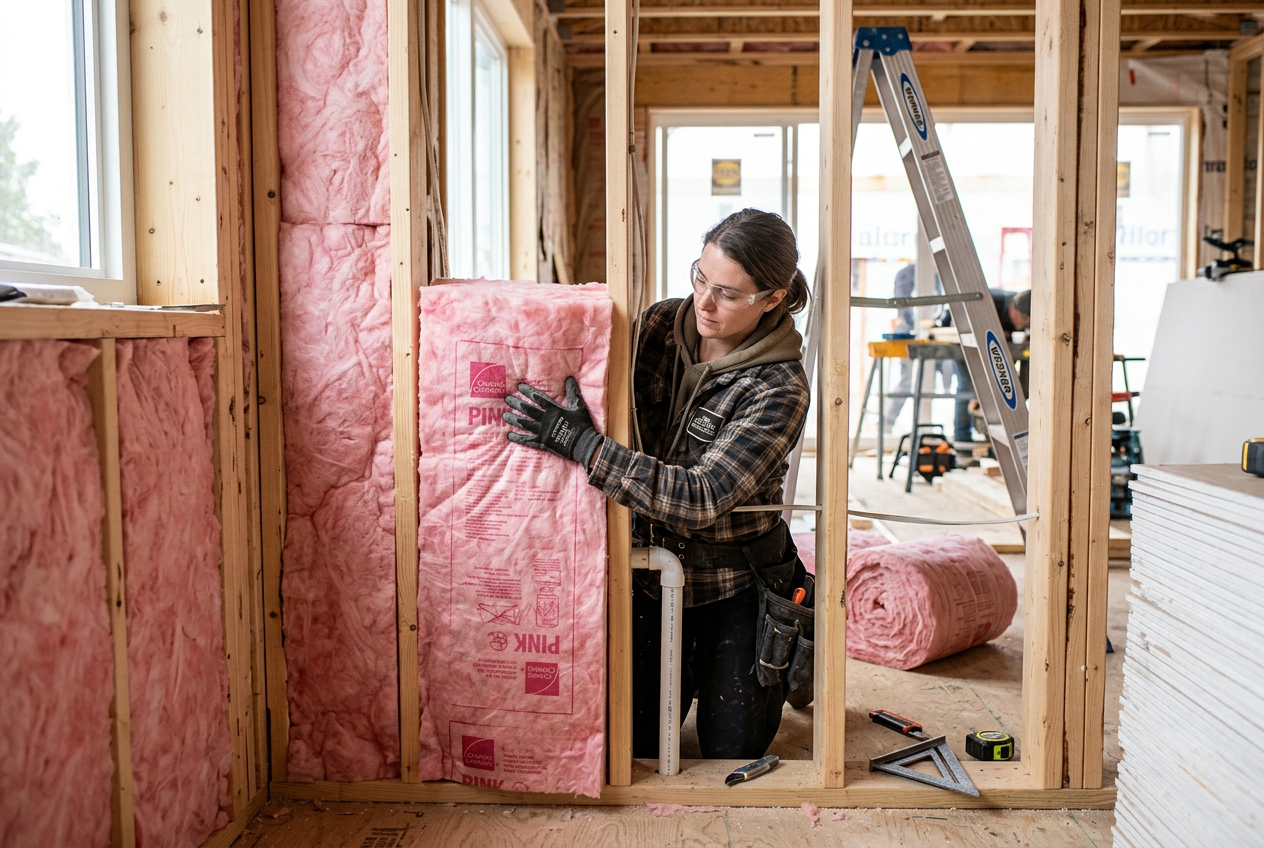
You can lay new glasswool batts (like Pink Batts or similar products) directly over the old ones, running them perpendicular to the joists to cover any gaps. Alternatively, polyester batts are a popular choice — they're itch-free and easier to handle. Loose-fill (blown) insulation is another option but usually requires professional equipment.
Products are available from Bunnings, Mitre 10, and PlaceMakers. Check the product's R-value label and calculate how much you need based on your ceiling area.
Installation Tips
- Lay new batts at right angles to the existing layer to eliminate cold bridges at the joists.
- Don't compress the new batts — compression reduces R-value.
- Keep insulation clear of recessed lighting (downlights) unless they are rated IC (insulation contact). Non-IC downlights need a 50–75 mm clearance and a fire-rated cover — check with an electrician if you're unsure.
- Ensure roof ventilation paths are not blocked at the eaves.
Does This Require a Building Consent?
In most cases, topping up existing ceiling insulation falls under Schedule 1 of the Building Act as exempt building work and does not require a consent. However, rules can vary — always confirm with your local council before starting. MBIE Building Performance has a useful guide to consent exemptions.
When to Call a Professional
Call a qualified insulation installer if:
- You suspect asbestos in the existing insulation — this is specialist, regulated work.
- The existing insulation is wet, mouldy, or heavily pest-damaged and needs full removal.
- Your ceiling space is difficult to access or has very low clearance.
- You want blown insulation installed, which requires specialist equipment.
- You're unsure about downlight clearances or any electrical concerns — contact a registered electrician via the EWRB.
A professional insulation installer will assess your existing insulation, recommend the right product and R-value for your climate zone, and ensure the job is done safely and correctly. You can find qualified local insulation installers on tradedirectory.co.nz.