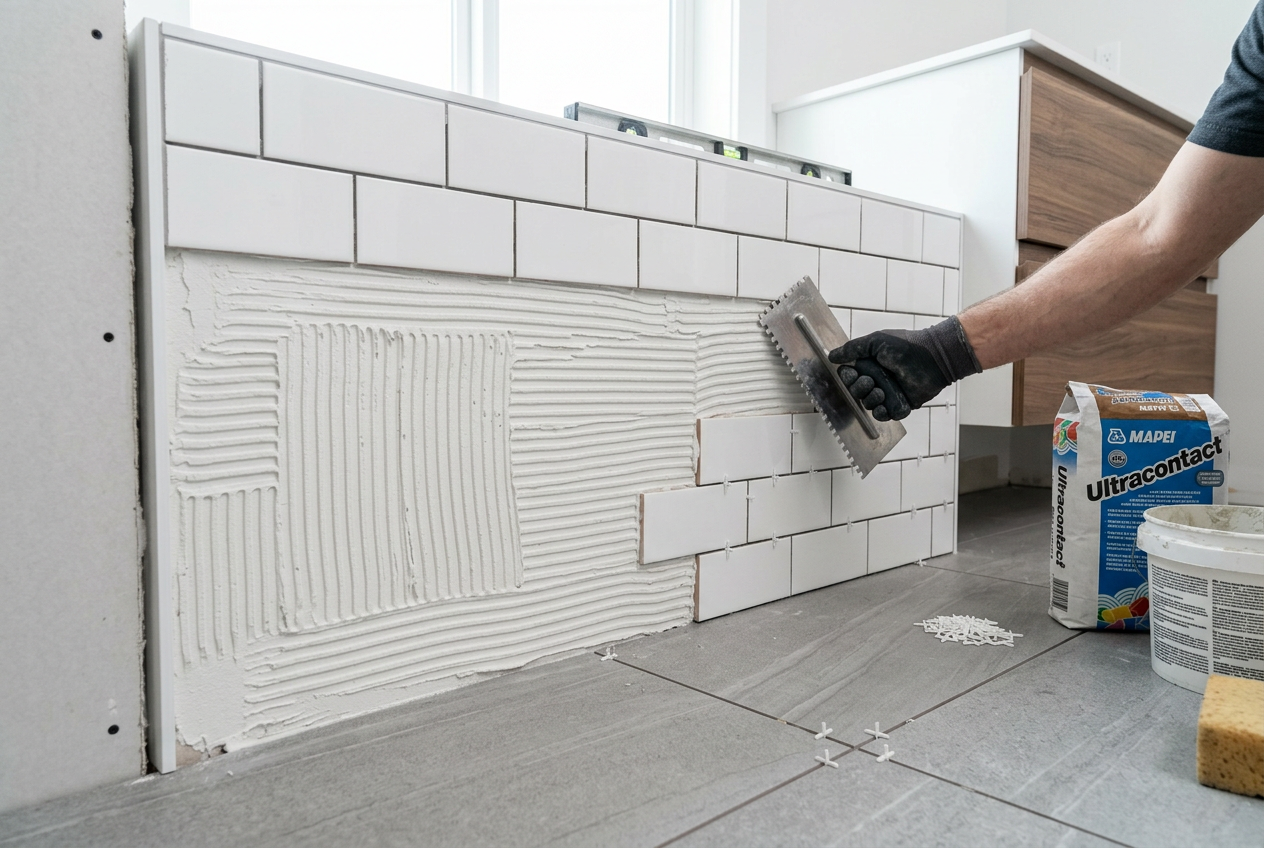
In many cases, yes — you can lay mosaic tiles directly over an existing tiled floor, but only when the old tiles are in sound condition and the substrate can handle the extra weight and height. Rushing this step is one of the most common causes of tile failure, so it pays to do a thorough assessment before you open a bag of adhesive.
Assess the Existing Tiled Floor First
Before anything else, check that the old tiles are genuinely fit to tile over. Walk the floor and listen for a hollow, drum-like sound when you tap each tile with a coin or the handle of a screwdriver. Hollow tiles have debonded from the substrate beneath — if you tile over them, the new mosaic layer will eventually crack or lift too.
Also check for:
- Cracked or broken tiles — these indicate movement in the substrate and must be addressed first.
- Grease, wax, or sealers — common in kitchens; these prevent adhesive bonding.
- Height changes — adding a tile-on-tile layer raises your floor level by roughly 8–15 mm (depending on adhesive bed and mosaic thickness). Check door clearances, transitions to adjoining rooms, and any step-down into a shower or wet area.
- Structural load — older homes, particularly those with timber subfloors, may not carry the additional weight. If in doubt, consult a builder or structural engineer.
When Tiling Over Old Tiles Is Acceptable
Tiling over existing tiles is generally acceptable when:
| Condition | Requirement |
|---|---|
| Adhesion | All existing tiles are fully bonded — no hollow spots |
| Surface | Clean, flat, and free of contamination |
| Grout lines | Shallow enough not to telegraph through the mosaic |
| Height | Extra height won't cause trip hazards or door issues |
| Substrate | Concrete slab or solid base (not a bouncy timber floor) |
If your existing floor fails any of these checks, the safer option is to remove the old tiles first.
Preparing the Surface Properly
Good preparation is everything. Here's the process:
- Clean thoroughly — degrease with a suitable cleaner and rinse well. In kitchens, a sugar soap wash is a good start.
- Repair any loose or cracked tiles — re-bond loose tiles with a suitable adhesive or remove and patch them flush.
- Sand or grind the surface — lightly abrading glazed tiles improves adhesive key. A belt sander or angle grinder with a diamond cup wheel works well; wear a P2 dust mask and eye protection. Check WorkSafe NZ guidelines if grinding older tiles, as some pre-1990s tile adhesives or underlays may contain asbestos — check WorkSafe NZ guidance before disturbing any materials in older homes.
- Apply a primer or bonding agent — products from Ardex or Mapei are widely used by NZ tilers to improve adhesion over non-porous surfaces like glazed tiles.
- Fill deep grout lines — if existing grout lines are wide or deep, skim them flush with a floor-levelling compound so they don't telegraph (show through) the mosaic sheet above.
Choosing the Right Adhesive for Mosaics
Mosaic tiles — typically supplied on mesh-backed sheets — are lightweight but have a large number of individual pieces, so full coverage of adhesive is critical. Use a polymer-modified, flexible tile adhesive rated for the application (floor-rated, and waterproof-rated if in a wet area). Brands like Ardex, Mapei, and Sika all offer suitable products available through trade suppliers and stores like Mitre 10 or Bunnings.
Use a notched trowel appropriate for the mosaic size — your adhesive manufacturer's data sheet will specify the correct notch size. Press the mesh sheets firmly and check that adhesive squeezes up between every individual tile piece; lift a sheet occasionally to verify full coverage.
Wet Areas and the NZ Building Code
If you're tiling over an existing tiled floor in a bathroom, shower, or laundry, pay close attention to NZ Building Code clause E3 (Internal Moisture). The waterproofing membrane sits beneath the tile system — tiling over old tiles does not add a new membrane. If the existing waterproofing is compromised or unknown, you may be creating a moisture risk.
For shower floors in particular, BRANZ and MBIE Building Performance guidance recommends ensuring the waterproofing layer is intact and compliant. If you're unsure, it's worth lifting a tile to inspect, or consulting a licensed tiler or builder.
Note that many tiling jobs do not require a building consent, but whether an exemption applies depends on the specific work and location — always confirm with your local council.
When to Call a Professional
Consider hiring a qualified tiler if:
- The existing floor has widespread hollow tiles or structural movement.
- You're working in a wet area and the waterproofing status is unknown.
- The floor is timber-framed and you're unsure about load capacity.
- You need to grind or remove old tiles and suspect asbestos-containing adhesive (pre-1990 homes especially — get it tested before disturbing it).
- The height change will affect door hardware, drainage falls, or transitions to other rooms.
A skilled tiler will assess all of these factors quickly and get the job done right first time. You can find qualified local tilers on tradedirectory.co.nz.

 Site Safe
 SiteWise


 BCITO Qualified





