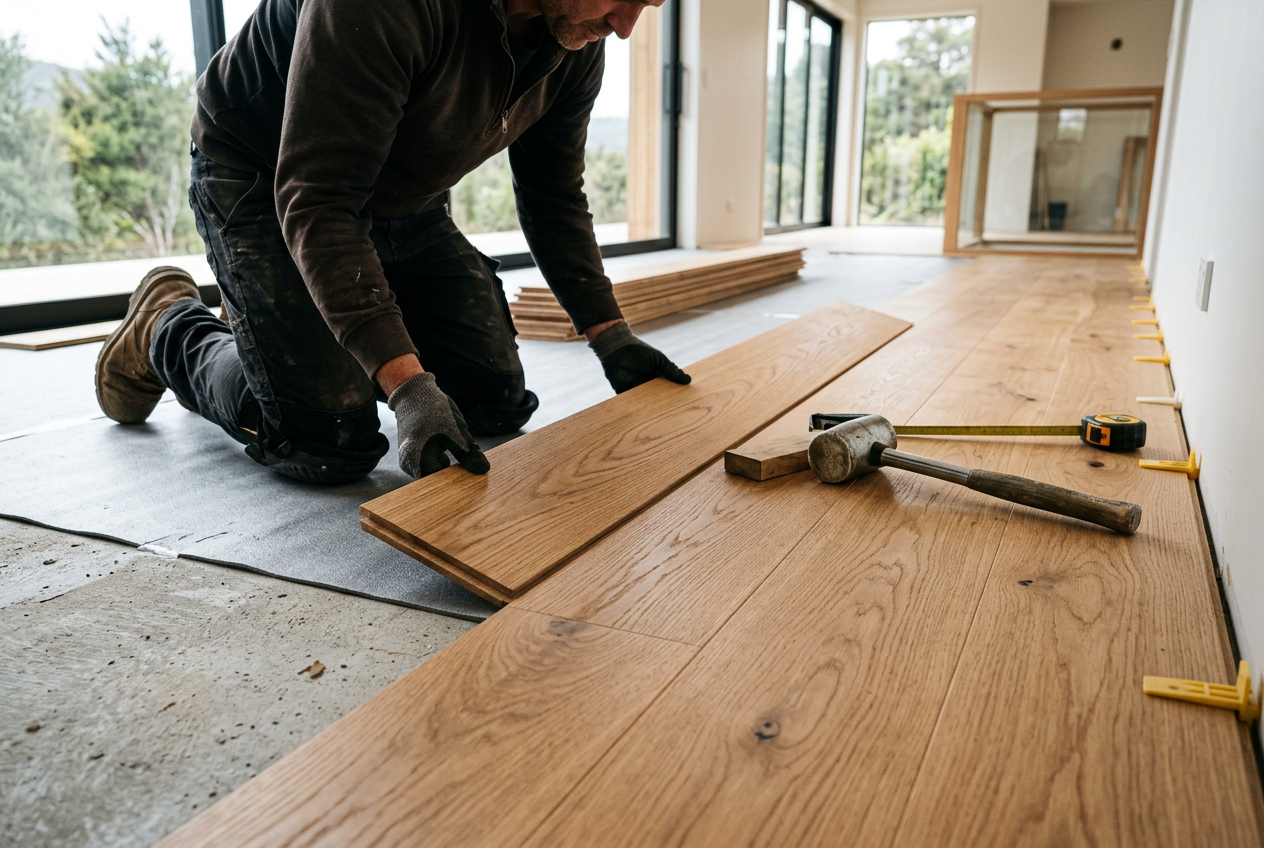
Laying laminate flooring in a laundry is possible, but it comes with real risks that you need to weigh up carefully. Standard laminate and water are not good friends — prolonged exposure causes swelling, warping, and mould — but modern water-resistant and waterproof laminate products have improved significantly, making them a more viable option for low-moisture areas like a laundry. Here's what you need to know before you commit.
Understanding the Risk in a Laundry
A laundry involves internal moisture considerations under the NZ Building Code. Clause E3 (Internal Moisture) covers wet areas such as showers and bathrooms; whether it applies specifically to a laundry floor in the same way is worth confirming with your council or a building professional. The floor must be able to handle occasional water splashes from the washing machine, sink, and general use without allowing moisture to penetrate the subfloor or cause structural damage.
Traditional laminate has a high-density fibreboard (HDF) core that absorbs water readily. Even small amounts of standing water seeping into joins can cause the boards to swell and lift within days. A laundry, even a tidy one, will see drips, splashes, and the occasional overflow — so your product choice is critical.
Choosing the Right Laminate Product
If you're set on laminate, look specifically for products rated as waterproof (not just water-resistant). Key things to check:
- AC Rating: Look for AC4 or AC5 for durability in a utility space.
- Core material: Choose laminate with a waterproof core (sometimes called WPC — Wood Plastic Composite — or SPC — Stone Plastic Composite). Note that true SPC/WPC products are technically a separate category from traditional laminate, but are often sold alongside it.
- IP or submersion rating: Some products are rated for short-term water submersion (e.g., 24–72 hours). This is ideal for a laundry.
- Warranty coverage: Check whether the manufacturer's warranty explicitly covers wet or splash-prone areas. Many standard laminate warranties are void in wet areas.
Always read the manufacturer's technical data sheet and installation guide before purchasing. Brands like Mitre 10 and Bunnings stock a range of laminate and hybrid flooring options with varying moisture ratings — staff can help you identify which products are suitable for wet areas.
Better Alternatives Worth Considering
Before committing to laminate, it's worth knowing that other flooring types are genuinely better suited to laundries:
| Flooring Type | Water Resistance | DIY Friendly | Relative Cost |
|---|---|---|---|
| Standard laminate | Low | Yes | Low |
| Waterproof laminate / SPC | Medium–High | Yes | Medium |
| Luxury Vinyl Plank (LVP) | Very High | Yes | Medium |
| Ceramic or porcelain tile | Excellent | Moderate | Medium–High |
| Sheet vinyl | High | Moderate | Low–Medium |
Luxury Vinyl Plank (LVP) is often the most practical choice for a NZ laundry — it's 100% waterproof, comfortable underfoot, and straightforward to install as a DIY project. Tiles are the gold standard for wet areas but require more skill and preparation to lay correctly.
Installation Tips If You Proceed With Laminate
If you've chosen a waterproof-rated laminate or SPC product and want to proceed, follow these steps carefully:
- Prepare the subfloor: The subfloor must be clean, dry, flat, and structurally sound. Check for any existing moisture issues before laying anything. A moisture reading above the manufacturer's specified limit means you need to address the source first.
- Use an appropriate underlay: Choose an underlay with a built-in vapour barrier rated for wet areas. Do not skip this step in a laundry.
- Seal all joins and edges: Use the manufacturer's recommended sealant around the perimeter, at doorways, and around any penetrations (pipes, floor waste). This is one of the most important steps in a wet area.
- Install a floor waste if required: If your laundry doesn't already have a floor waste (drain), consider whether one is needed. Floor wastes in laundries are common in NZ homes and are covered under the Building Code (Clause G13). Installing or modifying a floor waste is restricted plumbing work — see below.
- Leave correct expansion gaps: Follow the manufacturer's specification, typically 8–12 mm around all fixed objects and walls.
- Seal around the washing machine hose connections and check hoses regularly for wear.
Healthy Homes and Rental Properties
If this is a rental property, be aware of the Healthy Homes Standards, which include requirements around moisture and drainage. Flooring that is prone to water damage or mould growth could create compliance issues. Choosing a genuinely waterproof flooring option is the safer path for landlords.
When to Call a Professional
While laying laminate or LVP flooring is generally a DIY-friendly task, there are situations where you should bring in a qualified tradesperson:
- Subfloor issues: If the subfloor is uneven, damaged, or showing signs of moisture ingress, a flooring professional or builder should assess it first.
- Floor waste installation or modification: This is restricted plumbing work under the Plumbers, Gasfitters and Drainlayers Board (PGDB) rules. It must be carried out by a licensed plumber or drainlayer.
- Large or complex areas: Awkward layouts, multiple doorways, or transitions to other floor types are easier to get right with experience.
- Subfloor levelling compounds: Products like those from Ardex or Mapei can help level a subfloor, but application technique matters — a professional will get a better result.
You can find qualified local flooring installers and plumbers on tradedirectory.co.nz.