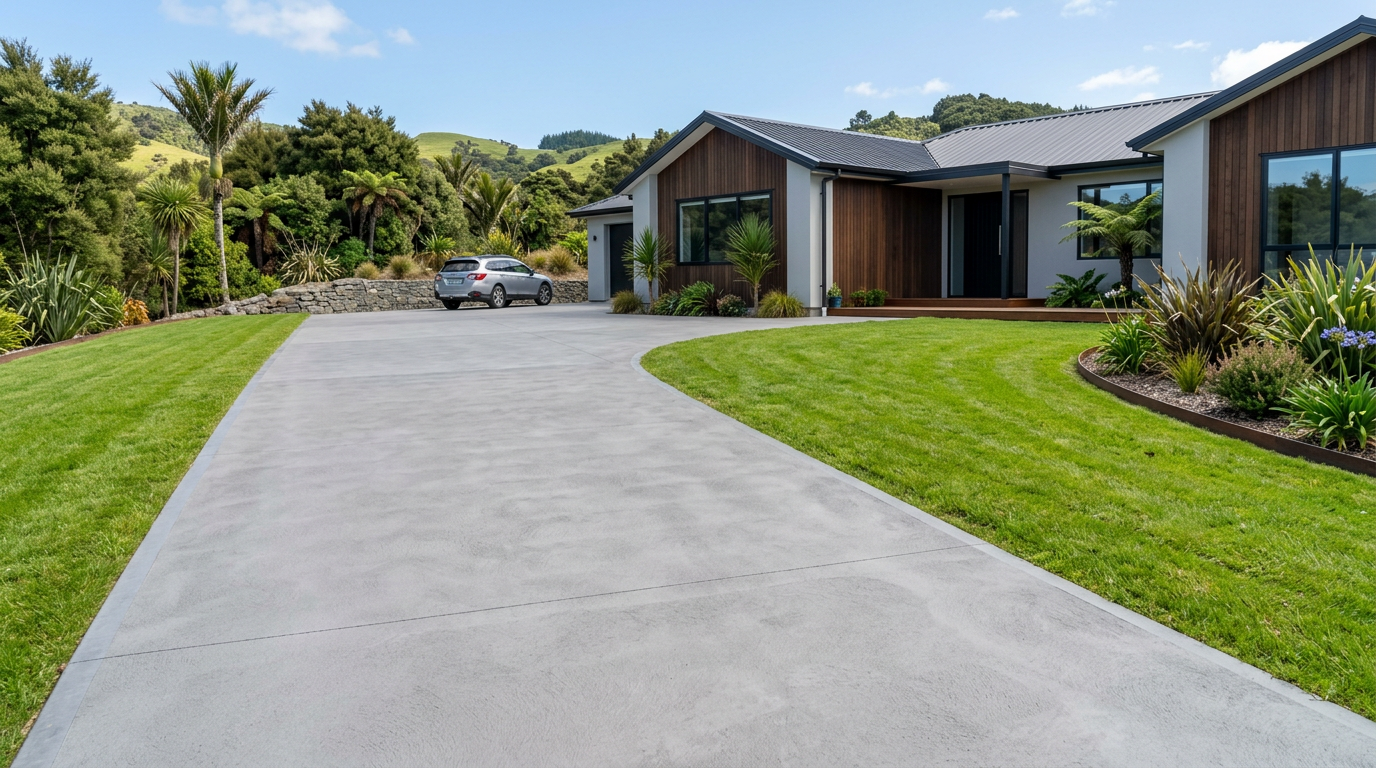
Yes, it is generally possible to lay asphalt over an existing concrete driveway in New Zealand — and many homeowners choose this route to refresh a tired or cracked surface without the cost of full removal. However, the success of the job depends heavily on the condition of the concrete underneath and how well the surface is prepared beforehand.
Is It a Good Idea?
Overlaying asphalt on concrete (sometimes called an asphalt overlay) is a well-established technique used by professional driveway layers across NZ. When done correctly, it can extend the life of your driveway significantly and give it a smooth, attractive finish. The key advantages are:
- Lower cost than full concrete removal and replacement
- Faster installation — no need to break out and dispose of the old slab
- Good durability when the base is sound
However, it is not always the right solution. If the concrete beneath is in poor shape, problems will eventually telegraph through to the asphalt surface.
Assessing Your Existing Concrete
Before any asphalt is laid, the concrete must be carefully assessed. A professional driveway layer will look for:
- Structural cracking — hairline cracks may be manageable, but wide, deep, or moving cracks (especially those caused by tree roots or subsidence) are a red flag
- Heaving or settlement — uneven sections suggest ground movement that asphalt alone won't fix
- Delamination or spalling — flaking or crumbling concrete needs repair or removal
- Drainage issues — poor falls (slope) in the existing slab can cause water pooling under the new surface, leading to premature failure
- Oil or chemical contamination — these can prevent proper adhesion
If the concrete is structurally sound and relatively flat, an overlay is likely a viable option. If it has significant movement or damage, removal may be the better long-term investment.
Key Preparation Steps
Proper preparation is what separates a long-lasting overlay from one that fails within a few years. A qualified driveway layer will typically:
- Clean the surface thoroughly — pressure washing to remove dirt, moss, oil, and any loose material
- Repair cracks and damaged areas — filling cracks with a suitable crack filler or patching compound before laying asphalt
- Check and adjust drainage falls — the finished surface must shed water away from the house and towards appropriate drainage, in line with MBIE Building Performance guidance on surface water management
- Apply a tack coat (bitumen primer) — this bonding agent is brushed or sprayed onto the concrete to help the asphalt adhere properly
- Consider edge restraints — where the driveway meets garden beds or paths, edging may be needed to contain the asphalt
How Thick Should the Asphalt Be?
For a residential driveway overlay in NZ, a minimum compacted depth of 40–50 mm of asphalt is generally recommended. Going thinner risks cracking and early wear, especially in areas with heavy vehicles or significant temperature variation. NZ's climate varies widely — from the hot, dry summers of Hawke's Bay to the wet, frost-prone winters of the South Island — and your local conditions should inform the specification.
Your driveway layer will select the appropriate asphalt mix (typically a fine-grade hotmix for residential use) and ensure it is laid and compacted correctly with a roller while still hot.
Height and Clearance Considerations
Adding 40–50 mm of asphalt will raise the finished driveway level. Before proceeding, check:
- Garage door clearance — will the new surface foul the bottom of the door?
- Step heights — raised driveway levels can affect the height of existing steps, which may create a trip hazard
- Drainage channels and grates — these may need to be raised or adjusted
- Council crossings — if your driveway crosses a footpath or kerb, the local council may have requirements about levels and materials. Always check with your local council before starting work.
Do You Need a Building Consent?
In most cases, laying a new driveway surface is exempt from building consent under Schedule 1 of the Building Act 2004. However, exemptions have conditions, and rules can vary by council and site. MBIE Building Performance provides guidance on Schedule 1 exemptions — always confirm with your local council before starting, particularly if your property is in a special character zone or near a boundary.
Cost as a Guide
As a rough guide only, asphalt overlay costs in NZ vary depending on driveway size, access, region, and the amount of preparation required. Expect to pay more per square metre for smaller jobs or those requiring significant crack repair. Get at least two or three quotes from local driveway layers to compare.
When to Call a Professional
While a keen DIYer can handle some preparation tasks like cleaning and minor crack filling, laying asphalt is not a practical DIY job for most homeowners. Hotmix asphalt must be laid and compacted quickly before it cools, requiring specialised equipment (a paving machine or at minimum a hand screed, plus a roller) and experience to achieve a smooth, properly graded finish.
A poorly laid driveway can fail quickly, hold water, or create drainage problems that affect your home — so this is one job where hiring a qualified local driveway layer pays off. You can find experienced driveway professionals in your area on tradedirectory.co.nz.
Also note: if any drainage work (e.g. connecting to stormwater) is involved, this is restricted work under the Plumbers, Gasfitters, and Drainlayers Act and must be carried out by a licensed drainlayer. Check the Plumbers Gasfitters & Drainlayers Board for more information.
Sources & Further Reading
- MBIE Building Performance — Building Act and consents
- BRANZ — Build magazine and technical guidance
- Plumbers Gasfitters & Drainlayers Board — licensed drainlayers
- Bunnings — driveway preparation products
- Mitre 10 — crack fillers and surface prep
- WorkSafe NZ — safe work on driveways and outdoor areas
 Site Safe
 SiteWise

 ISO 9001 / 45001 / 14001


 SARNZ (Scaffolding Association)