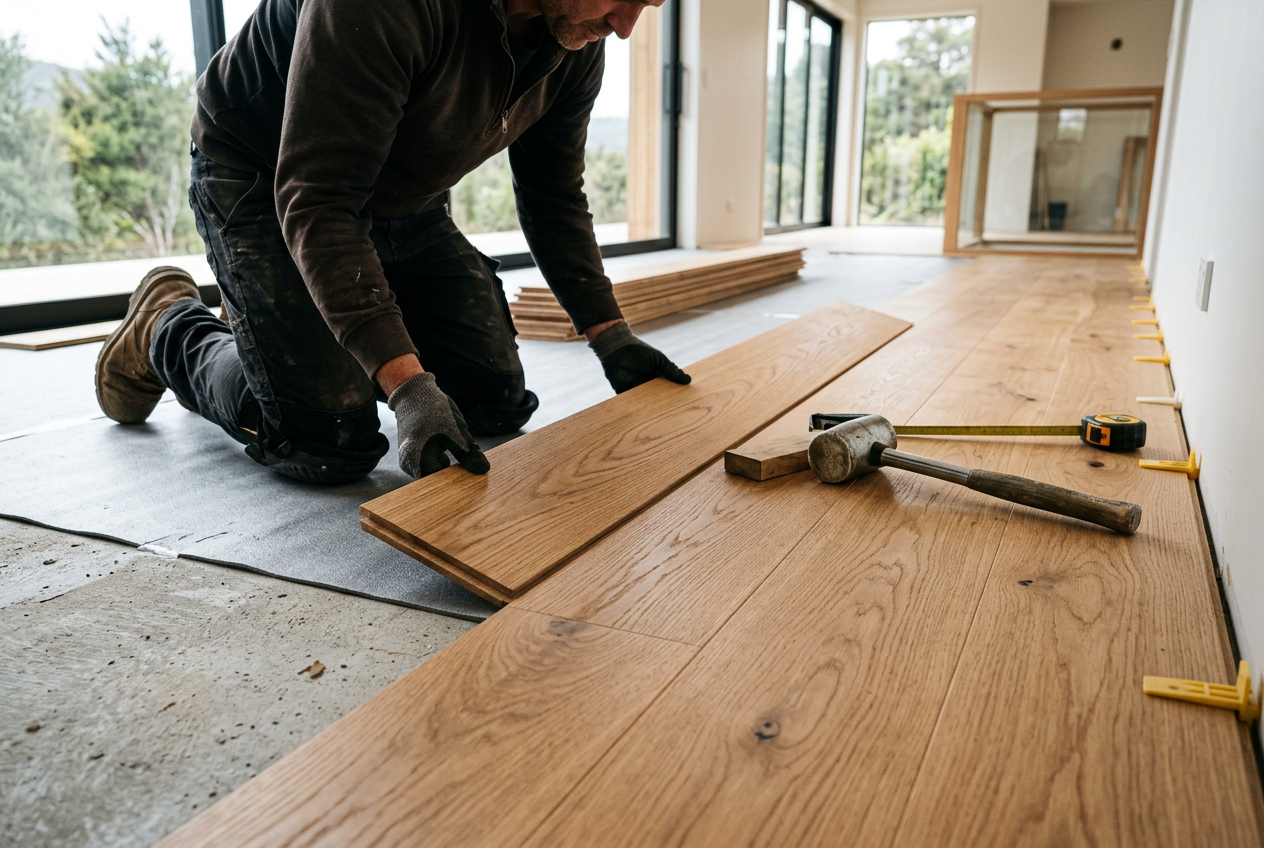
Installing underfloor heating mats under vinyl plank (LVP) flooring is a popular upgrade in New Zealand homes — it adds comfort underfoot and can help contribute to meeting Healthy Homes heating requirements for rental properties — though whether a specific installation satisfies the standard depends on the heating output and room size; confirm with Tenancy Services. The short answer is: you can handle much of the preparation and mat-laying yourself, but the electrical connection to mains power is restricted work and must be carried out by a licensed electrician. Here's what you need to know before you start.
How Underfloor Heating Mats Work
Electric underfloor heating mats consist of a thin resistance-wire element woven into a fibreglass mesh. They sit beneath your flooring and are controlled by a thermostat. For vinyl plank flooring, the mat is typically embedded in a self-levelling compound or laid directly on the subfloor, with the LVP floating on top.
Because they run on 230 V mains electricity, any connection to your home's wiring — including wiring the thermostat — is restricted electrical work under the Electricity Act 1992. Only a registered electrician can legally do this work in New Zealand. Check the Electrical Workers Registration Board (EWRB) for details on what constitutes restricted work.
Is a Building Consent Required?
In most cases, installing an electric underfloor heating mat is exempt from building consent under Schedule 1 of the Building Act 2004, as it is generally considered a like-for-like or minor electrical installation. However, rules can vary depending on your council and the specifics of your project. Always confirm with your local council before starting work. Your electrician can also advise you. Visit MBIE Building Performance for general guidance on consent exemptions.
What You Can Do Yourself
As a homeowner, you can legally carry out the following steps:
- Measure and plan your room layout, calculating the mat coverage area (typically 80–90% of the usable floor area, avoiding fixed cabinetry and furniture).
- Prepare the subfloor — it must be clean, dry, flat, and structurally sound. Any high spots or dips greater than 3 mm over 1.8 m should be addressed with a floor-levelling compound.
- Lay the heating mat according to the manufacturer's instructions, cutting the mesh (never the wire) to fit around obstacles.
- Embed the mat in a suitable self-levelling or patching compound if required by the manufacturer — this protects the element and creates a flat surface.
- Lay the vinyl plank flooring over the top once the compound has fully cured.
What Must Be Done by a Licensed Electrician
The following steps are restricted electrical work and cannot legally be done by a homeowner:
- Connecting the heating mat's cold tails to the mains supply.
- Wiring and installing the thermostat/controller.
- Any work inside your switchboard or consumer unit.
- Testing and certifying the installation with an Electrical Certificate of Compliance (CoC).
Always ask your electrician for a CoC on completion — you'll need it for insurance purposes and if you ever sell the property. Find a qualified local electrician on tradedirectory.co.nz.
Choosing the Right Heating Mat for Vinyl Plank Flooring
Not all underfloor heating systems are compatible with LVP flooring. Keep these points in mind:
- Check the flooring manufacturer's maximum temperature rating. Most vinyl plank products have a surface temperature limit of around 27–28°C. Exceeding this can cause the planks to expand, warp, or void the warranty.
- Choose a low-profile mat (typically 3 mm or less) to minimise height changes at doorways.
- Use a programmable thermostat with a floor sensor, not just an air sensor, to prevent overheating the LVP.
- Confirm compatibility with your specific LVP product — check with the flooring supplier or manufacturer before purchasing.
| Factor | What to Check |
|---|---|
| Max floor temp | LVP manufacturer spec (usually ≤27–28°C) |
| Mat wattage | Typically 100–200 W/m² for NZ conditions |
| Subfloor flatness | ≤3 mm variation over 1.8 m |
| Thermostat type | Floor sensor recommended for LVP |
| Electrical cert | CoC required from licensed electrician |
Subfloor and Moisture Considerations
New Zealand's varied climate means moisture management is critical, especially in older homes with suspended timber floors. Before installing any underfloor heating:
- Ensure the subfloor moisture content is within the flooring manufacturer's specified range.
- On concrete slabs, check for rising damp and use an appropriate moisture barrier if needed.
- Refer to BRANZ for guidance on subfloor moisture and flooring installation best practice.
Safety Note
⚠️ Never cut, staple through, or kink the heating wire element. Damage to the element can create a fire or electrocution hazard. Always use a mat resistance tester (ohmmeter) to check the mat's resistance before, during, and after installation to confirm it hasn't been damaged. Your electrician will do a final check before connection.
When to Call a Professional
You should engage a licensed electrician for all mains wiring and thermostat connection — this is non-negotiable under NZ law. If you're unsure about subfloor preparation, levelling compounds, or LVP compatibility, it's also worth consulting a qualified flooring installer. A professional can ensure the system is installed correctly, the warranty is protected, and the finished floor looks great. You can find experienced local flooring installers and electricians on tradedirectory.co.nz.
For rental properties, check whether your installation helps meet the Tenancy Services Healthy Homes heating standards.







