See the latest posts from tradesmen around the country

Can I Install Bamboo Flooring Myself the Same Way as Engineered Timber?

Bamboo flooring can be a DIY project, but it has key differences from engineered timber that affect how you install it. Here's what NZ homeowners need to know.

Can I Install Bamboo Flooring Myself the Same Way as Engineered Timber?

Bamboo flooring can be installed as a DIY project, and many of the techniques overlap with engineered timber — but there are important differences in how bamboo behaves that can catch homeowners out. Understanding these differences before you start will save you time, money, and a floor that buckles or gaps.

How Bamboo and Engineered Timber Are Similar

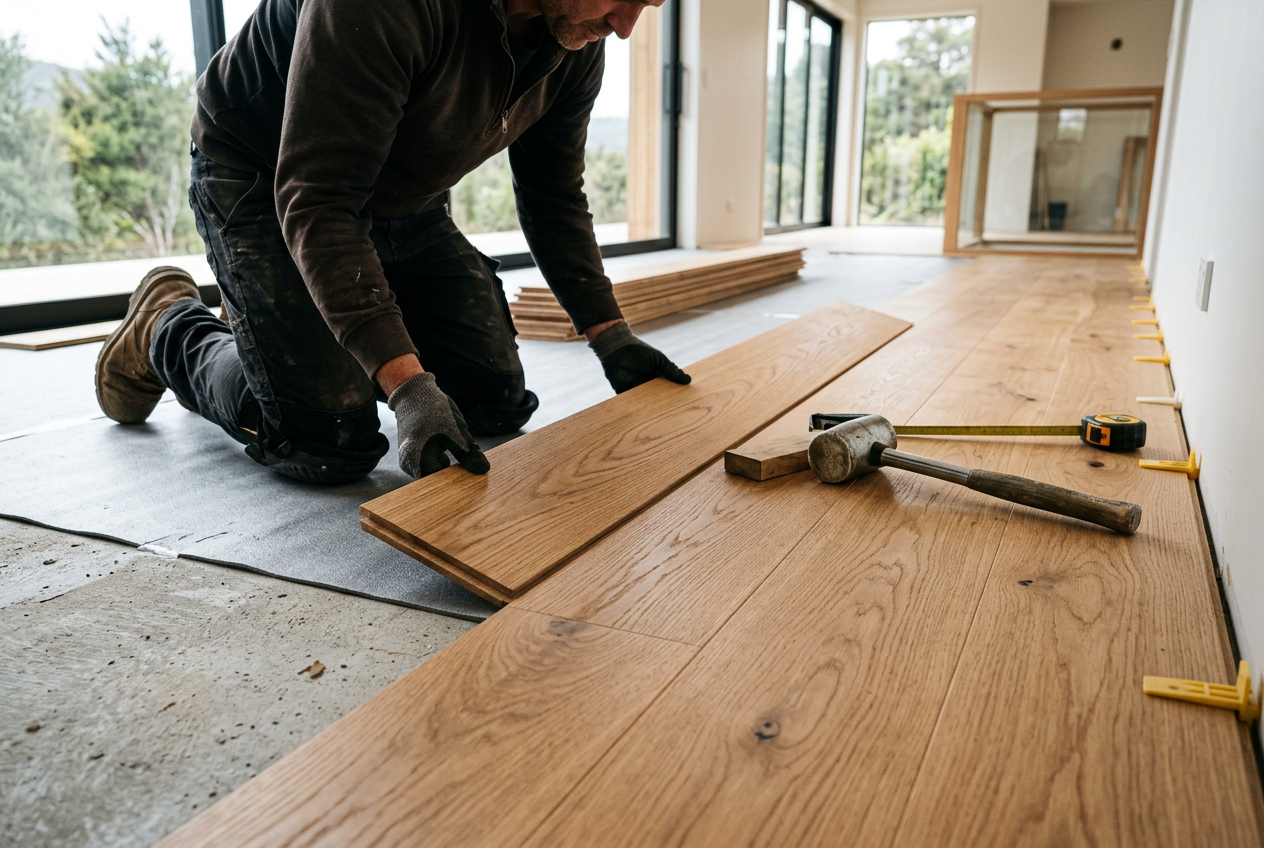
Both bamboo and engineered timber floors can be installed using the same three main methods:

  • Floating – boards click or glue together and sit over an underlay, not fixed to the subfloor
  • Secret nailing / stapling – boards are fixed through the tongue into a timber subfloor
  • Full glue-down – boards are adhered directly to a concrete or timber subfloor with a flexible flooring adhesive

For both products, you'll need to:

  • Acclimatise the flooring in the room before installation
  • Ensure the subfloor is flat, dry, and structurally sound
  • Leave an expansion gap around the perimeter (typically 10–12 mm)
  • Follow the manufacturer's installation instructions closely

If you've successfully laid engineered timber before, you'll find the process familiar.

Key Differences You Need to Know

Despite the similarities, bamboo has some distinct characteristics that affect installation.

1. Bamboo Moves More Than You Might Expect

Bamboo is technically a grass, not a timber, and it can be more sensitive to moisture and humidity changes than many engineered timber products. In New Zealand's varied climate — from the humid north to the drier, colder south — this matters. Strand-woven bamboo (the densest type) is generally more stable, but all bamboo flooring needs careful acclimatisation. Most manufacturers recommend at least 72 hours in the installation space, though some specify longer — always check your product's datasheet.

2. Hardness Can Affect Your Tools

Strand-woven bamboo is extremely hard — often harder than most NZ native timbers. This means:

  • Standard saw blades may dull quickly; use a carbide-tipped blade
  • Pre-drilling is recommended near ends to avoid splitting
  • Nailers and staplers need to be set correctly to avoid cracking the tongue

3. Glue-Down Is Often Preferred

Many bamboo flooring manufacturers recommend full glue-down over floating, especially for strand-woven products. A floating installation on a very hard, dense board can sometimes feel hollow or produce more noise underfoot. Check your manufacturer's recommendation — floating may void the warranty on some products. Use a flexible, moisture-resistant adhesive suitable for bamboo; products from brands like Sika or Ardex are commonly used by NZ flooring installers.

4. Subfloor Moisture Is Critical

Bamboo is particularly sensitive to moisture from below. On concrete slabs, test for moisture before installation — acceptable moisture content limits vary by product, but many manufacturers specify no more than 75% relative humidity (using a hygrometer test) or a specific moisture content reading. In NZ, BRANZ provides good guidance on subfloor preparation and moisture testing. If you're installing over a suspended timber floor, ensure there is adequate underfloor ventilation as required by the NZ Building Code.

5. Acclimitisation Requirements May Differ

Some bamboo products require longer acclimatisation periods than engineered timber, and some manufacturers specify storing boards flat (not standing on end). Read the instructions for your specific product carefully.

Step-by-Step Overview for DIY Installation

StepWhat to Do
1Check subfloor is flat (max 3 mm over 1.8 m — though tolerance requirements vary by product and manufacturer, so confirm with your product's datasheet), dry, and clean
2Test subfloor moisture levels
3Acclimatise bamboo in the room (follow manufacturer's timeframe)
4Install underlay if floating (check manufacturer's approved underlay type)
5Lay boards with expansion gaps at all fixed edges
6Cut with carbide-tipped blade; pre-drill near ends if nailing
7Fit skirting or scotia to cover expansion gaps
8Allow adhesive to cure fully before heavy foot traffic (glue-down)

Choosing the Right Bamboo Product

Not all bamboo flooring is equal. Look for products with clear technical datasheets, warranty documentation, and installation guides. Reputable NZ flooring suppliers and stores like Bunnings or Mitre 10 stock bamboo flooring and can advise on suitable products for your situation. Always match the product to your subfloor type and the room's conditions.

Do You Need a Building Consent?

In most cases, replacing or installing interior flooring does not require a building consent under Schedule 1 of the Building Act. However, if your project involves structural subfloor work, or you're building a new floor platform, you may need consent. Always confirm with your local council if you're unsure — MBIE Building Performance has helpful guidance on what work requires consent.

When to Call a Professional

Consider hiring a qualified flooring installer if:

  • You're unsure about subfloor moisture levels or preparation
  • The subfloor needs levelling compound or significant remediation
  • You're installing over underfloor heating (bamboo compatibility varies — check with the manufacturer)
  • The area is large or has complex layouts, stairs, or transitions
  • You want the manufacturer's warranty to remain valid (some require professional installation)

A professional flooring installer will have the right tools, experience with bamboo's quirks, and can identify subfloor issues before they become expensive problems. You can find qualified local flooring installers on tradedirectory.co.nz.

Note: Bamboo flooring installation does not involve restricted electrical, plumbing, or gas work, so there are no licensing requirements for the installation itself.

Frequently Asked Questions

Does bamboo flooring need to acclimatise before installation in NZ?+

Yes — bamboo flooring should be acclimatised in the room where it will be installed before laying. Most manufacturers recommend at least 72 hours, though some specify longer. Store the boards flat and in the actual conditions of the room. This is especially important in NZ where humidity can vary significantly between regions and seasons.

Can I float bamboo flooring over concrete in New Zealand?+

It depends on the product. Some bamboo flooring can be floated over concrete, but many manufacturers — particularly for strand-woven bamboo — recommend full glue-down instead. You must also test the concrete slab for moisture before installation, as excess moisture can cause bamboo to swell or warp. Check your specific product's installation guide for approved methods.

Is bamboo flooring suitable for NZ bathrooms or kitchens?+

Generally, bamboo flooring is not recommended for wet areas like bathrooms or laundries due to its sensitivity to moisture. It can be used in kitchens with care, but you should check the manufacturer's recommendations for your specific product. For wet areas, consider a more moisture-resistant flooring option and consult a flooring professional.

What tools do I need to cut strand-woven bamboo flooring?+

Strand-woven bamboo is very hard and will quickly dull standard saw blades. Use a carbide-tipped saw blade for clean cuts. A mitre saw or circular saw works well. Pre-drill holes near the ends of boards before nailing to prevent splitting. Wear appropriate eye and dust protection when cutting.

Will installing bamboo flooring myself void the warranty?+

It can — some bamboo flooring manufacturers require professional installation to maintain the product warranty. Others allow DIY installation provided their instructions are followed precisely. Always read the warranty documentation for your specific product before you start, and keep records of your installation process including moisture readings and acclimatisation time.

Need a Flooring Installer?

Find qualified flooring installers near you in our directory.

Find a Flooring Installer →

Flooring Installers Near You

kiwi flooring services ltd logo

Flooring Installer

Havelock North, Hawke's Bay

CALL US TODAY!! We are excited to offer our clients the convenience of booking an appointment with Kiwi Flooring Ltd. It

Flooring
Calbeni Ltd logo

Flooring Installer

Lower Hutt, Wellington

Calbeni Flooring Carpet and Vinyl Flooring in Wellington Your Flooring Experts We are a family business dedicated to proving our clients with quality flooring at affordable prices throughout the Wellington region. Explore Our Range Our Partners We stock a range of leading New Zealand flooring brands, chosen for comfort, durability, and everyday performance. Visit our showroom to compare samples, or get in touch and we’ll recommend options that suit your space and budget. Featured Ranges...

Creative Flooring Ltd logo

Flooring Installer

4.3(8)

Auckland, Auckland

Creative Flooring Ltd is a flooring installer based in Auckland, New Zealand. They specialise in locally produced, pre-finished wood and cork flooring in various colours. The company offers professional installation services and solutions for residential and commercial projects.

Andrew Meade Flooring Ltd logo

Flooring Installer

5.0(2)

Masterton, Wellington

Andrew Meade Flooring in Masterton lay carpet, vinyl, laminate & wooden flooring. Call Andrew Meade for domestic & commercial carpet, vinyl & timber flooring.

Floorwise NZ Ltd logo

Flooring Installer

4.7(20)

Auckland, Auckland

Floorwise NZ Ltd in Auckland specialises in supplying and professionally installing a wide range of flooring including carpets, vinyl, timber, cork, laminate, hybrid, and SPC rigid floors for residential and commercial properties. They offer comprehensive quotes covering product supply, preparation, installation, and.

SUPPLIERS AND INSTALLERS OF FLOORCOVERINGS
Pavimenti Ltd logo

Flooring Installer

4.5(2)

Auckland, Auckland

Pavimenti Ltd is a flooring installer based in Auckland, New Zealand. They specialise in installing a variety of flooring types including vinyl plank, wooden flooring, carpet, and hard flooring. Their services cater to both residential and commercial clients.

Tiles Stores Near You

Stock up for this job — tiles suppliers and stores, with address, phone and email.

Atelier Ceramics logo

Atelier Ceramics

Cromwell, Cromwell, Otago

Tiles

Atelier Ceramics offers premium porcelain tiles, outdoor pavers and SPC flooring. Modern designs, durable products and expert service for your project.

Bella Casa Tiling logo

Bella Casa Tiling

Frankton, Queenstown, Otago

Tiles
Tile Direct logo

Tile Direct

Richmond, Richmond, Tasman

Tiles

Tiles Nelson — Tile shop & tile suppliers in Nelson. Tile Direct on Quarantine Road. 20 years

Tile Space logo

Tile Space

Mount Wellington, Auckland, Auckland

Tiles

Tile Space Botany is a showroom of Tile Space, a Kiwi-owned tile specialist since 1994, supplying porcelain, ceramic, mosaic and natural stone tiles for floors, walls and outdoor areas, with free design consults and a trade section. Address: 24 Harris Road, Botany, Auckland. Details from Tile Space's official showroom page.

Tile Space Ellerslie logo

Tile Space Ellerslie

Ellerslie, Auckland

Tiles

Tile Space Ellerslie is a showroom of Tile Space, a Kiwi-owned tile specialist since 1994, supplying porcelain, ceramic, mosaic and natural stone tiles for floors, walls and outdoor areas, with free design consults and a trade section. Address: 218a Marua Road, Ellerslie, Auckland. Details from Tile Space's official showroom page.

Browse all tiles suppliers →
Last updated: Last reviewed:

The information on this page is provided as a general guide only. Kiwi Trade Directory makes no representations or warranties regarding the accuracy, completeness, or suitability of this information for your specific situation. Costs, timeframes, and recommendations vary significantly depending on your location, property, and individual circumstances. Always obtain multiple quotes from qualified tradespeople and seek independent professional advice before undertaking any home improvement or building work. Kiwi Trade Directory accepts no liability for any loss or damage arising from reliance on the information provided on this site.



