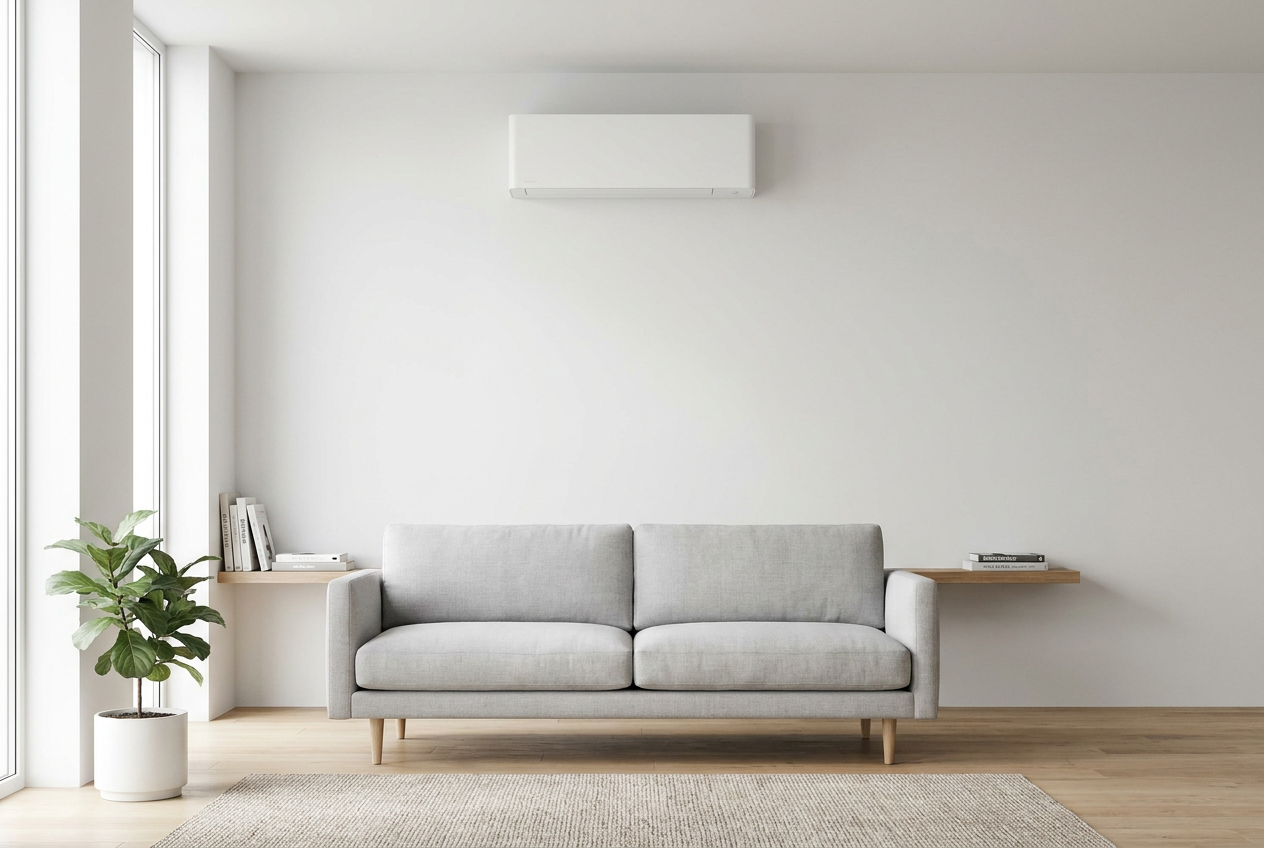
Installing a floor console heat pump yourself in New Zealand is largely not legal — and not just a matter of preference. The refrigerant handling, electrical connections, and in many cases the drainage work involved are all restricted trades work under NZ law. That said, there are a few preparation tasks a homeowner can do, and understanding where the lines are drawn will save you time, money, and potential legal headaches.
Why Most Heat Pump Work Is Restricted
A floor console heat pump is a split system: an indoor unit sits low on the wall or floor, connected by refrigerant lines, electrical cabling, and a condensate drain to an outdoor compressor unit. Each of those connections touches a restricted trade:
- Refrigerant handling – Handling, recovering, or charging refrigerants (such as R32 or R410A) requires a refrigerant handling licence issued under the Ozone Layer Protection Act. It is illegal for unlicensed people to purchase or handle these gases. Doing so can also result in significant fines.
- Electrical connections – Connecting the indoor and outdoor units to your home's electrical supply, including any new circuit or dedicated outlet, is restricted electrical work under the Electricity Act 1992. Only a registered electrician (registered with the Electrical Workers Registration Board) may carry out this work and issue a Certificate of Compliance.
- Drainage/plumbing – If the condensate drain connects to your household drainage system (rather than discharging freely outside), this may constitute restricted plumbing work under the Plumbers, Gasfitters, and Drainlayers Act 2006, overseen by the Plumbers Gasfitters & Drainlayers Board.
In short, the core installation of a heat pump is not a DIY job in New Zealand.
Does Installation Need a Building Consent?
In most cases, installing a standard residential heat pump is exempt from building consent under Schedule 1 of the Building Act 2004 — but this depends on the specifics of your installation. For example, if penetrations through an external wall affect weathertightness (which is very likely with a floor console unit), the work must still comply with NZ Building Code Clause E2 (External Moisture). Always confirm consent requirements with your local council before work begins. You can find general guidance at MBIE Building Performance.
What a Homeowner CAN Do
While the technical installation must be left to licensed tradespeople, there are some preparation tasks you can legally handle yourself:
- Choosing the location – Decide where you want the floor console unit placed, keeping in mind airflow, furniture clearance (typically 20 cm minimum in front of the unit), and proximity to an exterior wall for refrigerant line penetration.
- Measuring and planning – Measure the room and note the wall construction (timber framing, concrete block, brick) so your installer can quote accurately.
- Clearing the area – Move furniture, remove skirting boards if needed, and ensure clear access for the installer.
- Checking your switchboard – Note whether you have spare circuit capacity. Your electrician will assess this, but it helps to know in advance.
- Reading the manual – Familiarise yourself with the unit's requirements so you can have an informed conversation with your installer.
Choosing the Right Unit
Floor console heat pumps suit rooms where wall space is limited, or where occupants prefer heat delivered at a lower level — useful in older NZ homes with high ceilings. Key things to consider:
| Factor | What to Check |
|---|---|
| Heating capacity (kW) | Match to room size and insulation level |
| Energy star rating | Higher = lower running costs |
| Refrigerant type | R32 is now common; lower GWP than R410A |
| Noise level (dBA) | Important for bedrooms |
| Cold climate rating | Relevant in southern NZ or elevated areas |
For guidance on energy-efficient heating choices, Energywise has useful comparison information.
Healthy Homes Standards
If you are a landlord, note that the Healthy Homes Standards require rental properties to have a fixed heating device capable of heating the main living area to at least 18°C. A correctly sized and installed heat pump can meet this requirement. Full details are available at Tenancy Services.
Safety Note
Refrigerant gases used in modern heat pumps can be flammable (R32 is mildly flammable) and must be handled with care. Improper installation can result in refrigerant leaks, electrical faults, fire risk, or voided warranties. Never attempt to open refrigerant lines or tamper with electrical connections yourself.
When to Call a Professional
For a floor console heat pump installation, you will need at minimum:
- A refrigeration/heat pump technician with a current refrigerant handling licence to install and commission the unit
- A registered electrician to connect the unit to your home's power supply
- Possibly a licensed plumber if the condensate drain ties into household drainage
Many heat pump installation companies employ or subcontract all three trades, so a single quote often covers the full job. This is the most convenient and legally compliant approach. You can find qualified local heat pump installers on tradedirectory.co.nz to get competitive quotes. Always ask to see their licence details and check that they will provide the required Certificate of Compliance for electrical work.
For Licensed Building Practitioners and what work requires their involvement, see Licensed Building Practitioners.
Sources & Further Reading
- MBIE Building Performance – Building consent information
- Electrical Workers Registration Board – Restricted electrical work
- Plumbers Gasfitters & Drainlayers Board – Restricted plumbing work
- Energywise – Heating your home efficiently
- Tenancy Services – Healthy Homes heating standard
- WorkSafe NZ – Workplace and home safety



 ISO 9001






