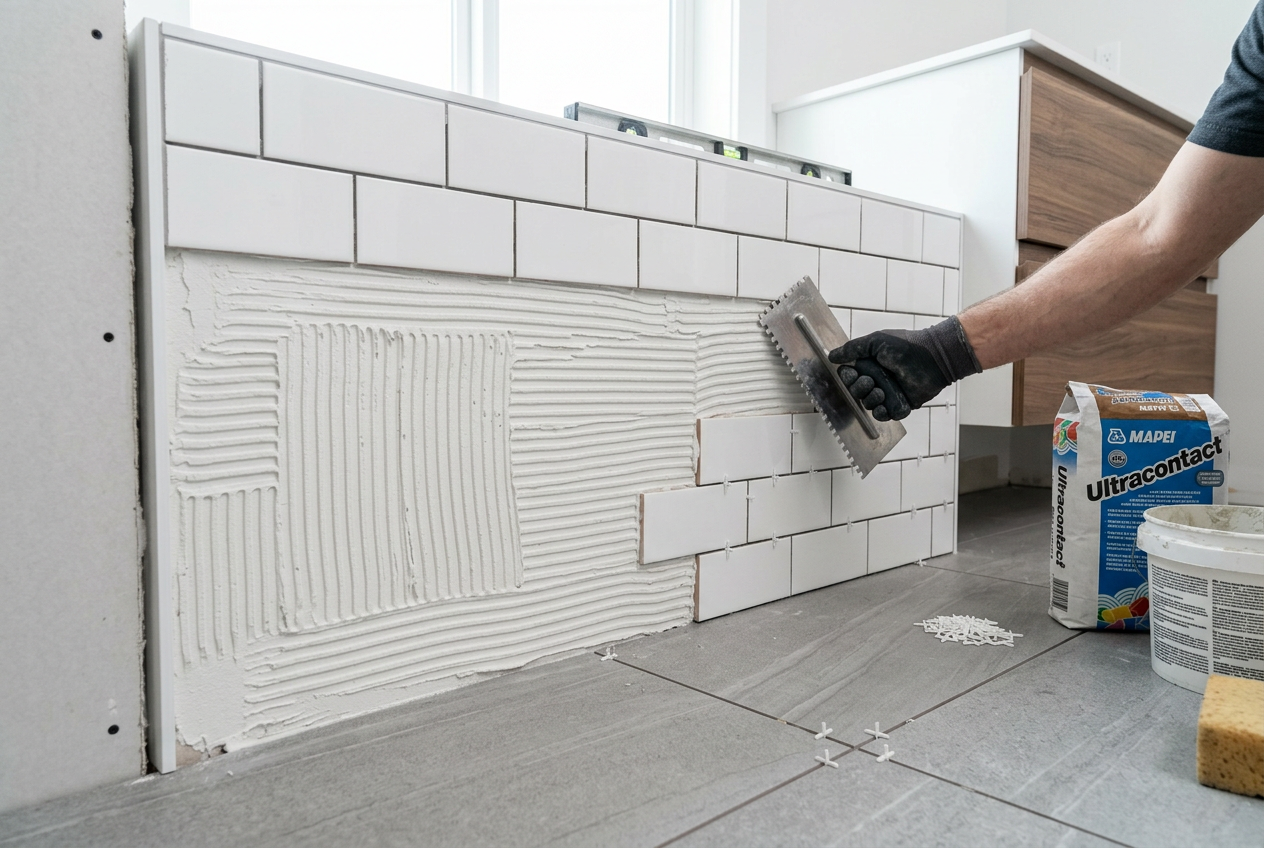
Grouting the same day you lay tiles is generally not recommended, even if the adhesive feels dry to the touch. Surface dryness is misleading — tile adhesive cures from the outside in, and the bond beneath your tiles may still be wet, soft, or chemically active. Grouting too early risks tiles shifting under pressure, weakened adhesion, and a job that fails prematurely.
Why "Feels Dry" Doesn't Mean "Is Cured"
Tile adhesives — whether cement-based (the most common type in NZ) or epoxy — go through a curing process, not just a drying process. The surface skins over quickly, sometimes within an hour or two, but the adhesive beneath the tile continues to cure for much longer. This is especially true in:
- Thicker adhesive beds (common on uneven substrates)
- Low-temperature or high-humidity conditions (think NZ winters or bathrooms with poor ventilation)
- Large-format tiles, which trap moisture underneath and slow curing significantly
If you apply grout and kneel or press on tiles before the adhesive has fully cured, you can cause tiles to move fractionally. Even a tiny shift breaks the bond and can lead to hollow spots, cracked grout, or loose tiles down the track.
What the Adhesive Manufacturer Actually Recommends
The golden rule is simple: always follow the adhesive manufacturer's data sheet. Cure times vary considerably by product and conditions, but as a general guide:
| Adhesive Type | Typical Minimum Wait Before Grouting |
|---|---|
| Standard cement-based adhesive | 24 hours |
| Rapid-set / fast-track adhesive | 3–6 hours (check data sheet) |
| Epoxy adhesive | Follow manufacturer's instructions — often longer |
| Large-format tile adhesive | 24–48 hours or more |
These are minimums under ideal conditions (around 20°C, moderate humidity). In colder or damper NZ conditions — a South Island winter, a poorly ventilated bathroom — add extra time. When in doubt, wait longer.
Brands like Ardex and Mapei publish detailed technical data sheets for their adhesives and grouts. Sika also offers tiling system products with specific cure guidance. Always download and read the data sheet for the exact product you're using — it's the most reliable source of information.
The Risks of Grouting Too Early
Rushing the grouting stage can cause a range of problems:
- Hollow or debonded tiles — the adhesive never achieves full bond strength
- Cracked grout joints — movement during curing causes stress fractures
- Tile lippage or shifting — especially on walls or large-format floor tiles
- Moisture trapped in the system — leading to mould growth behind tiles, a real concern in NZ wet areas governed by NZ Building Code clause E3
- Costly remediation — lifting and relaying tiles is expensive and time-consuming
NZ Climate Considerations
New Zealand's climate varies enormously. In humid regions like Auckland or Northland, or during winter in cooler parts of the country, adhesive cure times can extend well beyond the stated minimum. Never assume the minimum time is sufficient in cold or damp conditions. A garage floor in Christchurch in July, for example, may need significantly longer than 24 hours for a standard adhesive to cure properly.
For wet areas (bathrooms, laundries, shower recesses), the stakes are even higher. These areas must comply with NZ Building Code (including clauses relating to internal and external moisture), and a failed tile installation in a wet area can lead to serious water damage and potential consent issues.
How to Check If Adhesive Is Ready
Beyond timing, here are a few practical checks:
- Tap test — gently tap tiles with your knuckle. A hollow sound can indicate poor adhesion or uncured adhesive.
- Edge check — look at any exposed adhesive at the tile edge or in a grout joint. It should be firm and consistent in colour, not darker or soft in the middle.
- Movement test — try very gently pressing a corner of a tile. There should be absolutely zero movement.
If you're unsure, wait. An extra 12–24 hours costs you nothing compared to a failed installation.
Rapid-Set Adhesives: A Legitimate Option
If you genuinely need to grout quickly — for example, on a commercial job or a bathroom that needs to be back in use fast — use a rapid-set adhesive specifically designed for this purpose. Products in this category are formulated to achieve adequate cure strength in a few hours. However, even these require you to follow the data sheet precisely, and conditions still affect performance.
When to Call a Professional
Tiling in wet areas, over underfloor heating, on large-format tiles, or on complex substrates is best left to an experienced tiler. A qualified tiler will know the right adhesive system for your specific situation, understand NZ conditions, and ensure the installation meets the Building Code. A botched tile job — especially in a bathroom or kitchen — can be costly to fix and may even affect your home's weathertightness.
You can find qualified, local tilers on tradedirectory.co.nz to get the job done right the first time.

 Site Safe
 SiteWise


 BCITO Qualified





