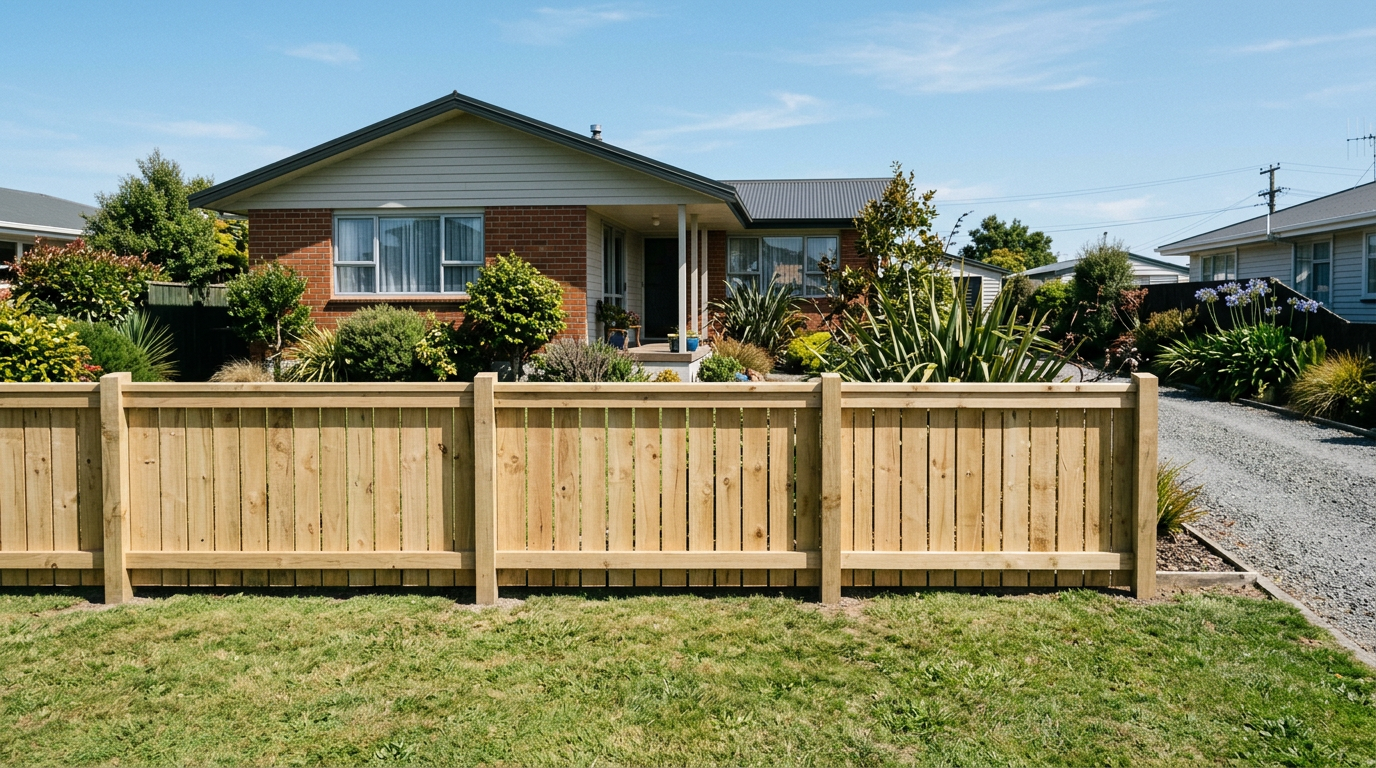
Yes, many homeowners can build their own front boundary fence next to a footpath — but it's not quite as simple as grabbing some posts and rails. Height restrictions, district plan rules, building consent requirements, and road reserve considerations all come into play before you hammer in the first post. Here's what you need to know before you start.
Check Your Council's District Plan First
This is the single most important step. Your local council's district plan sets rules on fence heights, materials, and setbacks for front boundaries — and these vary significantly around New Zealand. In many residential zones, a front boundary fence is limited to 1.2 m in height without needing a resource consent, though some councils allow up to 1.5 m or more depending on the zone and materials used.
Ring your council's duty planner or check their website before you buy a single piece of timber. Getting this wrong can mean being asked to remove or lower a fence at your own cost.
Do You Need a Building Consent?
Under the NZ Building Code and the Building Act 2004, many fences are exempt from building consent under Schedule 1 — but conditions apply. Generally, a fence that is:
- No taller than 2.5 m, and
- Not retaining soil, and
- Not part of a swimming pool barrier
…does not require a building consent. However, this exemption does not override your district plan's height rules or any road reserve requirements. Always confirm with your council whether your specific fence needs consent — don't assume the Schedule 1 exemption covers everything. You can read more about building consents and exemptions at MBIE Building Performance.
Road Reserve and Footpath Setbacks
Here's a common catch: the land right next to a footpath is often road reserve owned by the council, not your private property. Your legal boundary may actually sit behind the footpath, meaning you could be planning to build on council land.
Before you dig any post holes:
- Check your certificate of title and site plan to confirm where your legal boundary sits.
- Contact your council to ask about any road reserve between your boundary and the footpath edge.
- Ask whether you need a licence to occupy or encroachment permit if you want to build right to the footpath edge.
Building on road reserve without permission can result in the council requiring removal of the fence at your expense.
Height and Visibility Rules Near Driveways
If your fence is near a driveway or intersection, sightline (visibility) rules almost certainly apply. Councils and the NZ Transport Agency have requirements to keep sight lines clear for drivers and pedestrians. A solid 1.8 m fence right next to your driveway crossing could be a safety hazard and a breach of your district plan.
As a general guide, many councils require fences within a sight triangle near driveways to be no taller than 0.75–1.0 m, but check your specific rules. BRANZ has useful guidance on residential fencing best practice.
Choosing the Right Materials
For a front boundary fence, popular NZ options include:
| Material | Pros | Cons |
|---|---|---|
| Treated pine timber | Affordable, widely available | Needs painting/staining, maintenance required |
| Hardwood (e.g. kwila) | Durable, attractive | More expensive |
| Coloured steel/aluminium | Low maintenance, modern look | Higher upfront cost |
| Concrete block | Very durable, solid | Expensive, may need consent if tall |
| Picket (timber or vinyl) | Classic look, good visibility | Lower privacy |
For timber, make sure you use H3.2 or H4 treated timber for ground contact posts to comply with NZ durability requirements. You'll find treated timber and fencing supplies at Bunnings, Mitre 10, or PlaceMakers.
The Fencing Act 1978 and Your Neighbour
If the front fence is on a shared boundary with a neighbour, the Fencing Act 1978 may apply. This sets out how costs can be shared and the process for giving notice before building. Even if you're paying for it yourself, it's good practice to talk to your neighbour first — especially if the fence sits on or near the boundary line.
Practical DIY Tips
- Call Before You Dig — contact Dial Before You Dig (0800 248 344) to locate any underground services near your fence line.
- Set posts in concrete at a depth of at least one-third of the post length (e.g. a 1.8 m post needs at least 600 mm in the ground).
- Use a string line and spirit level to keep posts plumb and aligned.
- Allow concrete to cure for at least 24–48 hours before attaching rails and palings.
- Check whether your property needs to comply with Healthy Homes Standards if you're a landlord — visit Tenancy Services for details.
When to Call a Professional
Consider hiring a qualified fencer if:
- Your site has significant slope or difficult ground conditions.
- You're unsure about boundary locations or council rules.
- The fence involves retaining soil (which may require engineering input and building consent).
- You want a result that adds real kerb appeal and resale value.
A professional fencer will know local council requirements, can handle the consent process if needed, and will get the job done efficiently. You can find experienced local fencers on tradedirectory.co.nz.
Note: Fencing does not involve restricted electrical, gas, or plumbing work, so there are no licensing restrictions on who can build a standard fence.





