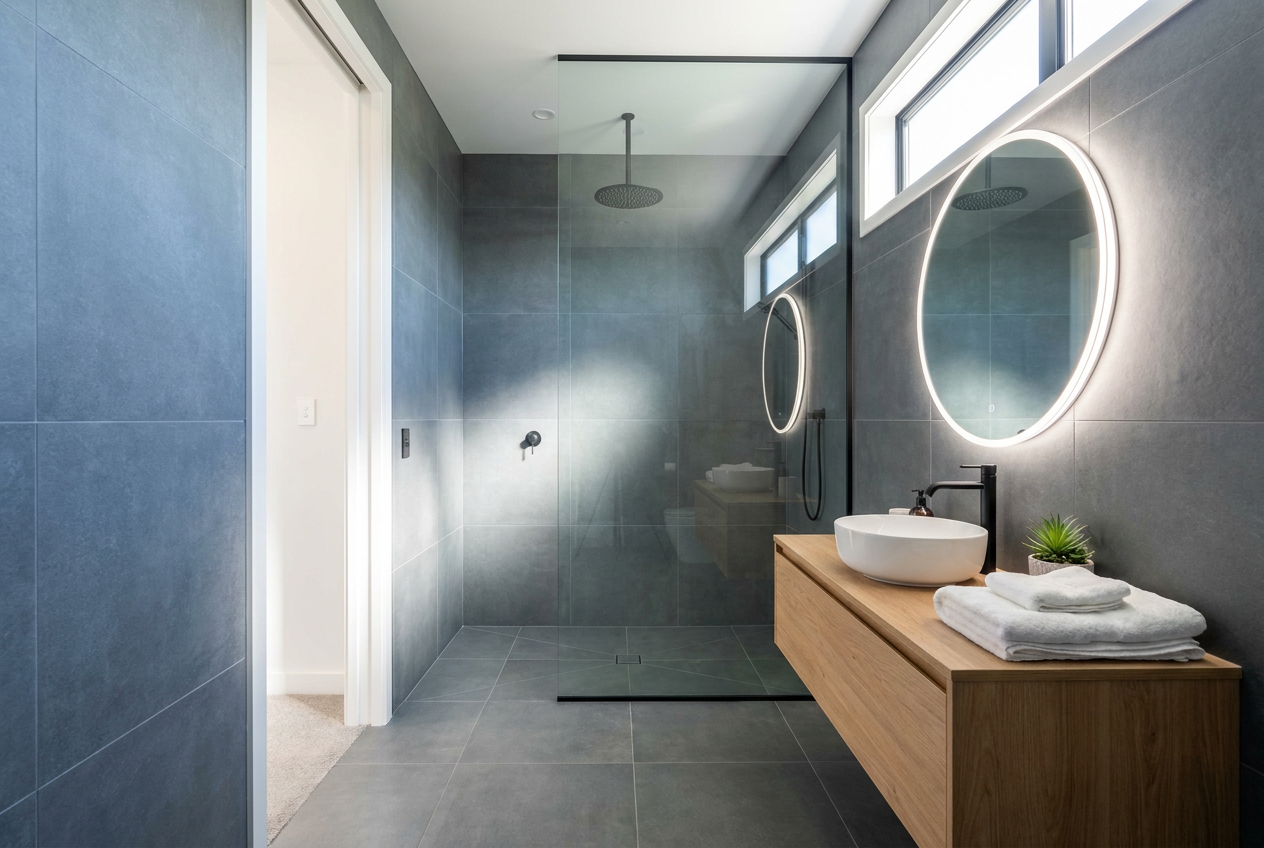
Applying a waterproofing membrane over a painted concrete floor is possible in some situations, but it's not a straightforward yes or no answer. The success of the job depends almost entirely on the condition and adhesion of the existing paint — get that wrong, and your membrane will fail regardless of how well it's applied.
Why Paint Is a Problem for Waterproofing Membranes
Waterproofing membranes — whether liquid-applied, sheet-based, or cementitious — need to bond directly to a solid, stable substrate. Paint creates a weak interface layer. If the paint is peeling, flaking, powdery, or poorly bonded, the membrane will only be as strong as that paint layer underneath it. In a wet area like a bathroom, laundry, or balcony, that's a recipe for delamination and water ingress.
The key question to ask yourself is: is the paint fully bonded to the concrete?
How to Test Paint Adhesion
Before doing anything else, carry out a simple cross-hatch adhesion test:
- Use a sharp knife or Stanley blade to score a 10×10 grid of small squares (roughly 2 mm apart) into the painted surface.
- Press a piece of strong adhesive tape firmly over the grid.
- Pull the tape off sharply at a 45-degree angle.
- If paint lifts with the tape, adhesion is poor and the paint must be removed.
You can also try tapping the surface — a hollow sound often indicates the paint has delaminated from the concrete beneath.
Surface Preparation: The Most Important Step
Proper surface prep is non-negotiable. Here's what's typically required:
- Remove all loose, flaking, or poorly bonded paint using a floor grinder, scarifier, or shot blaster. Hire equipment from Bunnings (https://www.bunnings.co.nz) or Mitre 10 (https://www.mitre10.co.nz) if you're doing it yourself.
- Degrease the surface thoroughly — old paint can carry oils, waxes, or release agents that prevent membrane adhesion.
- Fill cracks and voids with a suitable repair mortar or filler. Products from Ardex (https://www.ardex.co.nz) or Mapei (https://www.mapei.com/nz/en-nz) are commonly used by NZ waterproofers for concrete repair.
- Allow the surface to dry completely — concrete moisture content matters. Most liquid membranes require the substrate to be dry or only slightly damp. Check your product's technical data sheet.
- Prime the surface with a primer recommended by your membrane manufacturer. Skipping the primer is one of the most common DIY mistakes.
When Paint Can Stay vs. When It Must Go
| Situation | Action |
|---|---|
| Paint is fully bonded, no lifting, no flaking | Light abrasion, clean, prime, then apply membrane |
| Paint is partially bonded or flaking in spots | Remove all paint — don't spot-patch |
| Unknown paint type (e.g., epoxy, rubber) | Test adhesion; check membrane manufacturer's compatibility notes |
| Multiple layers of old paint | Remove all layers — too much risk of failure |
| Powdery or chalky surface | Remove completely; concrete may also need treatment |
Choosing the Right Membrane
For NZ conditions — particularly in wet areas covered by the NZ Building Code clause E3 (Internal Moisture) — you'll want a membrane that meets the requirements of AS/NZS 4858 (wet area membranes) or is specified for your application. Common options include:
- Liquid-applied polyurethane or acrylic membranes — flexible, good for floors with minor movement
- Cementitious membranes — rigid, good for stable substrates like concrete slabs
- Sheet membranes — used in more demanding applications
Always follow the manufacturer's application instructions exactly, including coverage rates, number of coats, and cure times. Sika (https://nzl.sika.com) and Ardex (https://www.ardex.co.nz) both offer waterproofing systems with detailed technical guidance suited to NZ conditions.
NZ Building Code and Consent Considerations
If you're waterproofing a wet area such as a bathroom, shower, or laundry as part of a renovation, the work may need to comply with MBIE Building Performance requirements. Some waterproofing work in wet areas may form part of restricted building work under the Building Act, which must be carried out or supervised by a Licensed Building Practitioner (LBP). Check with your local council or the MBIE Building Performance website to confirm what applies to your specific project. Always check with your local council whether a building consent is required before starting.
For Healthy Homes compliance in rental properties, moisture control is also a consideration — see Tenancy Services for guidance.
Safety Notes
- Wear appropriate PPE including gloves, eye protection, and a respirator when grinding concrete or applying solvent-based products.
- Ensure good ventilation — many membrane products release fumes during application and curing.
- Check WorkSafe NZ guidance on working with hazardous substances if you're unsure.
When to Call a Professional
If you're unsure about the paint type, the extent of delamination, or whether your project requires an LBP, it's well worth calling in a qualified waterproofer. A professional will assess the substrate properly, use commercial-grade equipment for surface prep, and apply the membrane to the manufacturer's specification — giving you a result that's backed by warranty and fit for purpose. You can find experienced local waterproofers on tradedirectory.co.nz.

 Site Safe


 SiteWise


 Licensed Building Practitioner (LBP)




