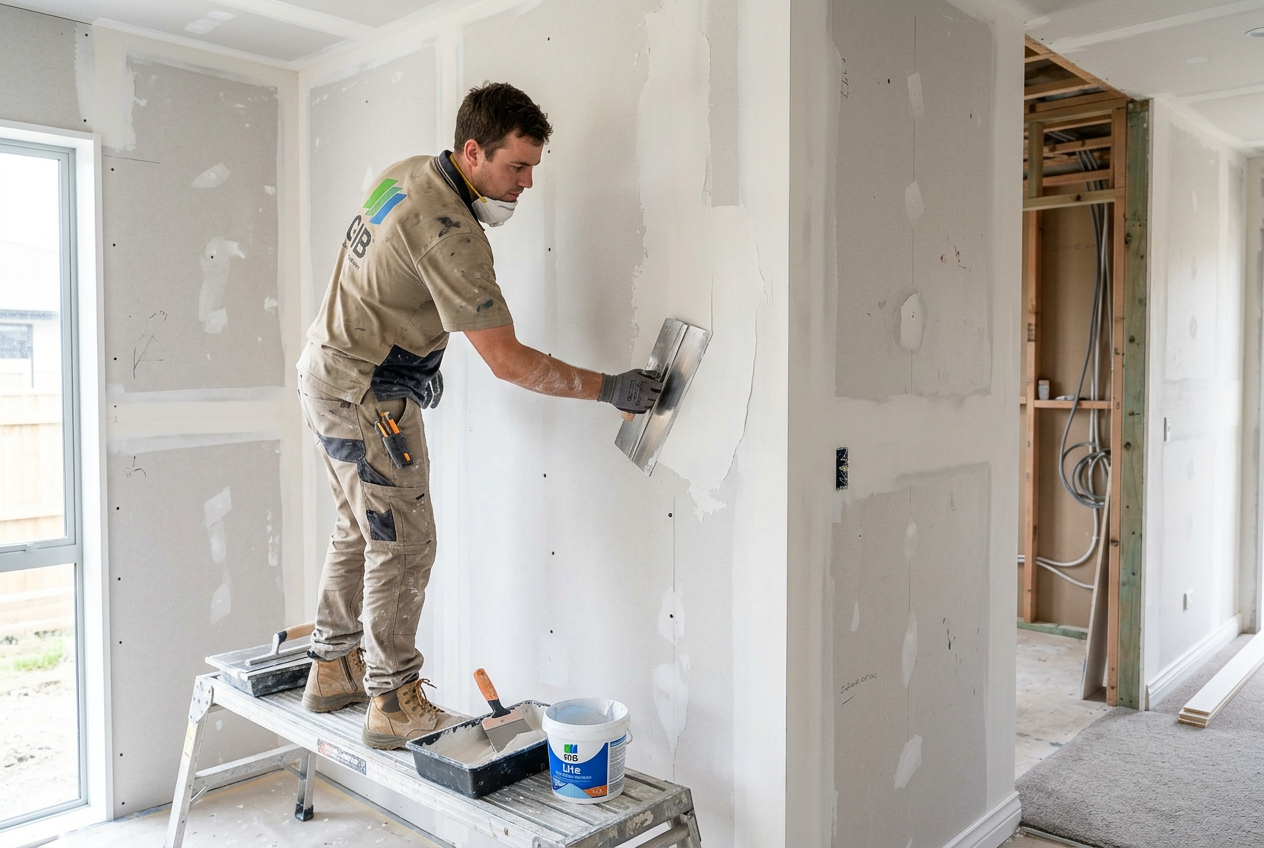
In many situations, yes — you can apply two coats of stopping on the same day, provided the first coat has dried sufficiently before you apply the second. The key is patience and reading the conditions, because rushing the process is the most common cause of cracking, shrinkage, and a poor final finish.
What Is Stopping and Why Does It Need to Dry?
Stopping (also called joint compound, filler, or plaster filler) is used to fill nail holes, joints, cracks, and imperfections in plasterboard or plaster walls before painting. Most stopping products sold in New Zealand are water-based, which means they dry through evaporation. As moisture leaves the compound, it shrinks slightly. If you apply a second coat before the first has fully released its moisture, you trap that moisture underneath — leading to cracking, bubbling, or the second coat peeling away.
How Long Should You Wait Between Coats?
Drying time depends on several factors:
- Product type — Lightweight fillers dry faster than heavier base-coat compounds. Always check the manufacturer's datasheet.
- Coat thickness — Thicker applications take significantly longer to dry. Keep each coat thin and feathered out.
- Temperature — Warmer conditions speed drying. Most products recommend working between 10°C and 35°C.
- Humidity — New Zealand's coastal and high-humidity regions (think Auckland, Northland, or the West Coast) slow drying considerably.
- Ventilation — Good airflow helps moisture escape. Open windows or use a fan.
As a general guide, many lightweight stopping products are ready for a second coat in 2–4 hours under good conditions (warm, dry, well-ventilated). In cooler or humid conditions, this can stretch to 6 hours or more. Some heavier base-coat products may need to be left overnight regardless of conditions.
The golden rule: the stopping should be completely white (not grey or translucent in patches) and feel dry to a light touch before you apply the next coat.
Tips for Successfully Applying Two Coats in One Day
Keep Each Coat Thin
Apply stopping in thin, feathered coats rather than trying to fill everything in one pass. A thin coat might be only 1–2 mm thick. Thin coats dry faster and are less prone to cracking.
Work in a Warm, Ventilated Space
If you're working in winter or in a damp room, consider using a dehumidifier or a fan heater to bring the temperature up and reduce humidity. Avoid working in direct sunlight on hot days, as this can cause the surface to skin over while the inside remains wet.
Sand Lightly Between Coats
Once the first coat is fully dry, a light sand with 120–180 grit sandpaper will knock back any ridges and give the second coat a better key. Wipe away dust with a slightly damp cloth and let it dry before applying the next coat.
Choose the Right Product
For same-day two-coat work, a lightweight ready-mixed stopping compound is your best option. Products from brands such as GIB (check their stopping and finishing range) are widely used in NZ and come with manufacturer guidance on recoat times. Always read the technical data sheet for the specific product you're using.
Common Mistakes to Avoid
| Mistake | Why It's a Problem |
|---|---|
| Applying second coat too soon | Traps moisture, causes cracking and shrinkage |
| Applying coats too thick | Extends drying time significantly, increases cracking risk |
| Poor ventilation | Slows drying, especially in humid NZ climates |
| Skipping sanding between coats | Reduces adhesion and leaves a rougher finish |
| Painting before stopping is fully cured | Paint can lift or crack as stopping continues to dry |
What About Skimming Over Existing Plaster?
If you're skim-coating over existing plaster or a textured surface, the same principles apply — but you may also need to prime the surface first to control suction. A high-suction surface can pull moisture out of the stopping too quickly, causing it to dry unevenly. Check with your stopping product's manufacturer for primer recommendations.
Healthy Homes and Moisture Considerations
If you're doing stopping work in a rental property, be aware that Tenancy Services Healthy Homes standards require adequate ventilation and moisture control. Doing plastering or stopping work in a poorly ventilated room can temporarily raise indoor humidity — open windows and allow the space to air out thoroughly before closing up.
When to Call a Professional
Stopping is generally a DIY-friendly task for small repairs and touch-ups. However, consider hiring a qualified plasterer if:
- You're stopping large areas of new GIB plasterboard, particularly in areas that require a Level 4 or Level 5 finish (e.g., under raking light or in high-gloss painted areas).
- You're dealing with structural cracks that may indicate movement in the building — these need investigation before cosmetic repair.
- The work is part of a larger renovation that may require a building consent — check with your local council, as some work is exempt under Schedule 1 of the Building Act, but it pays to confirm. MBIE Building Performance has guidance on what requires consent.
- You want a guaranteed smooth, professional result for a high-visibility area.
A skilled plasterer will know exactly how to manage drying times, product selection, and finish quality. You can find qualified local plasterers on tradedirectory.co.nz.

 Master Painters NZ member








