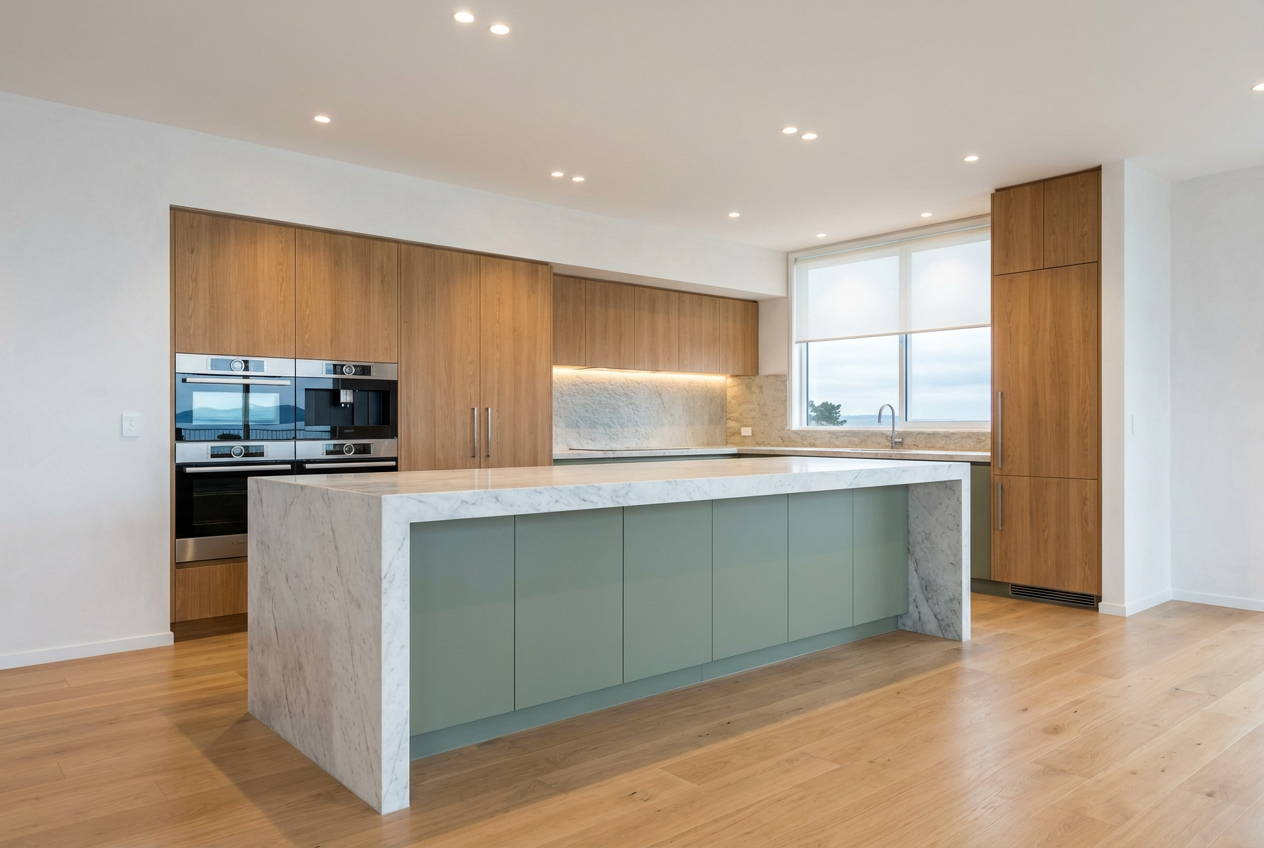
Yes, fitting soft-close hinges to your existing kitchen cabinets is absolutely a job you can do yourself — no building consent required, no licensed tradesperson needed. It's one of the most satisfying and affordable kitchen upgrades a Kiwi homeowner can make, and with a bit of patience and the right tools, you can have quieter, smoother-closing doors in an afternoon.
What Are Soft-Close Hinges?
Soft-close hinges (also called concealed hinges or European hinges) use a small hydraulic or spring-loaded damper mechanism to slow a cabinet door in the last few centimetres of its travel, preventing it from slamming shut. Most modern kitchens already use this style of hinge, so upgrading is often simply a matter of swapping out the old hinge for a soft-close version that fits the same mounting points.
Tools and Materials You'll Need
- Screwdriver (Phillips head, or a drill/driver on a low torque setting)
- Tape measure and pencil
- 35 mm Forstner drill bit (if drilling new cup holes)
- Power drill
- Soft-close hinges (matched to your existing hinge brand and overlay type)
- Optional: hinge jig or template for accurate drilling
Choosing the Right Hinges
This is the most important step. Hinges vary by:
- Cup hole diameter — the standard is 35 mm for most European-style concealed hinges
- Overlay type — full overlay, half overlay, or inset, depending on how your door sits relative to the cabinet frame
- Opening angle — typically 95°, 110°, or 165° depending on your cabinet layout
- Mounting plate — the plate screwed to the cabinet interior must match the hinge brand or be compatible
Common brands available at Bunnings and Mitre 10 include Blum, Hettich, and Grass. Blum's Clip Top Blumotion range is widely regarded as a quality option. Check the brand stamped on your existing hinges before purchasing — if you're replacing like-for-like, the mounting plates may already be in place, making the swap very simple.
Step-by-Step: Replacing Existing Hinges
1. Remove the Old Hinges
Open the cabinet door fully. Most concealed hinges clip onto a mounting plate — press the release lever or unscrew the hinge arm from the plate. Keep the mounting plates if they're compatible with your new hinges.
2. Check the Cup Holes
Look inside the door at the circular recess (the cup hole). If it's 35 mm in diameter and in good condition, your new soft-close hinge cup should press straight in.
3. Fit the New Hinge
Press the hinge cup into the hole and secure with the provided screws. Clip or screw the hinge arm onto the mounting plate on the cabinet interior.
4. Adjust for Alignment
Most concealed hinges offer three-way adjustment — up/down, in/out, and side to side — using the adjustment screws on the hinge arm. Take your time here; good alignment makes a big difference to how the door looks and operates.
5. Test and Fine-Tune
Close the door slowly and check the soft-close action engages smoothly. Adjust the damper tension if your hinge model allows it.
If You're Adding Hinges Where There Are None
If you're fitting hinges to a door that previously used a different hinge style (such as butt hinges), you'll need to drill new 35 mm cup holes. A Forstner bit in a drill press or handheld drill gives the cleanest result. Mark hole positions carefully — most hinge manufacturers provide a template or jig. Drilling freehand is possible but take care to keep the bit perpendicular to the door face and drill to the correct depth (typically 12–13 mm).
Common Mistakes to Avoid
| Mistake | How to Avoid It |
|---|---|
| Buying the wrong overlay type | Measure your existing door-to-frame gap before purchasing |
| Drilling cup holes too deep | Set a depth stop on your drill or use tape as a depth marker |
| Over-tightening screws | Use low torque — MDF and particleboard strip easily |
| Mismatched mounting plates | Check brand compatibility before assuming plates are universal |
| Skipping alignment adjustment | Always adjust all three axes before finishing |
Does This Require a Building Consent?
No. Replacing or upgrading cabinet hinges is routine maintenance and falls well outside the scope of work requiring a building consent under the NZ Building Code. It is also not restricted electrical, plumbing, or gasfitting work. Any competent homeowner can do this safely.
When to Call a Professional
While this is a genuine DIY job, there are situations where it's worth calling a qualified joiner:
- Cabinet doors are warped or damaged — a joiner can assess whether the door itself needs replacing before new hinges will work properly
- Cabinet carcasses are out of square — hinge adjustment has limits; structural issues need a professional eye
- You're replacing an entire set of hinges across a large kitchen — a joiner will work faster and ensure consistent results
- You're unsure about drilling into your doors — one wrong hole in a solid timber or veneer door can be costly to fix
You can find qualified local joiners and kitchen specialists on tradedirectory.co.nz to get the job done right if you'd prefer expert help.





