Many insulation installers in New Zealand do offer services beyond just laying batts or blowing in loose-fill — ventilation improvements and moisture control often go hand-in-hand with insulation work. However, the scope of what an installer can legally do depends on the type of work involved, and some tasks are restricted to licensed professionals.
Why Insulation, Ventilation, and Moisture Are Connected
In a New Zealand home, insulation, ventilation, and moisture management are deeply interrelated. Poor ventilation leads to condensation and dampness, which can saturate insulation and make it ineffective. Conversely, adding insulation without addressing existing moisture problems can trap humidity and cause mould, rot, or structural damage. This is why a good installer will assess all three together rather than treating them in isolation.
BRANZ research consistently shows that many NZ homes — particularly older weatherboard and brick homes — suffer from inadequate subfloor ventilation and moisture ingress, which directly undermines insulation performance.
What Insulation Installers Typically Cover
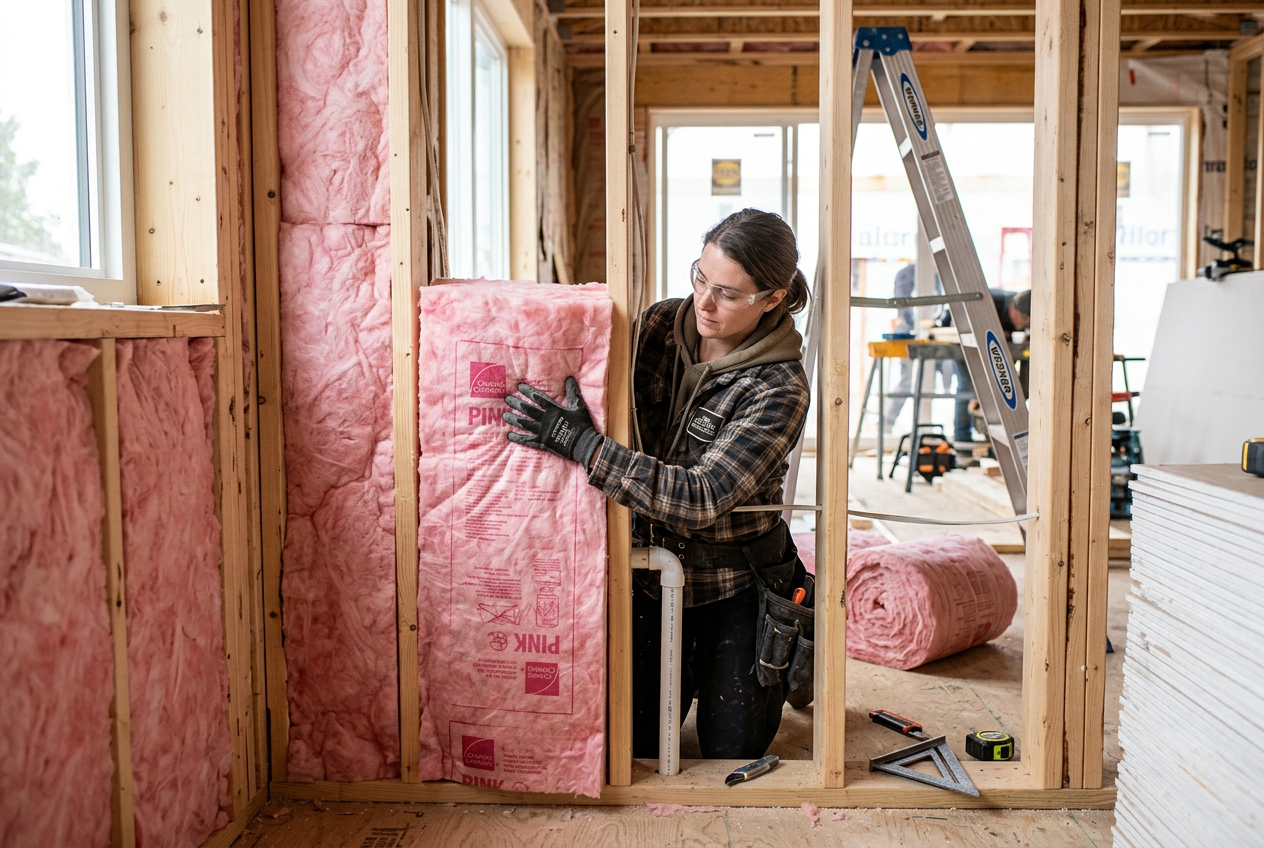
Most experienced insulation installers are well-equipped to handle:
- Ceiling, wall, and underfloor insulation — including bulk insulation batts and reflective foil
- Subfloor vapour barriers — laying polythene sheeting (typically 0.25 mm or heavier) to reduce ground moisture rising into the floor cavity
- Subfloor ventilation — installing passive vents or low-voltage subfloor ventilation fans to improve airflow under the house
- Roof space ventilation — fitting whirlybirds or passive ridge vents to reduce summer heat build-up and winter condensation
- Draught stopping — sealing gaps around pipes, cornices, and ceiling penetrations
- Moisture assessment — using moisture meters and visual inspection to identify damp areas before installing insulation
These services are generally not restricted work and can be carried out by a competent installer without a specific licence, provided no electrical or plumbing connections are involved.
Healthy Homes Standards — What Landlords Need to Know
If you're a landlord, the Healthy Homes Standards require rental properties to meet specific requirements for insulation, heating, ventilation, moisture ingress, and draught stopping. Many insulation companies have tailored their services to cover all five standards in a single visit, making them a practical one-stop option for compliance work.
Key ventilation requirements under Healthy Homes include an extractor fan in kitchens and bathrooms, and openable windows in living areas. Extractor fan installation that requires new electrical wiring is restricted electrical work and must be carried out by a registered electrician — see the Electrical Workers Registration Board (EWRB) for details on what's restricted.
Restricted Work: What Installers Cannot Do
There are clear legal boundaries in New Zealand around who can carry out certain types of work:
Electrical Work
- Installing or wiring extractor fans, heat recovery ventilation (HRV) systems, or positive pressure ventilation (PPV) units requires a registered electrician if new wiring or switchboard connections are involved.
- Replacing a like-for-like plug-in unit may not require a licensed electrician, but always confirm with the EWRB.
Plumbing and Drainage
- Fixing leaking pipes, stormwater drainage, or any work on sanitary plumbing is restricted to licensed plumbers and drainlayers registered with the Plumbers, Gasfitters and Drainlayers Board (PGDB). An insulation installer can identify moisture caused by a leaking pipe, but cannot legally fix the pipe itself.
Building Consent
- Some ventilation installations — particularly mechanical systems or structural changes — may require a building consent. Always check with your local council before proceeding. Schedule 1 of the Building Act lists exemptions, but these can be complex; your council is the best source of advice for your specific situation. MBIE Building Performance has useful guidance online.
Whole-House Ventilation Systems
Products like HRV, DVS, or similar positive-pressure and heat-recovery ventilation systems are commonly recommended alongside insulation upgrades. Many insulation companies are authorised installers of these systems. However, the electrical connection of these units must be done by a licensed electrician. A good installer will either have an electrician on their team or coordinate one for you.
Subfloor Moisture: A Common NZ Problem
New Zealand's damp winters — especially in regions like Southland, the West Coast, and parts of Auckland — mean subfloor moisture is a widespread issue. An insulation installer can:
- Lay or replace a polythene vapour barrier over bare earth
- Install or improve subfloor vents to increase airflow
- Recommend drainage improvements (though the drainage work itself must be done by a licensed drainlayer)
If you have standing water under your house, address the drainage issue before installing insulation — otherwise you risk trapping moisture and damaging the new insulation.
When to Call a Professional
Call a licensed electrician if any ventilation fan or system requires new wiring. Call a licensed plumber or drainlayer if moisture is caused by leaking pipes or poor drainage. If you're unsure whether work needs a building consent, contact your local council or visit MBIE Building Performance. For complex moisture problems involving the building envelope — such as leaky cladding — you may also need a Licensed Building Practitioner (LBP).
For straightforward insulation, vapour barriers, and passive ventilation, a qualified insulation installer is a great starting point. You can find experienced local insulation installers on tradedirectory.co.nz who can assess your home's specific needs and coordinate any specialist trades required.