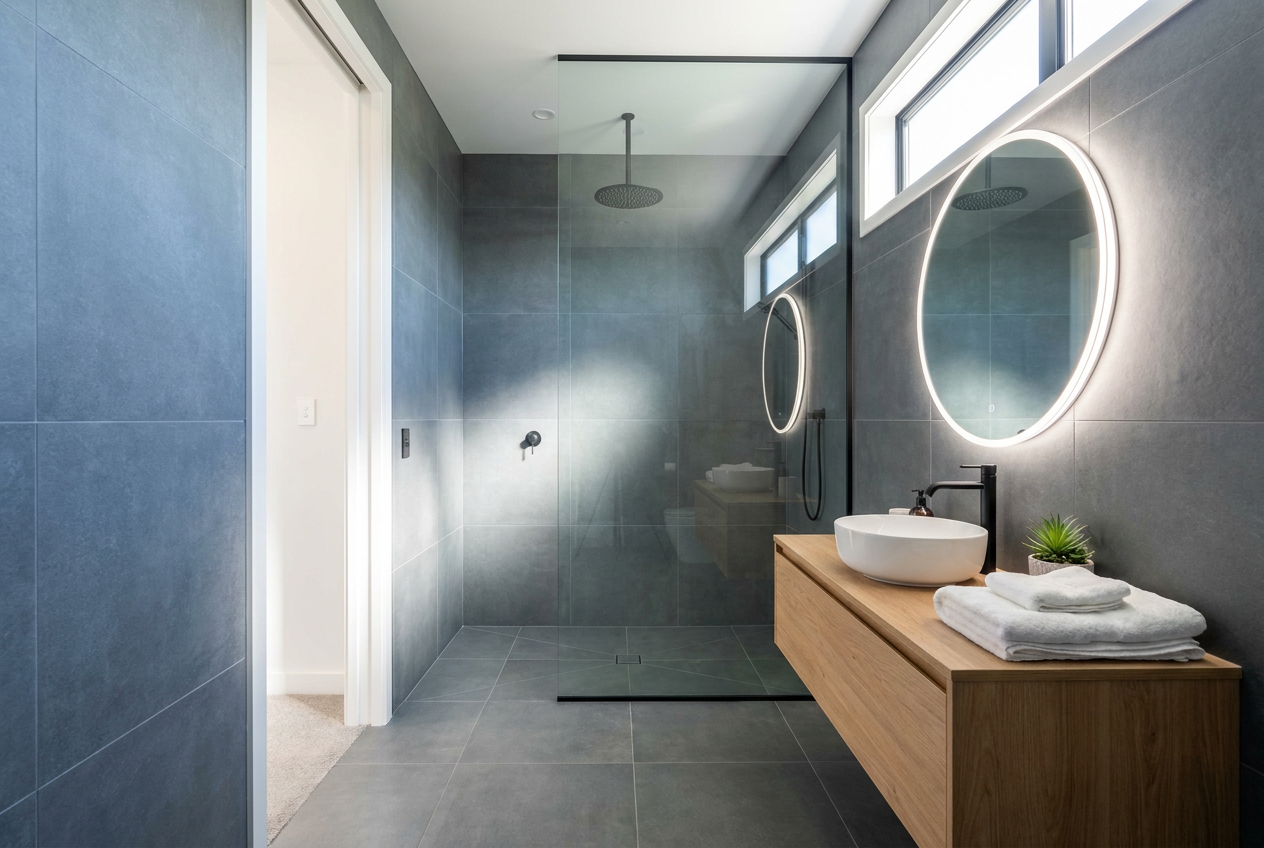
In most cases, yes — a professional waterproofer can carry out their work while your family continues to live at home. However, depending on the area being waterproofed, the products being used, and the size of the job, there may be times when certain rooms or spaces need to be temporarily vacated. A good waterproofing contractor will talk you through what to expect before they start.
What Areas Are Typically Waterproofed?
Waterproofing in NZ homes most commonly covers:
- Wet areas such as showers, bathrooms, and laundries (required under NZ Building Code clause E3)
- Decks and balconies, particularly those above habitable spaces
- Basements and subfloor areas
- Retaining walls and foundations
- Roofs and gutters
Each of these areas has different access requirements and drying times, which affects how disruptive the work will be to your household.
Will You Need to Vacate Any Rooms?
For most interior wet area waterproofing — such as a shower or bathroom — you'll need to avoid using that room during application and while the membrane cures. Curing times vary by product but are typically 24 to 72 hours before tiling can begin. Your waterproofer should give you a clear timeline.
For exterior work like decks, roofs, or foundations, your family can usually go about daily life with minimal disruption, though you may need to keep children and pets away from the work area for safety.
Fumes and Ventilation — What You Need to Know
This is the most important consideration for families at home. Many waterproofing membranes — particularly solvent-based products — release fumes during and after application. These can cause headaches, nausea, or respiratory irritation, especially for:
- Young children and babies
- Pregnant women
- People with asthma or respiratory conditions
- Elderly family members
A reputable waterproofer will ensure the work area is well ventilated and may recommend that sensitive family members stay out of the immediate area — or even out of the house — for a period after application.
Water-based membranes are lower in VOCs (volatile organic compounds) and are generally less disruptive for occupied homes. Ask your contractor which products they plan to use and whether a low-VOC option is available. WorkSafe NZ has guidance on managing chemical exposure in and around the home.
Bathroom and Wet Area Waterproofing — Timing Tips
If your bathroom is the only one in the house, waterproofing work can be a real inconvenience. Here are some practical tips:
- Schedule the work early in the week so the membrane has time to cure before the weekend
- Ask your contractor to start first thing in the morning to maximise drying time
- Arrange to use a neighbour's bathroom or a gym facility during the curing period
- Confirm with your contractor exactly when the area is safe to re-enter
Under NZ Building Code clause E3 (Internal Moisture), wet area waterproofing must meet specific standards. This work often requires a building consent, depending on the scope — always check with your local council before starting. You can find guidance at MBIE Building Performance.
Deck and Exterior Waterproofing
For decks and balconies, the main concern is keeping the family off the surface while the membrane cures. Liquid-applied membranes can be slippery when wet and must not be walked on until fully set. Your contractor should clearly mark off the area and advise when it's safe to use again.
Exterior work is generally the least disruptive to family life — you can carry on indoors as normal in most cases.
What About Noise and Mess?
Waterproofing is generally a low-noise trade compared to tiling or carpentry. Surface preparation (grinding, sanding, or cleaning) can be noisy and dusty, but the membrane application itself is usually quiet. Dust sheets and drop cloths should be used to protect your home, and a tidy contractor will clean up at the end of each day.
When to Call a Professional
Waterproofing in wet areas may form part of a broader building project that involves restricted building work under NZ law, in which case a Licensed Building Practitioner (LBP) must carry out or supervise the relevant restricted work. Check with your local council or visit MBIE Building Performance to confirm whether an LBP is required for your specific job.
For advice on whether your specific job requires a building consent or an LBP, contact your local council or visit MBIE Building Performance. BRANZ also publishes technical guidance on waterproofing standards and best practice in NZ.
If you're unsure about any aspect of the work — fumes, timelines, or access — a qualified local waterproofer can walk you through the process before a single drop of membrane is applied. You can find experienced waterproofing professionals in your area on tradedirectory.co.nz.

 Site Safe


 SiteWise


 Licensed Building Practitioner (LBP)




