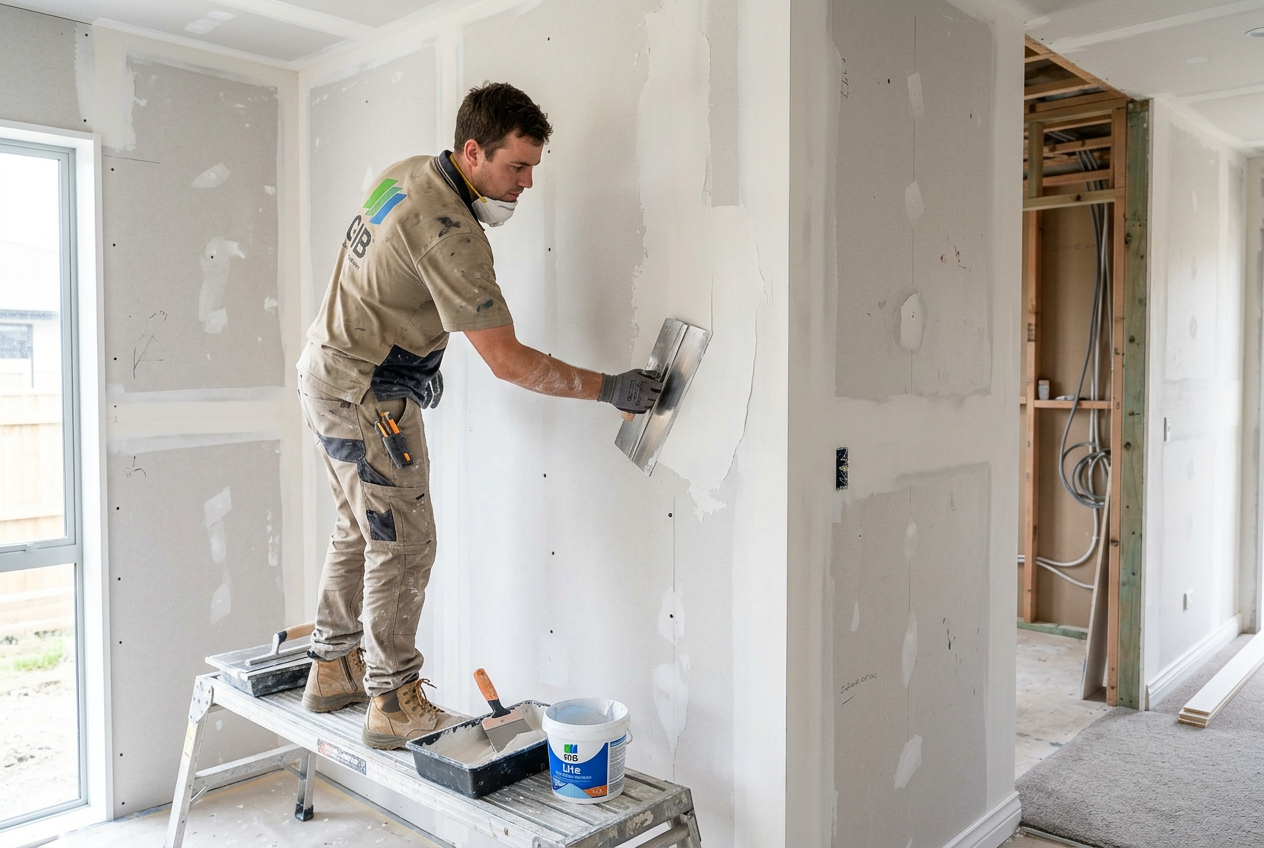
Yes, a skilled renderer can and should carry out a visual assessment of your home's exterior before starting any rendering work. Applying new render over existing moisture problems is one of the most common — and costly — mistakes in exterior renovation, so a good tradesperson will want to identify any issues upfront. That said, there are limits to what a renderer can formally diagnose, and some situations call for a specialist moisture assessor or building surveyor.
What a Renderer Can Look For
An experienced renderer will typically walk around your home and look for tell-tale signs of moisture problems before quoting or starting work. Common things they'll check include:
- Efflorescence — white, chalky salt deposits on the surface of existing render or masonry, which indicate water is moving through the wall
- Cracking and delamination — cracks, bubbling, or render that sounds hollow when tapped, suggesting water has got behind the existing coat
- Staining and discolouration — dark patches, mould, or algae growth that point to persistent damp
- Failed sealants and flashings — around windows, doors, and penetrations where water commonly enters
- Subfloor and ground clearance — render that runs too close to the ground or garden beds can wick moisture upward
- Roof and gutter condition — overflowing or leaking gutters can saturate walls over time
A renderer won't have specialist diagnostic equipment like a thermal camera or a calibrated moisture meter, but their trained eye is a valuable first filter. Many will flag concerns in writing before work begins, which protects both you and them.
Why This Matters Under the NZ Building Code
The NZ Building Code sets out performance requirements for how buildings manage moisture. Clause E2 (External Moisture) requires that walls prevent water from penetrating to the structure, and Clause E3 (Internal Moisture) addresses internal moisture in wet areas such as bathrooms. If a renderer applies new render over a wall that already has moisture ingress, the new coating can trap water inside, accelerating rot, corrosion of framing, and mould growth — all of which can lead to expensive structural repairs and potential Building Code non-compliance.
BRANZ (the Building Research Association of NZ) has published extensive guidance on moisture management in NZ homes, and it's worth checking their resources if you're dealing with a complex situation.
Limits of a Renderer's Assessment
While a renderer can spot surface-level warning signs, they are not licensed building practitioners or moisture specialists. They cannot:
- Provide a formal moisture report or building inspection report
- Use calibrated instruments to measure moisture content inside wall cavities
- Diagnose structural damage hidden behind cladding
- Certify that a wall is fit for rendering under the Building Code
If your renderer raises concerns — or if you already suspect moisture problems — it's wise to bring in a Licensed Building Practitioner (LBP) or a qualified building inspector before any work begins. Some inspectors use thermal imaging and professional moisture meters to map exactly where water is entering and how far it has spread.
What Happens If Moisture Is Found?
If moisture is identified, the renderer will typically recommend that the underlying issue is fixed first. This might involve:
- Replacing or repairing flashings around windows, doors, and roof junctions
- Repointing cracked mortar joints on brick or block walls
- Allowing walls to dry out fully before new render is applied — this can take weeks depending on the severity
- Applying a waterproof membrane or primer as part of the render system (products from manufacturers like Sika or Ardex are commonly used in NZ)
- Improving drainage around the base of the home
Skipping these steps to save time or money nearly always leads to render failure and bigger bills down the track.
Does Rendering Require a Building Consent?
In many cases, re-rendering an existing home is exempt from building consent under Schedule 1 of the Building Act — but this depends on the scope of work, the cladding system involved, and your local council's interpretation. If the work involves changes to the structure or weathertightness system, consent may be required. Always check with your local council before starting, as the rules vary and getting it wrong can cause problems when you sell.
Healthy Homes and Rental Properties
If you're a landlord, moisture and mould issues have added urgency. The Healthy Homes Standards require rental properties to have adequate moisture control and ventilation. Persistent damp from failing render can contribute to non-compliance, so addressing it promptly is both a legal and ethical obligation.
When to Call a Professional
You should engage a qualified renderer — and potentially a building inspector — if you notice any of the warning signs listed above, if your home is more than 20 years old, or if you've had previous weathertightness issues. A good renderer will be upfront about what they can and can't assess. For complex or high-risk situations, always get a formal inspection from an LBP or registered building surveyor before committing to render work.
You can find qualified, experienced renderers in your area through tradedirectory.co.nz.

 Licensed Building Practitioner (LBP)