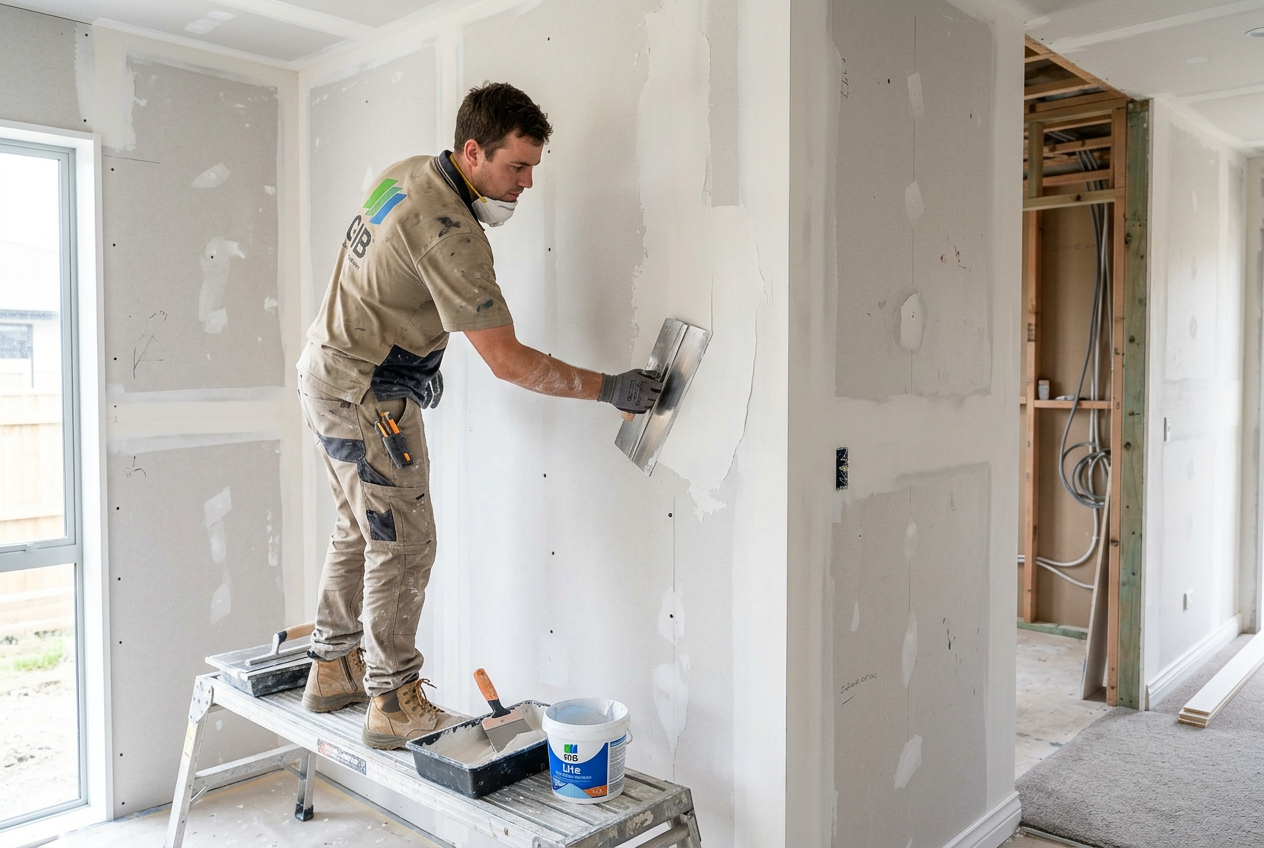
Water damage to your walls or ceiling is stressful, but the good news is that a skilled plasterer can absolutely restore the affected linings — once the root cause of the moisture has been properly dealt with. Skipping straight to the plaster repair without fixing the leak first is one of the most common (and costly) mistakes NZ homeowners make.
Why the Leak Must Be Fixed Before Plastering
Plaster and plasterboard are porous materials. If moisture is still entering the wall or ceiling cavity when a plasterer patches over the damage, the new work will bubble, crack, or grow mould within weeks. You'll be back to square one — and out of pocket twice.
Before a plasterer even quotes the repair job, they will (or should) confirm that the area is fully dry and that the source of water ingress has been resolved. Most experienced plasterers won't touch a wet substrate — and rightly so.
Which Trade Do You Need First?
The trade you call first depends entirely on where the water is coming from:
| Source of Water | Trade Required First |
|---|---|
| Leaking roof or flashing | Roofer / roofing contractor |
| Burst or leaking pipe | Licensed plumber |
| Leaking shower or wet area | Licensed plumber / waterproofer |
| Leaking windows or exterior cladding | Builder / joiner / cladding specialist |
| Condensation / poor ventilation | Builder, insulation installer, or HVAC specialist |
| Overflowing gutters | Roofer or handyperson |
For any work involving water supply pipes, drainage, or sanitary fixtures, you'll need a licensed plumber. Plumbing work in NZ is restricted work under the Plumbers, Gasfitters and Drainlayers Act 2006 — it must be carried out by someone registered with the Plumbers Gasfitters & Drainlayers Board. Never attempt to repair leaking pipes yourself and then cover the damage with plaster.
What a Plasterer Can Do After the Leak Is Fixed
Once the area is dry and the cause is resolved, a plasterer can:
- Remove and replace damaged plasterboard (GIB® or similar) — GIB is the most common brand used in NZ homes
- Re-stop and re-coat areas where the plaster surface has bubbled, cracked, or delaminated
- Blend repairs into the surrounding surface so they're invisible after painting
- Apply texture coats to match existing finishes (smooth, sand, or stipple)
- Repair cornices and decorative mouldings damaged by water
For wet areas like bathrooms, a plasterer may also work alongside a waterproofer to ensure the new lining is correctly sealed before tiling. This is important for compliance with NZ Building Code clause E3 (Internal Moisture).
How Dry Is Dry Enough?
This is a critical question. Plasterboard and timber framing need to return to an acceptable moisture content before new plaster is applied. A reputable plasterer will use a moisture meter to check the substrate. As a rough guide, timber framing should be below about 18% moisture content, though your plasterer or a building inspector can advise on the specific requirements for your situation.
If the framing or insulation has been saturated for a long time, you may also need a building inspector or remediation specialist to assess for structural damage or mould before plastering begins. BRANZ has useful guidance on moisture management in NZ buildings.
Mould: A Health and Safety Consideration
If you can see or smell mould behind damaged linings, take it seriously. Mould in wall cavities can affect indoor air quality and is a concern under the Tenancy Services Healthy Homes Standards for rental properties. In severe cases, a mould remediation specialist should assess and treat the affected area before the plasterer closes it up. WorkSafe NZ provides guidance on safe handling of mould-affected materials.
Do You Need a Building Consent?
Most like-for-like plaster repairs — replacing damaged GIB and re-stopping — fall under Schedule 1 exemptions of the Building Act 2004 and won't require a building consent. However, if the water damage has affected structural elements, or if the repair involves changes to the building's weathertightness (such as replacing cladding or flashing), a consent may be required. Always check with your local council before starting work if you're unsure. The MBIE Building Performance website is a good starting point for understanding consent requirements.
When to Call a Professional
Call a licensed plumber immediately if the water source is a leaking pipe or sanitary fitting — this is restricted work and cannot legally be done by an unlicensed person. Once the leak is fixed and the area is confirmed dry, find a qualified plasterer to assess and quote the repair. If there's any sign of structural damage, significant mould, or the water has come through the exterior cladding, a Licensed Building Practitioner (LBP) should also be involved. You can find qualified local plasterers and other tradespeople at tradedirectory.co.nz.

 Master Painters NZ member