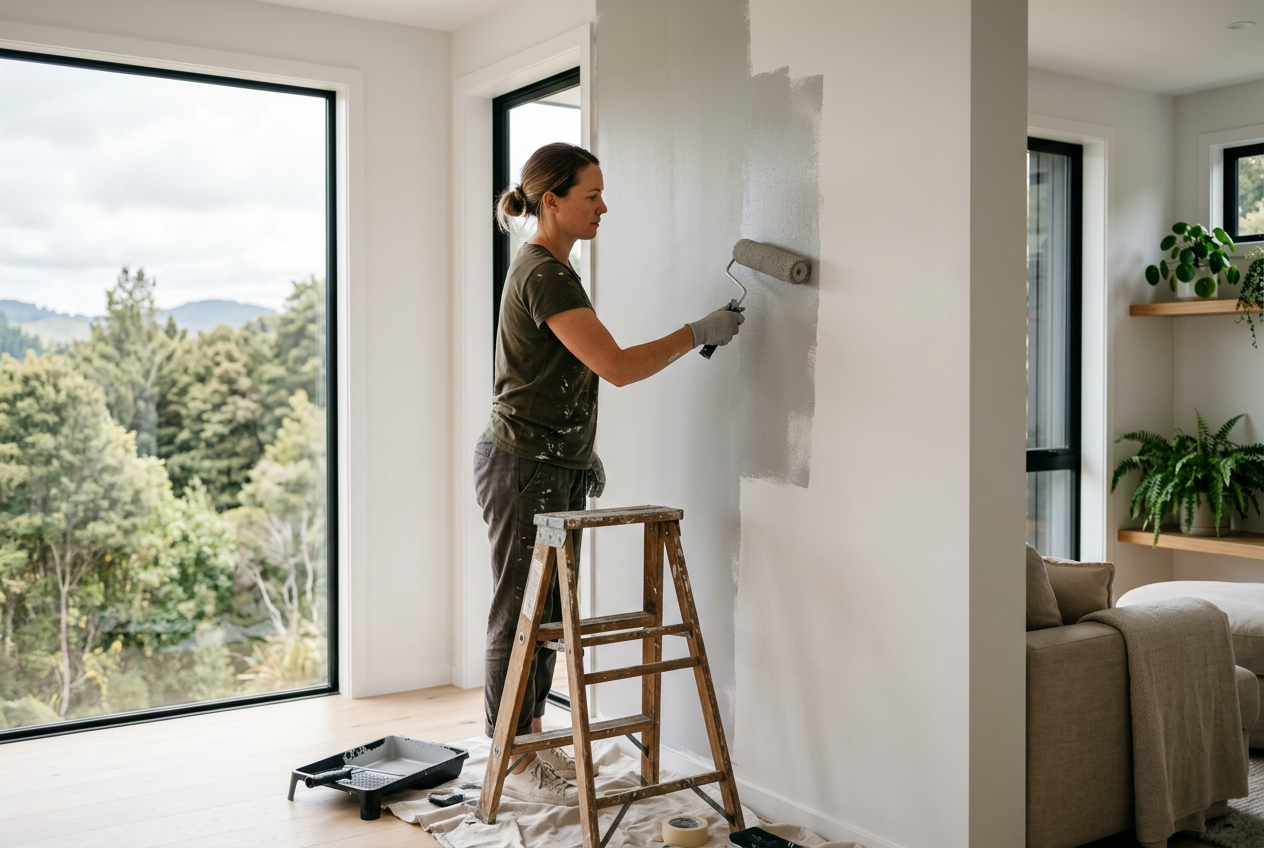
Yes, a painter can legally work on a home with confirmed lead paint in New Zealand — but there are important rules, responsibilities, and safety precautions that must be followed. Lead paint was commonly used in NZ homes built before 1980, and disturbing it without the right controls can create serious health risks for workers, occupants, and neighbours.
Why Lead Paint Is a Serious Hazard
Lead is a toxic heavy metal. When lead-based paint is sanded, scraped, heat-stripped, or otherwise disturbed, it produces fine dust and fumes that can be inhaled or ingested. Prolonged exposure can cause lead poisoning, which affects the nervous system, kidneys, and brain — with children and pregnant women being especially vulnerable. Even small amounts of lead dust can be harmful, so this is not a hazard to take lightly.
Is There a Legal Requirement to Test for Lead?
There is no blanket legal requirement in NZ that forces homeowners to test for lead paint before painting work begins. However, if lead paint is confirmed or reasonably suspected (for example, in a pre-1980 home), WorkSafe NZ requires that the work be managed under the Health and Safety at Work Act 2015 (HSWA) and associated regulations. Painters and their employers have a duty to identify and manage hazardous substances on the job.
If you have had a lead paint test done and the result is positive, you must share that information with any tradesperson you engage. Withholding known hazard information could expose you to legal liability.
What Rules Must a Painter Follow?
When working on surfaces with confirmed lead paint, a painter must follow safe work practices as outlined by WorkSafe NZ. Key requirements include:
- Risk assessment before starting work, to determine the level of disturbance and likely exposure
- Containment of the work area to prevent lead dust spreading to other parts of the home or outdoors
- Appropriate PPE — at minimum, a properly fitted P2 respirator, disposable coveralls, gloves, and eye protection
- Wet methods where possible (e.g. wet sanding) to suppress dust
- Avoiding dry sanding, dry scraping, or open-flame heat stripping on lead-painted surfaces, as these generate the most hazardous dust and fumes
- Safe disposal of lead-contaminated waste in accordance with local council and environmental rules
- Decontamination of the work area and themselves before leaving the site
For high-risk work — such as full paint removal on large areas — a painter may need to engage a specialist lead paint removal contractor with additional training and equipment.
What Can Be Done Without Full Removal?
In many cases, the safest and most practical approach is encapsulation rather than removal. This means applying a suitable primer and topcoat system over the existing lead paint to seal it in place, provided the existing paint is still well-adhered and not flaking. This minimises disturbance and is often acceptable under the NZ Building Code for repainting work. A qualified painter can advise whether encapsulation is appropriate for your situation.
BRANZ provides technical guidance on dealing with hazardous materials in older homes, and is a useful resource for both tradespeople and homeowners.
Do You Need a Building Consent?
Repainting or recoating an existing surface generally does not require a building consent under Schedule 1 of the Building Act 2004. However, if the work involves significant structural or weathertightness elements, always confirm with your local council. For lead paint removal specifically, consent is not typically required, but hazardous substance handling rules under the HSWA still apply regardless.
Protecting Occupants During the Work
If your home is occupied during lead paint work, the painter should:
- Clearly communicate which areas will be affected and for how long
- Seal off work areas with plastic sheeting and tape
- Advise occupants (especially children and pregnant women) to vacate the affected areas — or ideally the home — during high-disturbance work
- Clean up thoroughly at the end of each day using a HEPA vacuum and damp wiping
Paint suppliers such as Resene and Dulux can advise on suitable primer and topcoat systems for painting over or encapsulating lead-painted surfaces.
When to Call a Professional
Always engage a qualified, experienced painter for any work involving lead paint. For extensive lead paint removal — particularly in older villas, bungalows, or state houses — look for a contractor with specific experience in hazardous paint removal. A good painter will carry out a proper risk assessment, use the right PPE and containment methods, and dispose of waste correctly.
You can find qualified local painters on tradedirectory.co.nz. When getting quotes, ask specifically about the painter's experience with lead paint and what safe work procedures they will follow.
Safety note: Never attempt to dry-sand or scrape large areas of lead paint yourself without proper training and equipment. DIY lead paint disturbance is one of the most common causes of household lead contamination in NZ.

 BCITO Qualified

 Master Painters NZ
 Site Safe