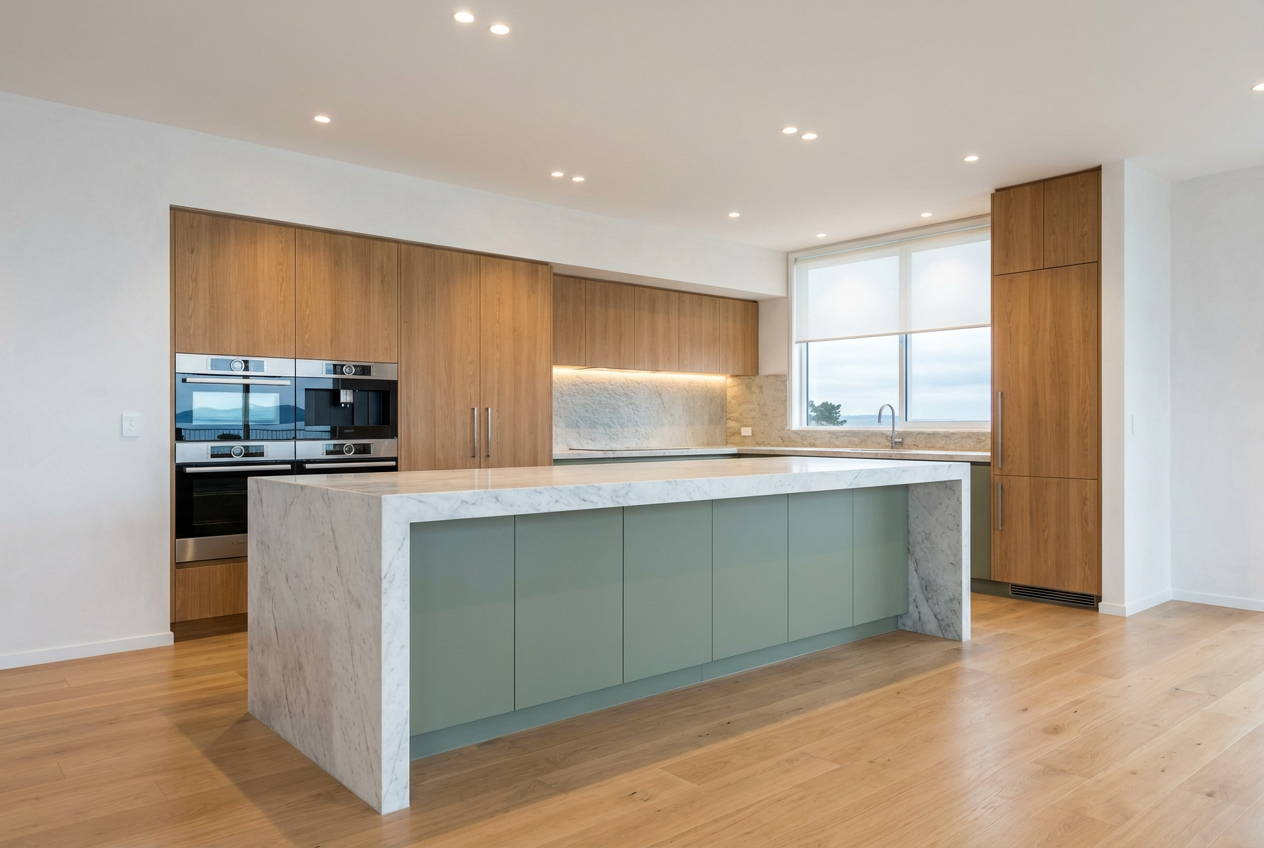
Good news for homeowners: in most cases, a skilled NZ joiner can handle both the design and construction of custom built-ins without you needing to hire a separate interior designer first. Many joiners have years of experience translating a rough idea — a sketch on a napkin, a Pinterest board, or a simple conversation — into detailed workshop drawings and a finished product that fits your space perfectly.
What Joiners Actually Do
A joiner is a tradesperson who specialises in crafting and fitting timber-based components — think wardrobes, bookshelves, entertainment units, window seats, kitchen cabinetry, laundry joinery, and study nooks. Unlike a carpenter (who typically works on structural timber), a joiner focuses on the finer, fitted elements of a home.
Most joiners offer a measure-and-quote service where they visit your home, assess the space, discuss your needs, and produce drawings or 3D renders before any timber is cut. This design process is usually included in their quote or charged as a modest design fee.
When a Joiner Can Design Your Built-Ins
For the majority of residential built-in projects, a joiner working alone is entirely sufficient. This includes:
- Wardrobes and walk-in robes — shelving layouts, hanging rails, drawer configurations
- Bookshelves and display units — alcove shelving, floor-to-ceiling libraries
- Entertainment units and media walls — cable management, TV recesses, storage
- Window seats and banquettes — with or without integrated storage
- Home office built-ins — desks, shelving, filing drawers
- Laundry and mudroom joinery — bench tops, cabinetry, hooks and cubbies
A good joiner will ask about your storage needs, preferred materials, hardware style, and budget. They'll consider practical details like door swing clearances, weight-bearing requirements, and how the joinery will be fixed to your walls — important in NZ homes where wall framing can vary between older villas and modern builds.
When You Might Want a Designer Involved
There are situations where bringing in an interior designer or architect before approaching a joiner makes sense:
- Large-scale renovations where the built-ins are part of a broader design scheme (flooring, lighting, colour palette) and you want everything to feel cohesive
- Complex spatial planning — for example, reconfiguring a room layout or opening walls to create a built-in that spans structural elements
- High-end or bespoke projects where you want detailed mood boards, material specifications, and a curated finish
- New builds or consented renovations where a designer or architect is already engaged and can coordinate the joinery as part of the overall package
That said, many joiners work closely with interior designers and are used to receiving a design brief or drawings to work from. It's a collaborative process, not an either/or situation.
Building Consent — Do You Need One?
For most internal built-in joinery — wardrobes, shelving, cabinetry — building consent is not required under Schedule 1 of the Building Act 2004. These are considered routine fit-out work. However, if your built-in involves:
- Structural changes (removing or modifying wall framing or load-bearing elements)
- Electrical work such as integrated lighting or power points
- Plumbing connections (e.g., a built-in wet bar or laundry)
…then those specific elements may require consent and must be carried out by licensed tradespeople. Always confirm with your local council if you're unsure — rules can vary. You can find general guidance at MBIE Building Performance.
Electrical and Plumbing in Built-Ins
If your custom built-in includes integrated lighting, power outlets, or data points, this electrical work is restricted work under NZ law and must be carried out by a registered electrician (check EWRB). Similarly, any plumbing connections must be done by a licensed plumber registered with the Plumbers Gasfitters & Drainlayers Board. Your joiner can coordinate with these trades or advise you on who to engage.
Choosing the Right Materials
Your joiner will guide you through material options, which typically include:
| Material | Best For | Notes |
|---|---|---|
| MDF | Painted finishes, smooth look | Affordable, takes paint well |
| Plywood | Structural shelving, natural look | Strong, can be left with visible ply edge |
| Melamine board | Budget cabinetry | Wide colour/finish range |
| Solid timber | Feature pieces, heritage homes | Premium cost, beautiful result |
| Veneer panels | Timber look, stable substrate | Good middle-ground option |
For painted finishes, your joiner may recommend priming with a quality primer before your painter applies a topcoat — products from Resene or Dulux are widely used on joinery in NZ.
When to Call a Professional
Always engage a qualified, experienced joiner for custom built-in work. Look for someone who:
- Has a portfolio of similar projects
- Provides a written quote with clear scope and materials
- Is happy to do a site measure before quoting
- Can advise on consent requirements if your project is complex
For projects involving structural changes, engage a Licensed Building Practitioner (LBP) — find out more at LBP. For technical guidance on construction standards, BRANZ is an excellent NZ resource.
You can find qualified local joiners in your area right here on tradedirectory.co.nz.





