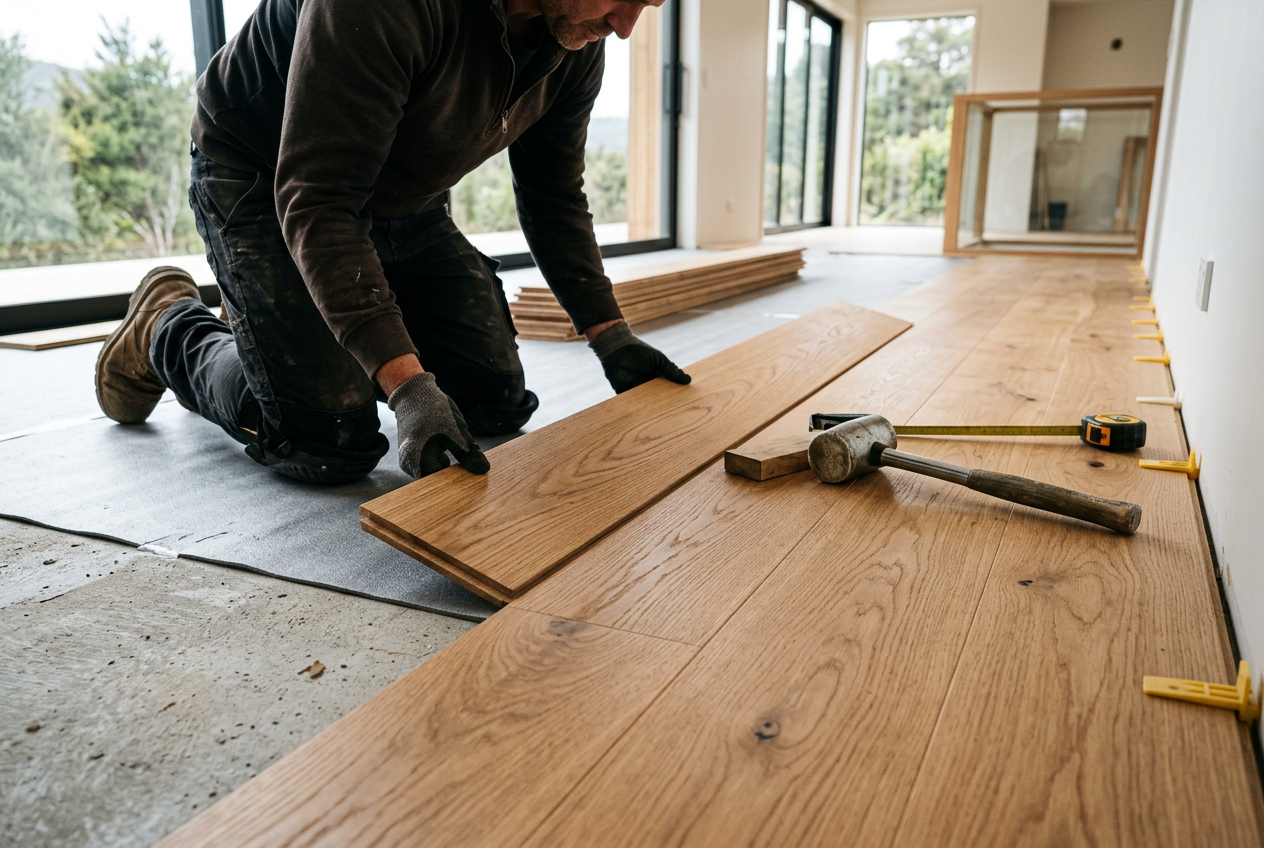
Yes, a skilled flooring installer absolutely can — and should — advise you on the best product for your situation. In fact, getting product advice from an experienced installer before you buy anything is one of the smartest moves you can make. The wrong flooring choice can lead to costly failures, so tapping into a professional's hands-on knowledge early saves time, money, and headaches.
Why a Flooring Installer's Advice Is So Valuable
Flooring installers work with a wide range of products every day — timber, engineered wood, laminate, luxury vinyl plank (LVP), carpet, cork, and tile. They see firsthand how different products perform in different conditions, and they understand the technical requirements that product brochures often gloss over. Their advice is grounded in real-world experience rather than marketing.
A good installer will consider:
- Your subfloor type — concrete slab, timber framing, or existing flooring
- Moisture levels — especially important in NZ homes, where ground moisture and poor underfloor ventilation are common issues
- Room use — high-traffic areas like hallways and kitchens need more durable products than a bedroom
- Your household — pets, kids, and elderly family members all influence the best choice
- Your budget — balancing upfront cost against long-term durability and maintenance
- Heating systems — underfloor heating (UFH) significantly limits which products are suitable
What a Good Installer Will Check Before Recommending Anything
Before suggesting a product, a thorough installer will want to assess your space in person. Key checks include:
Subfloor condition and moisture
Moisture is the enemy of many flooring types. In New Zealand, concrete slabs — particularly in older homes — can have high moisture vapour emission rates (MVER). An installer may use a moisture meter or conduct a calcium chloride test before recommending timber or engineered products. BRANZ provides excellent technical guidance on moisture management in NZ buildings.
Subfloor flatness
Most manufacturers specify a flatness tolerance (commonly 3 mm over 1.8 m). An uneven subfloor can cause floating floors to bounce, click, or fail prematurely. Your installer will check this and advise whether grinding or levelling compounds (such as those from Ardex or Mapei) are needed before installation.
Room conditions
Sunlight exposure, temperature fluctuations, and humidity all matter. NZ's varied climate — from the humid north to the cold, dry south — means what works in Auckland may not suit a Queenstown home.
Common Flooring Products and When They're Recommended
| Product | Best For | Watch Out For |
|---|---|---|
| Solid timber | Dry areas, character homes | Moisture-sensitive; not for slabs without DPM |
| Engineered timber | Slabs, underfloor heating | Quality varies widely — ask about ply core vs HDF |
| Luxury vinyl plank (LVP) | Wet areas, rentals, families | Cheap versions can dent or fade |
| Laminate | Bedrooms, low-moisture areas | Not suitable for wet areas |
| Carpet | Bedrooms, living rooms | Check fibre type for durability |
| Ceramic/porcelain tile | Kitchens, bathrooms, entries | Heavy; subfloor must be rigid |
Healthy Homes and Rental Properties
If you're a landlord, flooring choices can also intersect with Healthy Homes Standards. While flooring itself isn't directly mandated, draught stopping and underfloor insulation requirements can affect what's practical during a flooring upgrade. A knowledgeable installer can flag these considerations.
Questions to Ask Your Installer
To get the most useful advice, come prepared with these questions:
- What products do you recommend for my subfloor type and moisture reading?
- What's the wear layer or hardness rating on the products you're suggesting?
- Is this product suitable for underfloor heating?
- What's the manufacturer's warranty, and does your installation method preserve it?
- Are there NZ-specific installation standards I should know about?
- What maintenance will this floor need long-term?
Does the Installer Supply the Product?
Many flooring installers supply and install — meaning they source the product, often at trade pricing, and handle everything. Others are supply-only or install-only. If you're sourcing your own product from a retailer or a store like Bunnings or Mitre 10, always check with your installer first to make sure the product is suitable and that installing it won't void the warranty.
Be cautious: some manufacturers' warranties are only valid when installed by a certified or registered installer. Ask your installer whether they hold any product-specific accreditations.
When to Call a Professional
Always engage a qualified flooring installer before purchasing product — especially for:
- Timber or engineered flooring over concrete slabs, where moisture assessment is critical
- Underfloor heating systems, where the wrong product can delaminate or warp
- Wet areas such as bathrooms, where waterproofing under tiles must comply with NZ Building Code clause E3 — note that wet area waterproofing work may require a building consent depending on the scope; check with your council
- Large open-plan areas where expansion gaps and transitions need careful planning
- Rental properties, where durability and compliance matter for your investment
You can find qualified, experienced flooring installers in your area right here on tradedirectory.co.nz.







