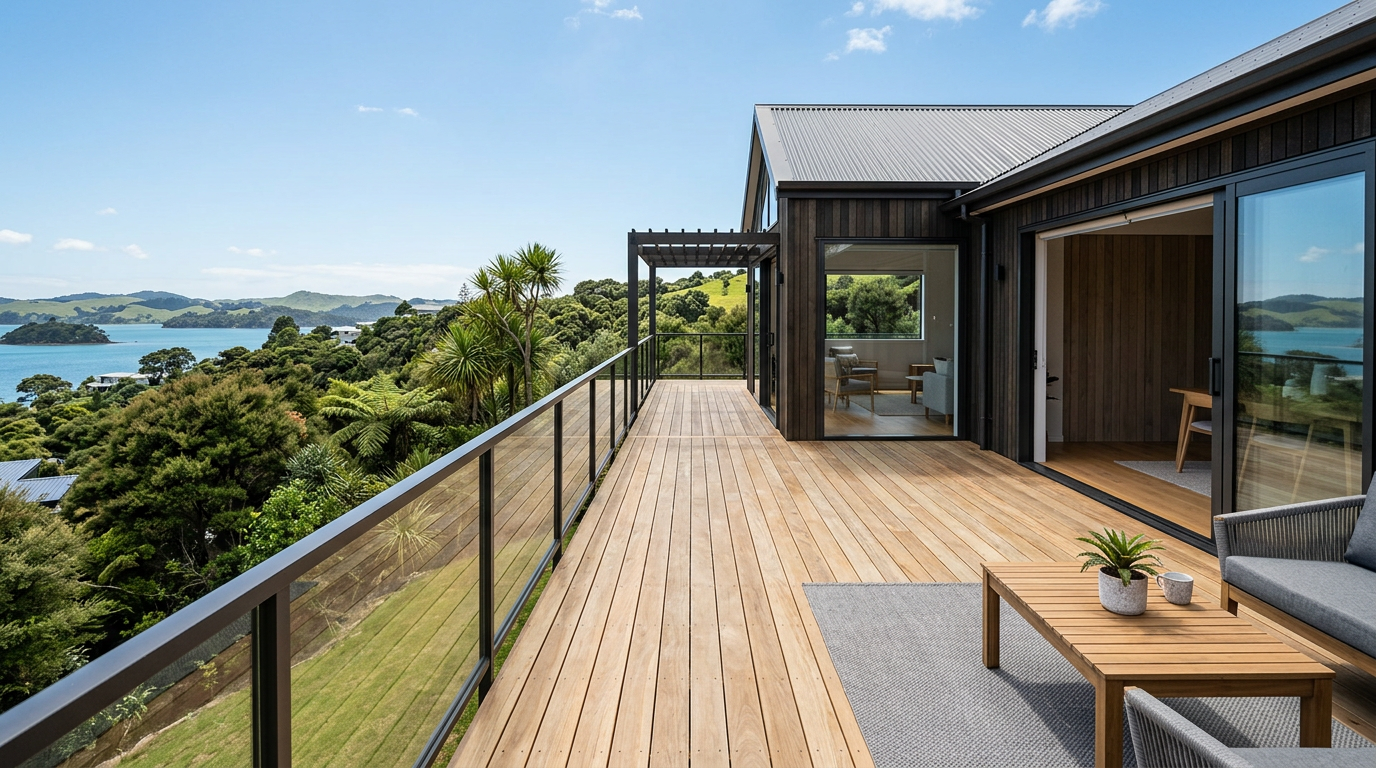
Wet weather is a fact of life across much of New Zealand, and it does affect deck building — but it doesn't always bring work to a complete standstill. Whether your builder can keep going depends on the stage of the project, the materials being used, and how heavy the rain actually is.
How Wet Weather Affects Different Stages of Deck Building
Not all deck work is equally sensitive to moisture. Here's a general breakdown:
Site Preparation and Foundations
Excavation and post-hole digging can become difficult or unsafe in heavy rain. Waterlogged soil is unstable, and freshly dug holes can fill with water or collapse. Concrete poured into wet or muddy holes may not cure properly, which can compromise the structural integrity of your deck's foundations. Most experienced builders will pause concrete work during or immediately after significant rainfall.
Framing and Structural Timber
Timber framing can generally be installed in light rain, but prolonged exposure to moisture before the deck boards go down is not ideal. Untreated or partially treated timber can swell, warp, or develop mould if left wet for extended periods. Quality deck builders use H3.2 or H4 treated timber (as required under the NZ Building Code for ground-contact or exposed situations), which is far more resistant to moisture damage. Check BRANZ for guidance on appropriate timber treatments for outdoor use in NZ conditions.
Decking Boards
Laying decking boards in wet conditions is generally avoided by careful tradespeople. Wet timber boards can shrink as they dry, leaving larger-than-intended gaps. Composite decking products may be less affected, but manufacturer installation guidelines — which your builder should follow — often specify dry conditions for fixing and adhesive work.
Finishing, Staining, and Sealing
This is where wet weather causes the most definite delays. Stains, oils, and sealants must be applied to a dry surface and need dry conditions to cure properly. Applying a finish in damp or rainy weather will result in poor adhesion, uneven colour, and a finish that peels or fails prematurely. Brands like Resene, Dulux, and Wattyl all specify minimum surface moisture and temperature requirements on their product data sheets — your builder should be checking these before applying any coating.
What a Good Builder Will Do in Wet Weather
A professional deck builder won't simply down tools and disappear at the first sign of drizzle. Here's what you can expect from a skilled tradesperson:
- Assess conditions before starting each day — light drizzle may allow framing work to continue; heavy rain or storms will not.
- Cover materials and work in progress with tarps or temporary sheeting to protect timber and partially completed structures.
- Reschedule weather-sensitive tasks such as concrete pours and finishing work to suitable dry days.
- Communicate proactively — a good builder will keep you updated on how weather is affecting the schedule rather than leaving you guessing.
- Plan the project timeline with NZ weather in mind, particularly if you're building in regions like the West Coast, Northland, or Wellington, which see more rainfall or wind than other parts of the country.
NZ Climate Considerations
New Zealand's weather varies enormously by region. Auckland and Northland experience frequent summer rain; Wellington is known for strong winds; the South Island's West Coast is one of the wettest places in the country. A deck builder working in these areas should have experience managing weather-related delays and building in contingency time. If you're in a drier region like Hawke's Bay or Central Otago, weather delays may be less of a concern.
It's worth discussing your region's typical weather patterns with your builder at the quoting stage so the project timeline is realistic from the start.
Building Consents and Wet Weather
If your deck requires a building consent (generally required for decks more than 1.5 metres above ground level (or in some cases at a lower threshold depending on council and specific site conditions — always confirm with your local council) — though always confirm with your local council, as rules vary), inspections must be booked at specific stages. Wet weather can delay these inspection hold points, which in turn delays the overall project. Your builder should factor this into the programme. For more on when consents are needed, visit MBIE Building Performance.
Protecting Your Investment During Construction
If rain is forecast and your deck is mid-build, ask your builder:
- Are exposed timber members covered overnight?
- Is concrete work scheduled around the forecast?
- Are materials stored off the ground and under cover on site?
These are reasonable questions and any reputable tradesperson will have clear answers.
When to Call a Professional
Deck building in New Zealand involves structural work that must comply with NZS 3604 (Timber-framed buildings) and the NZ Building Code. Decisions about whether conditions are safe and suitable to continue work — especially around foundations, structural connections, and treated timber specifications — should be made by a qualified, experienced deck builder. Attempting to rush work in unsuitable conditions to save time can lead to structural problems, failed finishes, and costly remediation down the track.
If you're looking for a reliable local deck builder who knows how to manage NZ weather conditions, you can find qualified tradespeople on tradedirectory.co.nz.




 Licensed Building Practitioner (LBP)





