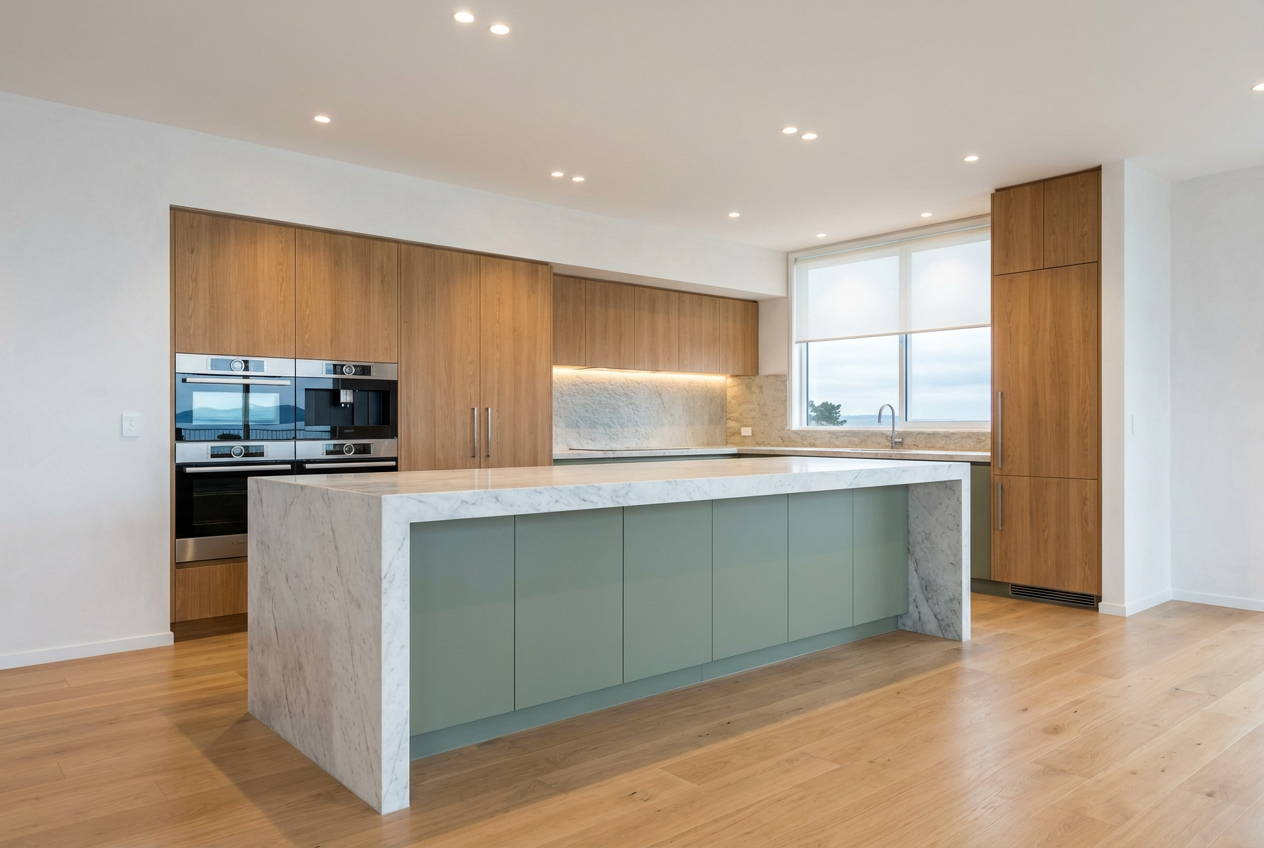
The short answer is: yes, cabinet makers can carry out certain minor wall alterations as part of a kitchen fit-out — but there are important legal boundaries in New Zealand that both homeowners and tradespeople need to understand. Some work requires a licensed building practitioner, a building consent, or a specialist tradesperson, and getting this wrong can create real problems down the track.
What Minor Wall Work a Cabinet Maker Can Typically Do
A skilled cabinet maker will often need to make small adjustments to walls to ensure cabinetry fits flush, is level, and is properly secured. Work that generally falls within their scope includes:
- Patching and making good plasterboard or plaster surfaces after removing old cabinetry
- Cutting small penetrations for service access (e.g., a hole for a rangehood duct), provided no structural or restricted work is involved
- Fixing blocking or nogging into existing wall cavities to provide solid fixing points for wall-hung cabinets
- Scribing and trimming wall linings to achieve a neat fit around cabinetry
- Removing and reinstating non-structural wall linings such as splashback tiles or plasterboard panels
These tasks are generally considered low-risk building work and, depending on the scope, may fall under Schedule 1 of the Building Act 2004 as exempt work — meaning no building consent is required. However, you should always confirm with your local council before assuming any work is exempt, as interpretations can vary.
What Requires a Building Consent or Licensed Building Practitioner
This is where things get more complex. Not all wall alterations are created equal. Under the NZ Building Code and the Licensed Building Practitioners scheme, certain work must be carried out or supervised by an LBP (Licensed Building Practitioner).
Work that is likely to require a consent and/or an LBP includes:
- Removing or altering load-bearing walls — even partially. This affects the structural integrity of the building and falls under NZS 3604 (Timber-framed buildings). A cabinet maker should never remove or notch a structural element without proper engineering sign-off.
- Altering wall framing in a way that affects weathertightness (relevant to external walls, governed by BRANZ guidance and Building Code clause E2)
- Any work that changes the building's footprint or envelope
If a cabinet maker encounters a wall they suspect is load-bearing, the right move is to stop and bring in a qualified builder or structural engineer before proceeding.
Electrical Work — Strictly Restricted
Kitchen fit-outs almost always involve working near electrical wiring — think rangehood circuits, power points for appliances, and under-cabinet lighting. In New Zealand, electrical work is restricted work under the Electricity Act 1992.
Only a registered electrician (registered with the Electrical Workers Registration Board) can legally connect, alter, or install electrical wiring and fittings. A cabinet maker can cut a hole in the wall for a rangehood duct, but they cannot wire up the rangehood or move a power point — even if it looks straightforward.
Safety note: Never attempt to work on live wiring. Always ensure power is isolated at the switchboard before any work near electrical cables.
Plumbing Work — Also Restricted
Similarly, if the kitchen fit-out involves moving a sink, relocating water supply lines, or altering drainage, this is restricted plumbing and drainlaying work under the Plumbers, Gasfitters, and Drainlayers Act 2006. Only a licensed tradesperson registered with the Plumbers, Gasfitters and Drainlayers Board can legally carry out this work.
A cabinet maker can install a sink cabinet and cut the benchtop for the sink bowl, but connecting the water supply and waste is a job for a licensed plumber.
Gas Work — No Exceptions
If your kitchen renovation involves a gas cooktop or any gas appliance, all gas work must be carried out by a licensed gasfitter registered with the PGDB. This is non-negotiable under NZ law, and for very good reason — incorrectly installed gas fittings can be fatal.
A Practical Guide: Who Does What
| Task | Who Can Do It |
|---|---|
| Install wall and base cabinets | Cabinet maker |
| Add nogging/blocking for cabinet fixing | Cabinet maker / builder |
| Patch plasterboard after removal | Cabinet maker / builder |
| Remove a load-bearing wall | Licensed builder + consent |
| Wire rangehood or move power points | Registered electrician |
| Connect sink plumbing | Licensed plumber |
| Install or connect gas cooktop | Licensed gasfitter |
| Apply for building consent | Homeowner or LBP |
When to Call a Professional
If your kitchen fit-out involves anything beyond straightforward cabinet installation — such as opening up walls, relocating services, or structural changes — you should engage the right specialists from the start. A good cabinet maker will be upfront about the limits of their scope and will coordinate with builders, electricians, and plumbers as needed.
For peace of mind, look for a cabinet maker who works regularly with a trusted team of subbies, or ask your cabinet maker to project-manage the full fit-out with the appropriate licensed trades involved. You can find qualified local cabinet makers and other tradespeople at tradedirectory.co.nz.
Always check that any tradesperson doing restricted work holds a current licence, and keep records of all consents and code compliance certificates — these matter when you sell your home.
Sources & Further Reading
- MBIE Building Performance — Building Act and consents
- Licensed Building Practitioners (LBP) scheme
- Electrical Workers Registration Board — find a registered electrician
- Plumbers, Gasfitters and Drainlayers Board — licensed tradespeople
- BRANZ — building research and guidance
- WorkSafe NZ — construction safety