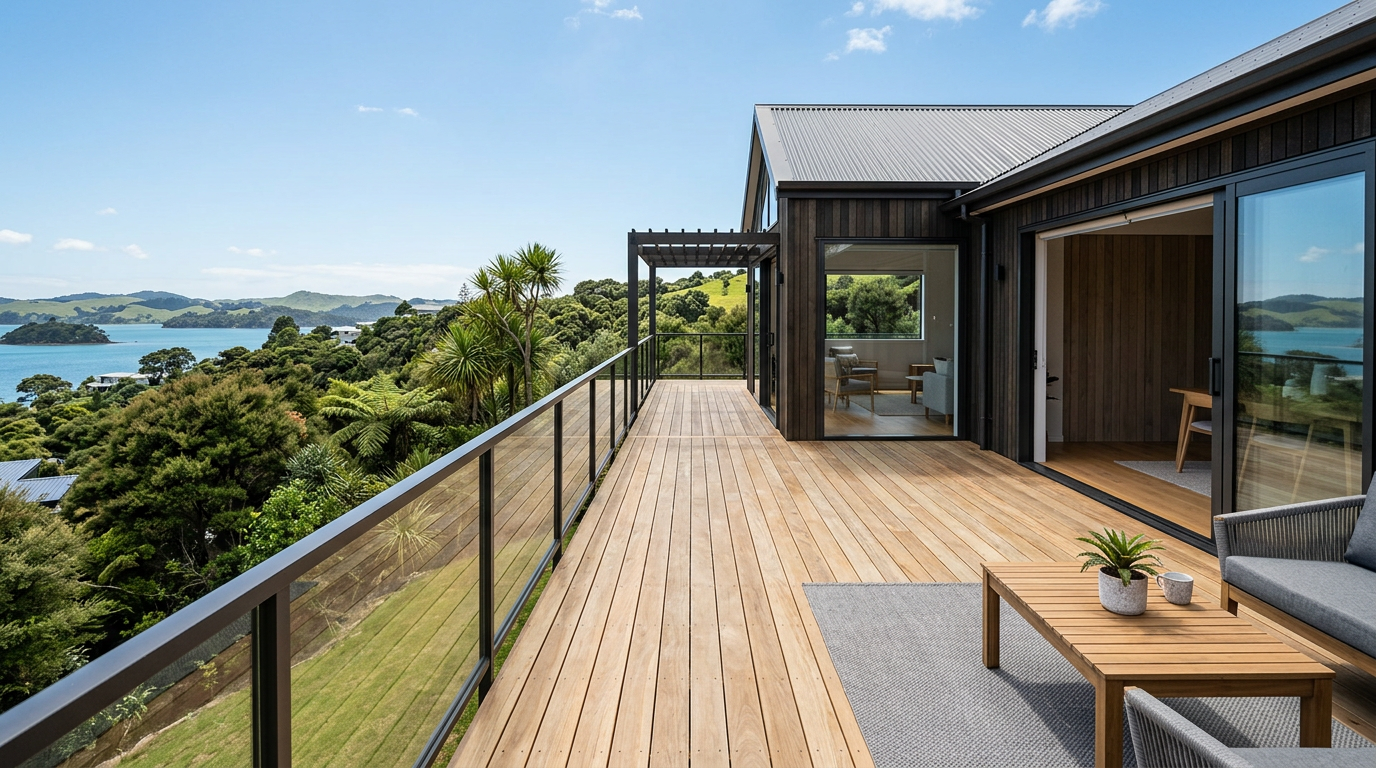
Building a deck is one of the most popular home improvement projects in New Zealand — and for good reason. A well-built deck adds living space, improves your home's value, and lets you make the most of our outdoor lifestyle. But before you pick up a hammer or call a builder, you need to understand whether your project requires a building consent. Getting this wrong can cause serious headaches when you come to sell your home or make an insurance claim.
The Short Answer: It Depends on Size and Height
In New Zealand, not every deck requires a building consent. The MBIE Building Performance website outlines Schedule 1 of the Building Act 2004, which lists work that is exempt from needing a consent. For decks, the key exemptions generally relate to:
- Height above ground: A deck that is no more than 1.5 metres above the ground at any point is more likely to qualify for an exemption.
- Floor area: Smaller decks attached to a single residential dwelling are more likely to be exempt.
- Structural connection: How the deck connects to your house matters — a deck that is structurally integrated with the house may trigger consent requirements even if it is low to the ground.
Important: Schedule 1 exemptions are not automatic. You must still ensure the work complies with the NZ Building Code, even if no consent is required. Always confirm with your local council before starting work — exemption interpretations can vary between territorial authorities.
When You Will Almost Certainly Need Consent
You are very likely to need a building consent if your deck:
- Is more than 1.5 metres above the ground at any point
- Is attached to a multi-unit dwelling or apartment building
- Involves significant structural changes to the existing house
- Is located in a special hazard zone (flood plain, coastal erosion zone, or similar)
- Requires a pool barrier to be altered or removed
- Is part of a larger renovation project that already requires consent
If your property is subject to a resource consent condition or is in a heritage overlay, additional rules may apply. Check with your council's planning department as well as the building department.
NZ Building Code Compliance — Consent or Not
Even if your deck is exempt from needing a building consent, it must still comply with the NZ Building Code. The most relevant clauses for decks are:
| Building Code Clause | What It Covers for Decks |
|---|---|
| B1 Structure | The deck must be structurally sound and able to carry expected loads |
| B2 Durability | Materials must last — the Building Code sets durability requirements for structural elements (the required period depends on the element and its accessibility for maintenance) |
| E1 Surface Water | Drainage must not direct water toward the house or neighbouring properties |
| E2 External Moisture | Where the deck attaches to the house, weathertightness must be maintained |
The E2 external moisture clause is particularly important. A poorly flashed deck-to-wall junction is one of the most common causes of leaky home damage in New Zealand. This is not something to cut corners on.
For timber framing and structural design, NZS 3604 provides the standard for light timber frame construction and is the reference most builders and councils use.
Choosing Your Materials for NZ Conditions
New Zealand's climate varies enormously — from the humid, high-UV north to the cold, wet south and the salt-laden air of coastal areas. Use quality materials suited to NZ conditions:
- Treated timber: H3.2 treated timber is the minimum for above-ground exterior use; H4 or H5 is required where timber is in contact with or close to the ground. Check with your supplier or PlaceMakers or Mitre 10 for the correct hazard class.
- Composite decking: Low maintenance and durable, but check manufacturer specifications for structural use.
- Stainless steel or hot-dipped galvanised fixings: Essential in coastal areas to prevent corrosion.
- Decking oils and stains: Products from Resene or Dulux are formulated for NZ's high UV environment and will extend the life of your timber deck significantly.
The Consent Application Process
If your deck does require consent, here is what to expect:
- Prepare plans and specifications — Your builder or a draughtsperson will draw up plans showing dimensions, materials, structural connections, and drainage.
- Lodge the application — Submit to your local council, either online or in person, along with the application fee (fees vary by council — confirm directly with yours).
- Processing time — Councils have 20 working days to process a consent (the clock stops if they request more information).
- Inspections — The council will require at least one inspection, often at the foundation/post stage and again at completion.
- Code Compliance Certificate (CCC) — Once the council is satisfied, they issue a CCC. Keep this document — it is important for future sales and insurance.
DIY vs Hiring a Professional
Building a deck is not restricted building work in the same way that electrical or plumbing work is — however, if your deck requires a building consent and constitutes restricted building work, the work must be carried out or supervised by a Licensed Building Practitioner (LBP). You can verify a tradesperson's licence at Licensed Building Practitioners.
For exempt, low-level decks, a competent DIYer can legally do the work — but you are still responsible for ensuring it meets the Building Code. If you are unsure about structural sizing, post spacing, or the deck-to-house connection, get professional advice. A small investment in a builder's consultation can save you from costly mistakes.
Always get multiple quotes from qualified tradespeople and check references before hiring. Plan your project budget carefully, including a contingency for unexpected ground conditions or material price changes.
When to Call a Professional
Call a qualified builder or LBP if your deck:
- Is more than 1 metre above the ground
- Attaches directly to your house (especially important for weathertightness)
- Requires a building consent
- Involves any electrical work (outdoor lighting, power points) — this is restricted electrical work and must be done by a registered electrician. Check EWRB for registered electricians.
- Is on a sloping or unstable site
- Is in a coastal or high-wind zone
Finding a qualified local tradesperson is straightforward — use the tradedirectory.co.nz directory to find builders and deck specialists in your area who understand local conditions and council requirements.
Practical Tips for Getting Good Value
- Get at least three written quotes and make sure they cover the same scope of work.
- Ask your builder whether consent is required and who is responsible for lodging it.
- Specify the timber treatment class and fixing types in writing before work starts.
- Consider future maintenance — a slightly more expensive material upfront can save significantly on repainting or replacement costs over time.
- Check whether your home insurance covers the deck during construction and once complete.




 Licensed Building Practitioner (LBP)





