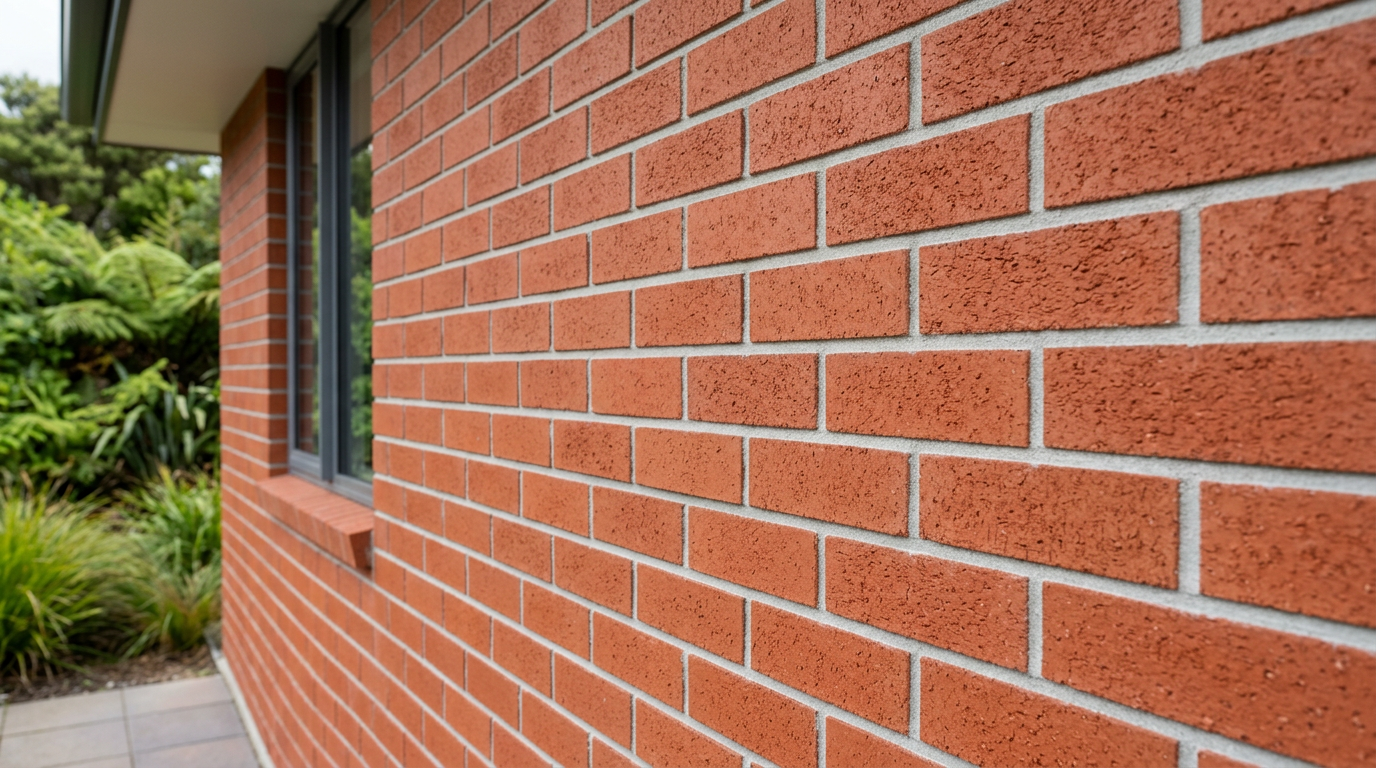
If you're building or renovating and considering brick, you'll quickly encounter two very different construction methods: brick veneer and solid brick (also called double brick or full brick). While both look similar from the street, they behave quite differently structurally, thermally, and in an earthquake. Understanding the distinction will help you make a smarter decision for your home and your budget.
What Is Brick Veneer?
Brick veneer is the most common brick construction method used in New Zealand today. A single layer of bricks — typically 70–110 mm thick — is attached to a timber or steel-framed wall using metal wall ties. The brick is purely a cladding material; it carries no structural load. The timber frame inside does all the structural work, and a cavity (usually around 40 mm) sits between the brick and the frame to allow drainage and ventilation.
Because the frame is timber, brick veneer homes are built to NZS 3604 (the timber-framed buildings standard) and are well understood by NZ builders. Insulation is fitted between the timber studs, making it straightforward to meet the current NZ Building Code thermal requirements.
What Is Solid Brick Construction?
Solid brick (or double brick) uses two leaves of brick — typically 110 mm each — with a small cavity or mortar fill between them. Both leaves contribute to the structural integrity of the wall. This method was common in New Zealand before the 1970s, particularly in commercial buildings and some older homes, but it is rarely used in new residential construction today.
Solid brick walls are heavy, labour-intensive, and expensive to build. They also present challenges under the NZ Building Code's seismic requirements — unreinforced masonry performs poorly in earthquakes, which is a critical consideration in a country as seismically active as ours. BRANZ research has consistently highlighted the vulnerability of older unreinforced masonry buildings in NZ seismic events.
Head-to-Head Comparison
| Criteria | Brick Veneer | Solid Brick |
|---|---|---|
| Structural role of brick | Cladding only — frame carries load | Both leaves carry structural load |
| Common in NZ new builds? | Yes — very common | Rarely used; mostly pre-1970s |
| Earthquake performance | Good (timber frame absorbs movement) | Poor if unreinforced; high risk in seismic zones |
| Insulation | Easy — fits between studs | Difficult; thermal mass helps but R-values are low |
| Wall thickness | Thinner overall footprint | Significantly thicker walls |
| Weight on foundations | Moderate | Very heavy — requires substantial foundations |
| Durability | Excellent cladding life; frame can be affected by moisture if cavity fails | Extremely durable masonry, but moisture ingress is hard to fix |
| Maintenance | Repoint mortar joints periodically; check ties | Repoint mortar; harder to remediate problems |
| Appearance | Identical to solid brick from outside | Same classic brick look |
| DIY friendliness | Laying brick is a skilled trade; not DIY | Not DIY — complex and regulated |
| Rough cost guide | Moderate (as a guide only) | High — more materials and labour |
| NZ Building Code compliance | Straightforward for new builds | Complex; seismic reinforcing required |
Insulation and Thermal Performance
This is where brick veneer has a clear practical advantage in modern NZ construction. Insulation batts fit neatly between the timber studs, and you can achieve the R-values required under the current Building Code without difficulty. Energywise recommends well-insulated walls as a key part of a warm, healthy home.
Solid brick has good thermal mass — it absorbs heat during the day and releases it slowly — but its insulating R-value is low. Retrofitting insulation into solid brick walls is costly and disruptive, often requiring internal wall linings or external cladding over the brick.
Earthquake and Seismic Considerations
New Zealand sits on the Pacific Ring of Fire, and seismic performance is non-negotiable. Unreinforced solid brick (URM) is one of the most dangerous building types in an earthquake. Many older solid brick buildings in Christchurch were demolished or required extensive strengthening after the 2010–2011 earthquakes.
Brick veneer, by contrast, ties into a flexible timber frame. The ties allow the brick to move slightly with the frame, and the frame itself is designed to absorb seismic energy. For new construction, brick veneer is the only realistic residential brick option that comfortably meets NZ Building Code seismic requirements.
If you own an older solid brick home, it's worth having a structural engineer assess its earthquake resilience. MBIE Building Performance has guidance on earthquake-prone buildings and what obligations may apply to your property.
Cost Considerations
As a rough guide only, brick veneer adds a meaningful premium over standard weatherboard or fibre cement cladding, but it is substantially less expensive than solid brick construction. Solid brick requires more materials, heavier foundations, more labour hours, and specialist masonry skills — all of which push costs up considerably.
For renovation work on an existing solid brick home, budget carefully: repointing, damp-proofing, or structural strengthening can be significant expenses. Always get multiple quotes from qualified tradespeople.
Maintenance: What to Expect
Both systems require periodic repointing — replacing deteriorated mortar joints — to prevent moisture ingress. In coastal or high-rainfall NZ regions, this is especially important. Brick veneer also relies on its wall ties remaining intact; older galvanised ties can corrode over time, which is a known issue in homes built before stainless steel ties became standard.
For solid brick, any moisture that penetrates is harder to detect and remediate. Rising damp is a common problem in older solid brick homes without adequate damp-proof courses.
Our Recommendation
For new builds: Brick veneer is the clear choice for almost all NZ residential construction. It meets the Building Code, performs well in earthquakes, is easier to insulate, and is more cost-effective than solid brick. It delivers the same classic brick aesthetic without the structural and seismic risks.
For existing solid brick homes: Don't panic — many older solid brick homes are solid, well-built, and perfectly liveable. Focus on maintenance (repointing, damp control), get a seismic assessment if you're in a moderate-to-high hazard zone, and consult a specialist before undertaking any structural alterations.
For renovations adding brick: If you're adding a brick feature wall or extension to an existing home, brick veneer is almost always the practical and code-compliant solution.
Bricklaying is a skilled trade — whether veneer or solid, the quality of the work depends heavily on the tradesperson. A poorly laid brick veneer with inadequate cavity drainage or missing flashings can cause serious moisture problems. Always use a qualified, experienced bricklayer. You can find licensed local bricklayers on tradedirectory.co.nz to get the job done right.
Sources & Further Reading
- BRANZ – Building Research Association of NZ
- MBIE Building Performance – NZ Building Code guidance
- Standards NZ – NZS 3604 Timber-framed buildings
- Energywise – Home insulation and energy efficiency
- Licensed Building Practitioners – Find a licensed tradesperson
- James Hardie – NZ cladding systems and technical resources


 Licensed Building Practitioner (LBP)





