Choosing the right ceiling insulation can make a real difference to your home's warmth, energy bills, and comfort — especially through a New Zealand winter. Two of the most common options are blown-in (loose-fill) insulation and batt insulation, and each has genuine strengths depending on your roof space, budget, and how hands-on you want to be. Here's an honest look at both to help you decide.
What Is Batt Insulation?
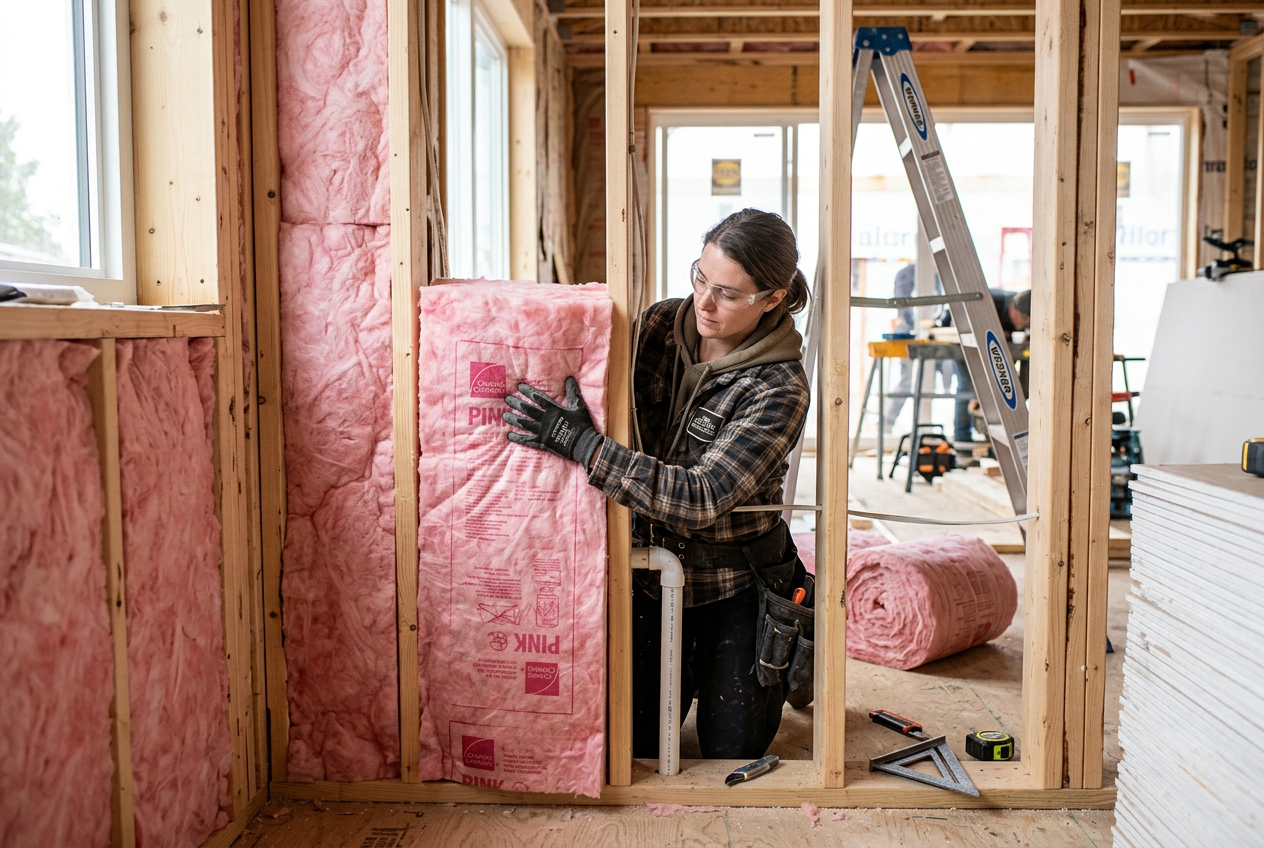
Batt insulation comes in pre-cut blanket segments, typically made from glasswool or polyester fibre. You lay them between ceiling joists by hand — it's the familiar pink or yellow fluffy stuff most Kiwis picture when they think of ceiling insulation. Batts are widely available from Bunnings, Mitre 10, and PlaceMakers, and are sold in standard widths to suit common joist spacings.
Batts are rated by their R-value (thermal resistance). For ceiling insulation, MBIE Building Performance recommends a minimum R-value of R3.3 for most of New Zealand (Zone 2), rising to R6.6 in colder southern regions (Zone 3). Common batt products achieve R2.8 through to R6.0+ depending on thickness.
Pros of batt insulation
- Straightforward DIY installation in accessible roof spaces
- No specialist equipment needed
- Easy to inspect and replace individual sections
- Widely available in NZ
Cons of batt insulation
- Difficult to install around obstructions (pipes, wiring, cross-bracing)
- Gaps and compression reduce effectiveness significantly
- Not ideal for irregular joist spacings or very low-pitch roofs
What Is Blown-In Insulation?
Blown-in (loose-fill) insulation is pumped into your ceiling space using a hose and blower machine. The most common materials in NZ are glasswool fibre and polyester fibre. The loose material flows around obstructions, fills awkward corners, and creates a more even blanket of insulation across the entire ceiling plane.
Professional installers bring the blowing machine to site; some hire outlets also offer machine hire for confident DIYers. BRANZ research consistently shows that blown-in insulation tends to achieve better coverage in real-world roof spaces compared to batts, particularly in older homes with complex framing.
Pros of blown-in insulation
- Excellent coverage around obstructions and in tight spaces
- Faster to install in large or complex roof spaces
- Consistent depth = more consistent R-value across the whole ceiling
- Good for topping up existing insulation
Cons of blown-in insulation
- Requires blower equipment (hire or professional)
- Harder to inspect or access services after installation
- Can settle slightly over time, reducing R-value
- Not suitable for very steep or inaccessible roof spaces without professional equipment
Head-to-Head Comparison
| Criteria | Batt Insulation | Blown-In Insulation |
|---|---|---|
| Typical R-value range | R2.8 – R6.0+ | R3.0 – R6.0+ (depth-dependent) |
| Coverage around obstructions | Poor – gaps likely | Excellent – fills around pipes, wiring |
| DIY suitability | Good (accessible roofs) | Moderate (machine hire needed) |
| Installation speed | Slower in complex spaces | Faster in large/complex spaces |
| Rough cost guide | Lower upfront material cost | Slightly higher (equipment/labour) |
| Settling over time | Minimal | Slight settling possible |
| Topping up existing insulation | Awkward | Ideal |
| NZ climate suitability | Good | Good |
| Suitability for low-pitch roofs | Poor | Better, but still limited |
| Inspecting roof services later | Easy | More difficult |
Cost ranges vary by region, product, and installer. Always get at least two quotes.
Cost Considerations
As a rough guide only, batt insulation materials for a typical NZ home ceiling (around 100–150 m²) are generally the more affordable upfront option if you're doing it yourself. However, labour costs for professional batt installation can be similar to blown-in, since batts take longer to lay carefully around obstructions.
Blown-in insulation typically costs more when professionally installed, but the labour time is often shorter. If you're hiring a machine and doing it yourself, costs can be competitive — though you'll need a helper to manage the hopper and hose.
For homeowners eligible under the Warmer Kiwi Homes programme (administered through Energywise), government subsidies may cover a significant portion of ceiling insulation costs regardless of which type you choose. It's well worth checking your eligibility before committing to either option.
NZ Building Code and Healthy Homes
If you're a landlord, ceiling insulation is a legal requirement under the Healthy Homes Standards. Details on minimum R-values by climate zone are outlined at Tenancy Services. Both blown-in and batt products can meet these requirements — what matters is achieving the correct R-value for your zone.
For new builds or major renovations, insulation must comply with NZS 4218 and the NZ Building Code Clause H1 (Energy Efficiency). Your local council or a Licensed Building Practitioner can advise on compliance requirements.
Safety Note
Working in roof spaces carries real risks: limited headroom, exposed nails, weak ceiling linings, and heat in summer. Always wear a P2 dust mask, safety glasses, gloves, and long sleeves when handling glasswool products. Never stand on ceiling joists without proper boards — ceiling linings will not support your weight. If your home was built before the 1990s, check for asbestos in existing insulation before disturbing it. WorkSafe NZ has guidance on identifying and managing asbestos safely.
Any electrical work in the roof space — including moving or protecting wiring before insulation — must be carried out by a registered electrician under the Electrical Workers Registration Board rules.
Our Recommendation
Choose batt insulation if: your roof space is easy to access, has standard joist spacings, and you're comfortable with a DIY project. It's a solid, proven option for straightforward ceiling spaces and is easy to source locally.
Choose blown-in insulation if: your roof space has lots of obstructions, irregular framing, low pitch, or you're topping up existing insulation. It's also the better choice for large homes where consistent coverage matters more than upfront material cost.
For most older NZ homes — particularly villas, bungalows, and 1960s–80s houses with complex framing — blown-in insulation tends to deliver better real-world performance. For newer homes with clean, accessible roof spaces, quality batts installed carefully are perfectly effective.
Wherever possible, get the job assessed and quoted by a qualified insulation installer. A professional can check your roof space, confirm the right R-value for your climate zone, and ensure the installation meets current standards. You can find experienced local insulation installers on tradedirectory.co.nz.