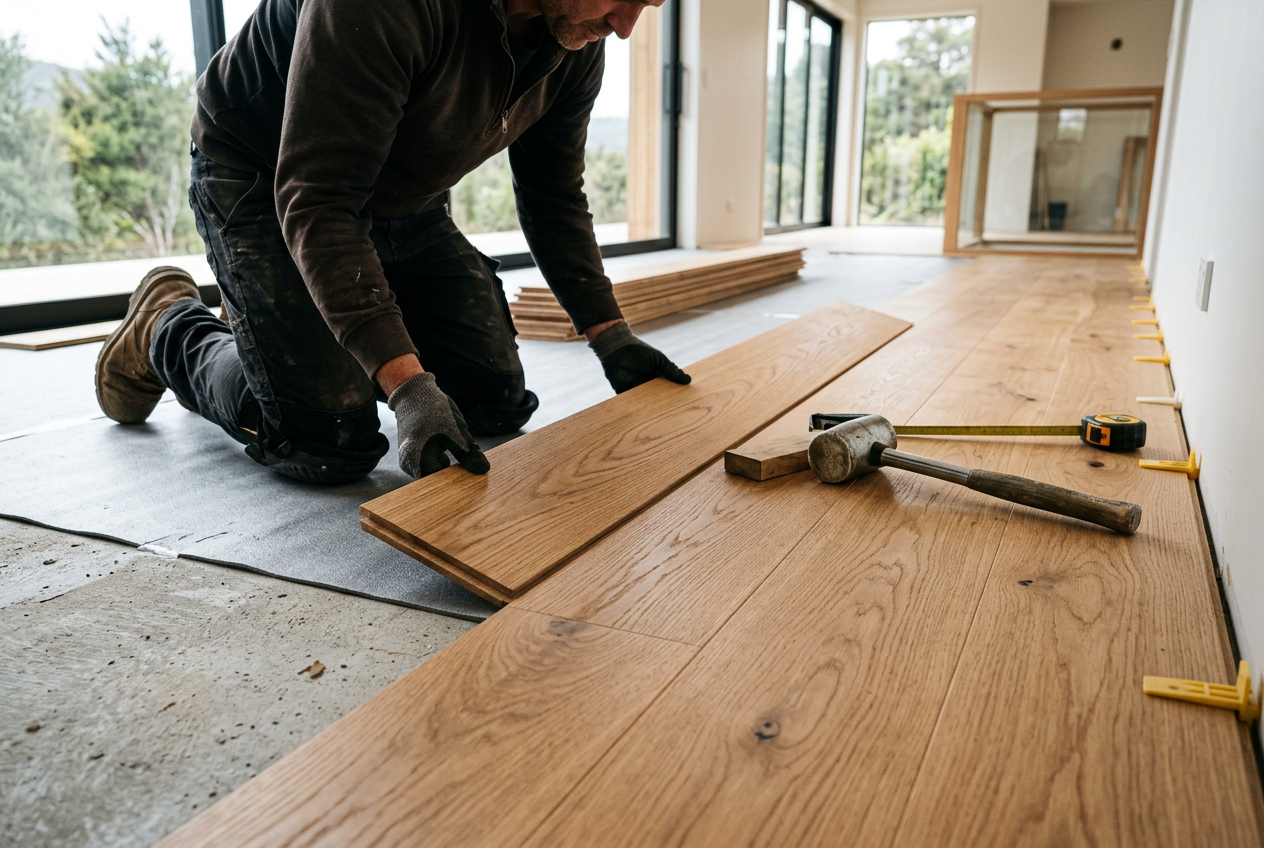
Choosing the right flooring is one of the most impactful decisions you'll make in a home improvement project. New Zealand's diverse climate — from the humid subtropics of Northland to the cold, wet winters of Southland — means that what works beautifully in one region can warp, mould, or wear prematurely in another. This guide walks you through the most popular flooring materials available in NZ, what affects their performance and cost, and how to make a smart, lasting choice.
Understanding NZ Conditions That Affect Flooring
Before comparing materials, it pays to understand the environmental pressures your floor will face:
- Moisture and humidity: Coastal and northern regions experience high humidity year-round. Sub-floor moisture is a major issue in older NZ homes with suspended timber floors and inadequate underfloor ventilation.
- UV exposure: New Zealand has some of the highest UV levels in the world. South-facing rooms may be cool and damp; north-facing rooms can bleach and dry out certain materials rapidly.
- Temperature swings: Canterbury, Otago, and Central Plateau homes experience large daily and seasonal temperature ranges, causing expansion and contraction in rigid materials.
- Seismic movement: In earthquake-prone areas, rigid tile installations need flexible adhesives and grout to reduce cracking.
- Healthy Homes Standards: Rental properties must meet Tenancy Services Healthy Homes Standards, which include underfloor insulation requirements that interact directly with your flooring system.
Popular Flooring Materials Compared
| Material | Durability | Moisture Resistance | Warmth Underfoot | Typical Best Use |
|---|---|---|---|---|
| Solid timber | High | Low–Medium | Warm | Living areas, bedrooms |
| Engineered timber | High | Medium | Warm | Living areas, over concrete |
| Luxury vinyl plank (LVP) | Very high | Excellent | Medium | Kitchens, bathrooms, rentals |
| Ceramic/porcelain tile | Very high | Excellent | Cold | Bathrooms, laundries, entries |
| Carpet | Medium | Low | Very warm | Bedrooms, living rooms |
| Polished concrete | Very high | Excellent | Cold | Modern homes, slabs |
| Laminate | Medium | Low | Medium | Dry living areas |
Solid and Engineered Timber
Solid timber flooring is a classic NZ choice — rimu, matai, and heart pine are found in many villas and bungalows. It can be sanded and refinished multiple times, extending its life for decades. However, solid timber is vulnerable to moisture and is not recommended in wet areas or directly over concrete slabs without a proper moisture barrier.
Engineered timber uses a real timber veneer over a stable plywood core, making it more dimensionally stable across temperature and humidity changes. It can be installed as a floating floor over concrete — a significant advantage in NZ's many slab-on-ground homes. Always check the manufacturer's warranty conditions and the thickness of the wear layer, as this determines how many times it can be refinished.
Luxury Vinyl Plank (LVP)
LVP has become one of the most popular flooring choices in NZ over the past decade, and for good reason. It is waterproof, highly durable, comfortable underfoot with the right underlay, and available in realistic timber and stone looks. It suits rental properties particularly well given its resilience to everyday wear. Look for products with a wear layer of at least 0.5 mm for residential use, and 0.7 mm or more for high-traffic areas.
Ceramic and Porcelain Tile
Tile is the go-to for bathrooms, laundries, and kitchen splashbacks. Porcelain tile is denser and less porous than ceramic, making it better suited to wet areas and outdoor-to-indoor transitions. In NZ wet areas, installations must comply with NZ Building Code clause E3 (internal moisture) — this means correct waterproof membrane systems behind and beneath tiles in showers and around baths. Use a quality flexible adhesive and grout (products from Ardex or Mapei are widely used by NZ tilers) to accommodate movement, especially in seismic zones.
Carpet
Carpet remains popular in NZ bedrooms and living rooms for its warmth and acoustic comfort. Wool carpet, produced extensively in NZ, is naturally resilient, fire-resistant, and handles humidity well. Synthetic carpets (nylon, polyester) are more stain-resistant and typically lower in cost. The underlay you choose is just as important as the carpet itself — a quality underlay improves comfort, insulation, and carpet longevity significantly.
Polished Concrete
Polished or sealed concrete suits modern NZ homes built on concrete slabs. It is extremely durable and easy to clean, but cold underfoot — pair it with in-slab hydronic heating or quality rugs in living areas. Ensure the slab has adequate moisture control before finishing.
What Affects the Cost of Flooring?
Cost drivers vary widely by material and project. Key factors include:
- Material grade and origin: Imported vs. NZ-made, thickness, and finish quality all affect price.
- Sub-floor preparation: An uneven or damaged sub-floor requires grinding, levelling compounds, or structural repairs before laying — this can add significant cost.
- Room complexity: Stairs, alcoves, and irregular shapes increase labour time and material waste.
- Underlay and adhesives: These are often underestimated in budgets.
- Removal and disposal of existing flooring: Old carpet, vinyl, or tiles must be removed and disposed of responsibly.
- Installer experience and location: Labour rates vary between regions.
Always get multiple written quotes from qualified tradespeople and ensure each quote covers the same scope of work so you can compare accurately. Include a contingency in your budget for sub-floor surprises.
Building Consent and Compliance
Most flooring replacements — swapping like-for-like carpet, vinyl, or timber — do not require a building consent under Schedule 1 of the Building Act. However, always confirm with your local council before starting work, as exemptions have conditions. Work that involves changes to the structure (e.g., cutting into a concrete slab for in-floor heating), or wet area waterproofing in a bathroom, may require consent and must meet the NZ Building Code. MBIE Building Performance provides guidance on when consent is required.
For rental properties, underfloor insulation requirements under the Healthy Homes Standards must be met by the compliance deadlines — check current requirements as these are enforced by Tenancy Services.
Choosing Quality Materials Suited to NZ Conditions
- Buy from reputable NZ suppliers such as Bunnings, Mitre 10, or PlaceMakers, or specialist flooring retailers.
- Ask for products tested to Australian/NZ standards where applicable.
- Check BRANZ for independent research on building materials performance in NZ conditions.
- For timber, confirm the species and grade are appropriate for your sub-floor type and moisture conditions.
- Always follow manufacturer installation guidelines — incorrect installation can void warranties.
When to Call a Professional
While keen DIYers can lay some floating floors and carpet tiles, most flooring work benefits enormously from professional installation:
- Solid timber and engineered timber: Requires precise acclimatisation, cutting, and fixing. Poor installation leads to squeaking, gapping, and cupping.
- Tile in wet areas: Waterproof membrane installation in bathrooms and showers is critical and must comply with NZ Building Code E3. Errors here cause serious water damage and potential liability issues.
- Sub-floor repairs: Structural sub-floor work may be restricted building work requiring a Licensed Building Practitioner (LBP).
- In-slab or underfloor heating: Electrical underfloor heating is restricted electrical work and must be installed by a registered electrician licensed with the Electrical Workers Registration Board (EWRB). Hydronic systems must be installed by a licensed plumber registered with the Plumbers, Gasfitters and Drainlayers Board (PGDB).
A qualified local flooring installer will understand NZ-specific conditions, source appropriate materials, and stand behind their workmanship. Use tradedirectory.co.nz to find vetted flooring professionals in your area — always check references and confirm they carry appropriate insurance before work begins.
Practical Tips for Getting Good Value
- Plan your project budget carefully, including a contingency of at least 10–15% for unexpected sub-floor or structural issues.
- Get a minimum of three written quotes and ask each tradesperson to walk through the scope in detail.
- Check qualifications and references before hiring — ask to see examples of previous work.
- Buy slightly more material than your measured area to allow for cuts, waste, and future repairs (typically 10% extra for straight runs, more for diagonal or complex patterns).
- Consider the total lifecycle cost, not just the upfront price — a durable material that lasts 20+ years may be better value than a cheaper option replaced every 8–10 years.
- Time your project to avoid peak demand periods when tradespeople are busiest and lead times on materials may be longer.







