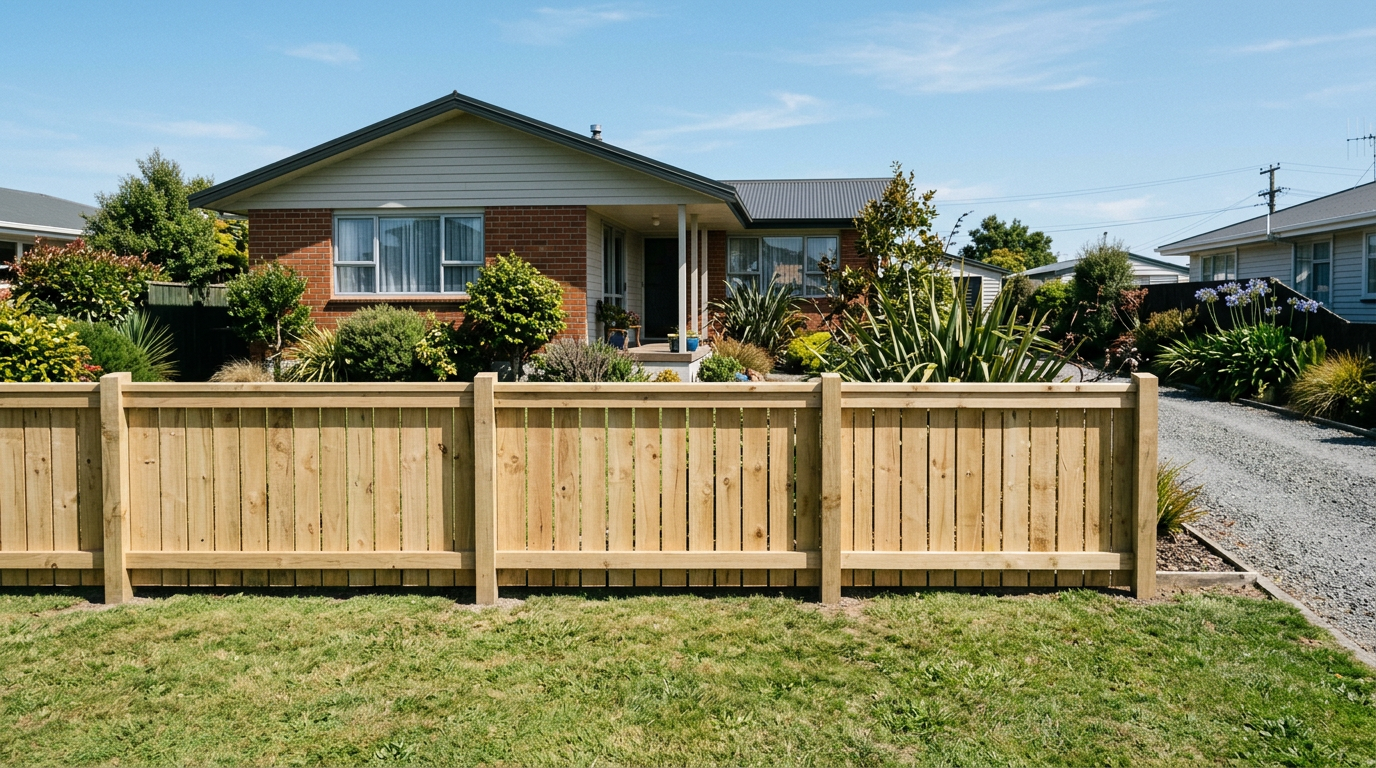
Yes, there are specific rules about fencing near road boundaries in New Zealand — and they vary depending on your local council, your property's zoning, and the type of road your property fronts. Getting it wrong can mean being asked to remove or lower a fence at your own cost, so it pays to check before you build.
Why Road Boundary Fences Are Regulated
Fences near roads are regulated for a few key reasons: traffic safety (particularly sight lines at driveways and intersections), neighbourhood character, and general amenity. Most councils manage this through their District Plan, which sets out rules for different residential, rural, and commercial zones. The MBIE Building Performance website is a good starting point for understanding how the NZ Building Code and local planning rules interact.
Height Limits: The General Rules
While every council is different, a common rule of thumb across many NZ districts is:
- Up to 1.0–1.2 metres is typically permitted near a road boundary without resource consent in residential zones.
- Up to 1.8 metres may be allowed on side or rear boundaries, but this limit often drops closer to the road.
- Rural zones sometimes allow taller fences, particularly post-and-rail or farm-style fencing.
These are general guides only — your council's District Plan is the definitive source. Always confirm with your local council before starting work.
| Zone Type | Typical Max Height at Road Boundary | Notes |
|---|---|---|
| Residential | 1.0–1.2 m | Varies by council |
| Rural | 1.2–1.8 m | Farm fencing often exempt |
| Commercial | Varies | Check District Plan |
| Corner sites | Often lower | Sight line rules apply |
Sight Lines and Traffic Safety
One of the most important considerations near road boundaries is sight lines — the clear triangular area near driveways and intersections that must remain unobstructed so drivers can see pedestrians and other vehicles. Many councils specify a sight triangle (sometimes called a vision splay) where fence height must be kept very low, often no more than 600–750 mm.
If your property is on a corner, or has a driveway close to an intersection, these rules are especially important. Your council's engineering or planning team can advise on the exact dimensions required for your site.
Do You Need a Building Consent?
In many cases, a standard residential fence does not require a building consent under Schedule 1 of the Building Act 2004, which lists exempt building work. However, exemptions have conditions — for example, a fence must not exceed certain heights and must not be in a location where it poses a risk to people. Retaining walls combined with fences, or fences on unstable ground, may require consent.
Planning (resource) consent is a separate matter and may be required if your fence doesn't comply with the District Plan rules — for example, if you want a taller fence near the road. Always check both building consent and resource consent requirements with your local council. The MBIE Building Performance site has useful guidance on Schedule 1 exemptions.
The Fencing Act 1978
The Fencing Act 1978 governs disputes between neighbours about boundary fences, including cost-sharing. However, it does not override council planning rules — so even if your neighbour agrees to a tall fence, you still need to comply with your District Plan. Note that the Fencing Act generally does not apply to road boundaries (which are public land), so the road-boundary fence is typically your responsibility alone.
Materials and Appearance Rules
Some councils also have rules about fence materials and appearance near road boundaries, particularly in heritage areas, special character zones, or newer subdivisions with design guidelines. Covenants on your title (set by a developer) may also restrict fence styles, colours, or materials — these are separate from council rules but equally binding.
For durable, weather-resistant fencing materials suited to NZ conditions, suppliers like Mitre 10, Bunnings, and PlaceMakers stock a wide range of timber, steel, and composite options.
Rural and Lifestyle Properties
On rural or lifestyle blocks, road boundary fencing is often more straightforward — post-and-wire or post-and-rail fencing is common and generally has fewer restrictions. However, if your property is near a state highway, NZTA (Waka Kotahi) may also have requirements, particularly around access points and sight lines. Check with your council and, if relevant, Waka Kotahi.
When to Call a Professional
A qualified fencer will be familiar with common local rules and can help you plan a fence that's both compliant and fit for purpose. They can also advise on ground conditions, post depths, and materials suited to your site. That said, always verify consent requirements directly with your council — a fencer cannot give you a legal guarantee about planning compliance.
For complex situations — such as corner sites, heritage zones, or fences combined with retaining walls — it may also be worth speaking to a Licensed Building Practitioner (LBP). You can find qualified LBPs at Licensed Building Practitioners and experienced local fencers right here on tradedirectory.co.nz.





