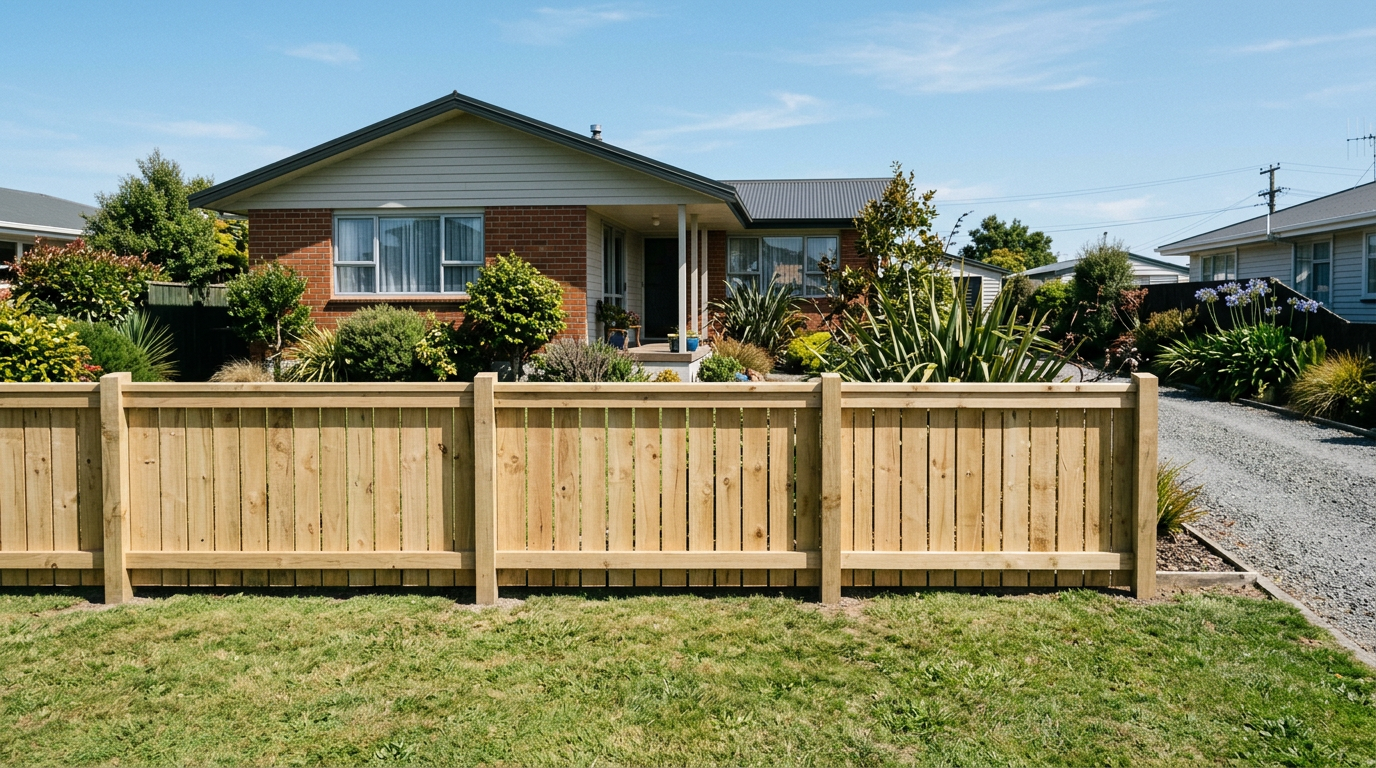
Yes, there are council rules about fence height near a road boundary in New Zealand, and they vary depending on where you live. Most councils set height limits through their district plan, and getting it wrong can mean being asked to remove or lower your fence at your own cost. Here's a plain-English guide to how it works.
Why Councils Regulate Fence Height Near Roads
Fences close to road boundaries can affect driver sightlines, pedestrian safety, and the general streetscape of a neighbourhood. A tall solid fence on a corner section, for example, could block a driver's view of oncoming traffic or pedestrians — a genuine safety hazard. Councils use their district plans (made under the Resource Management Act 1991) to manage these risks.
Typical Height Limits — What to Expect
While rules differ between councils, some common patterns exist across New Zealand:
- Front boundary fences (facing the road) are often limited to 1.0 m to 1.2 m for solid fences.
- Transparent or open fences (such as post-and-rail or pool fencing) may be allowed up to 1.8 m in some zones.
- Corner sections usually have stricter rules — a sight triangle or splay area near the intersection where fence height is limited to as low as 0.6 m to 0.75 m to protect driver sightlines.
- Rural zones may have more relaxed rules than residential zones.
- Retaining walls combined with fences are often measured together for total height.
These are general guides only. Your specific limits depend on your council's district plan and the zone your property sits in.
How to Find the Rules for Your Property
The most reliable way to find out what applies to your section is to:
- Check your council's district plan — most are available online through your council's website or the national planning portal.
- Contact your local council's duty planner — they can give you a quick verbal steer on what's permitted.
- Check if a resource consent is required — if your proposed fence exceeds the permitted height, you may need to apply for resource consent before building.
The MBIE Building Performance website is a useful starting point for understanding the difference between building consent (under the Building Act 2004) and resource consent (under the RMA). Note that most standard fences don't require a building consent under Schedule 1 of the Building Act — but always confirm with your council, as exceptions apply (for example, fences over 2.5 m or retaining walls over certain heights may need consent — confirm the exact thresholds with your council).
Road Boundary vs. Side and Rear Boundaries
It's worth knowing that road boundary rules are generally stricter than those for side and rear boundaries. A fence between you and your neighbour at the side or rear of your property is typically governed by the Fencing Act 1978 (which covers cost-sharing and disputes), while road boundary fences fall under district plan rules. These are two separate legal frameworks.
Corner Sections — Extra Care Required
If your property is on a corner, pay close attention to sight triangle requirements. Many councils require a clear sightline triangle near the intersection — often measured as a triangle with sides of around 2.5 m to 6 m from the corner point, depending on road speed and council rules. Within this triangle, fence height may be restricted to as little as 600 mm. Check your district plan carefully or ask your council before building anything near a corner.
Materials and Appearance Rules
Some councils also have rules about fence materials and appearance near road boundaries — for example, prohibiting certain types of wire fencing in residential zones, or requiring fences to complement the character of a heritage area. If you live in a special character zone, heritage area, or a newer subdivision with design covenants, there may be additional restrictions beyond the district plan.
Neighbour Disputes and Road Boundary Fences
Unlike boundary fences between neighbours, a road boundary fence is entirely your responsibility — your neighbour (in this case, the road controlling authority) has no obligation to share costs. If you're unsure where your legal boundary sits, consider getting a licensed cadastral surveyor to peg the boundary before you build.
When to Call a Professional
A qualified fencer will be familiar with common local rules and can help you plan a fence that's likely to comply — but the legal responsibility for getting consents and checking the district plan rests with you as the property owner. For anything near a road boundary, especially on a corner section or if you're planning a fence over 1.2 m, it's worth:
- Calling your local council to confirm the permitted height.
- Hiring an experienced local fencer who knows your area's typical requirements.
- Getting a surveyor to confirm the boundary if there's any doubt.
You can find qualified fencers in your area on tradedirectory.co.nz.
For health and safety on any fencing project — particularly when working near roads — refer to WorkSafe NZ guidance on working safely near traffic.





