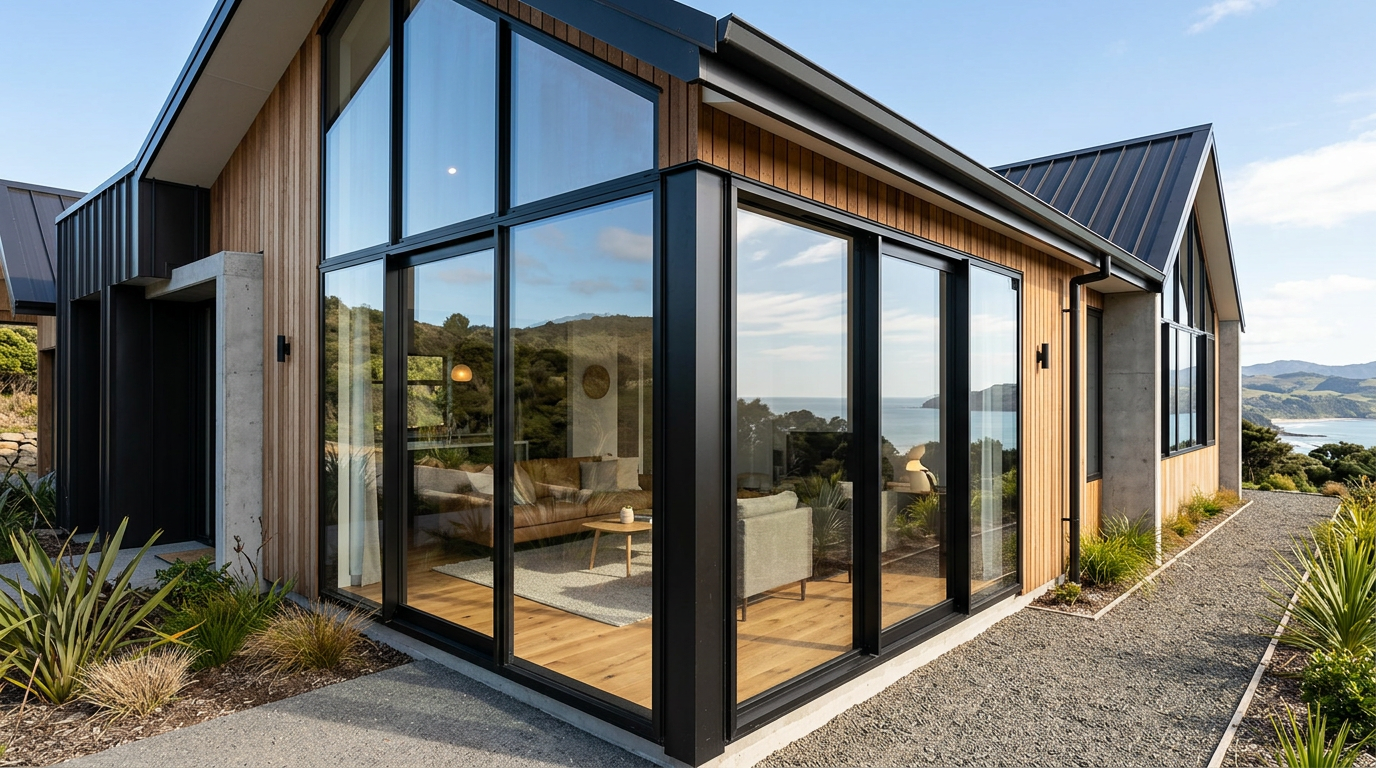
Replacing or upgrading your windows is one of the bigger decisions you'll make as a homeowner — and the frame material you choose will affect your comfort, energy bills, maintenance workload, and kerb appeal for decades to come. In New Zealand, three materials dominate the market: aluminium, uPVC (unplasticised polyvinyl chloride), and timber. Each has genuine strengths and real drawbacks, and the best choice depends on your home's style, location, and budget.
A Quick Overview of Each Option
Aluminium Frames
Aluminium has been the go-to window frame material in New Zealand since the 1970s. It's strong, lightweight, low-maintenance, and handles our coastal salt air and UV exposure well. Modern aluminium frames are available with thermal breaks — a layer of insulating material separating the inner and outer aluminium sections — which dramatically improves their energy performance compared to older single-skin frames. Without a thermal break, aluminium conducts cold readily and can cause condensation on the inner face, which is a concern under the NZ Building Code and the Healthy Homes Standards.
uPVC Frames
uPVC is the dominant window frame material across Europe and is growing steadily in popularity here. The material is a rigid plastic that doesn't rot, corrode, or need painting. Its biggest advantage is thermal performance: uPVC is a poor conductor of heat, meaning frames stay warmer in winter and cooler in summer without needing a thermal break. It's also naturally resistant to moisture, making it well-suited to wet areas and high-humidity climates. The trade-off is that uPVC can discolour or become brittle over time if exposed to intense UV — something worth considering in high-sun NZ regions.
Timber Frames
Timber is the traditional choice and remains popular in heritage homes, character villas, and bungalows. A well-made timber frame is beautiful, warm to the touch, and an excellent natural insulator. However, timber requires the most ongoing maintenance of the three options — regular painting or oiling, and prompt attention to any moisture ingress to prevent rot. BRANZ research highlights that poorly maintained timber joinery is one of the more common sources of weathertightness issues in older NZ homes. Engineered timber and finger-jointed options have improved durability, but the maintenance commitment remains real.
Head-to-Head Comparison
| Criteria | Aluminium | uPVC | Timber |
|---|---|---|---|
| Thermal performance | Moderate (good with thermal break) | Excellent | Good (natural insulator) |
| Durability | Excellent (30–50+ years) | Very good (30–40+ years) | Good–excellent (with maintenance) |
| Maintenance required | Very low | Very low | High (regular painting/sealing) |
| Coastal/salt air suitability | Good (powder-coated) | Excellent | Moderate (needs protection) |
| UV resistance | Excellent | Moderate (can yellow/fade) | Moderate (needs coating) |
| Aesthetic range | Wide (many colours/profiles) | Moderate (mainly white/woodgrain) | Excellent (natural, paintable) |
| Heritage/character homes | Limited | Limited | Excellent |
| DIY-friendliness | Low (specialist fabrication) | Low–moderate | Moderate (repairs possible) |
| Approximate cost (as a guide) | Mid-range | Mid to upper | Upper range |
| Recyclability | Excellent | Moderate | Excellent |
Thermal Performance and the NZ Building Code
Since 2023, the NZ Building Code (specifically Clause H1 Energy Efficiency) has been progressively tightened, requiring higher minimum insulation values for new builds and significant alterations. This means single-skin aluminium frames without a thermal break no longer meet minimum requirements in most NZ climate zones for new work. If you're replacing windows in an existing home, you're not always required to upgrade to current H1 standards, but it's strongly worth doing for comfort and energy savings — especially given the Healthy Homes Standards requirements for rental properties.
uPVC and thermally broken aluminium both perform well under the updated H1 requirements. Timber, when properly glazed with double glazing, also meets the standard comfortably.
Cost Considerations
Prices vary significantly by supplier, window size, glazing type, and installation complexity — so treat any figures here as a rough guide only. As a general rule:
- Aluminium (thermally broken, double-glazed) sits in the mid-range and is the most commonly quoted option from NZ suppliers.
- uPVC is often comparable to or slightly above thermally broken aluminium, depending on the brand and profile.
- Timber is typically the most expensive upfront, and ongoing maintenance costs add to the lifetime total.
You can compare products and get a feel for pricing at Bunnings or Mitre 10 for off-the-shelf options, though most quality window installations are custom-fabricated through a glazier or joinery supplier.
Don't forget installation costs. Window installation that involves structural alterations or changes to the building envelope is Restricted Building Work under the Building Act, meaning it must be carried out or supervised by a Licensed Building Practitioner (LBP). Always check your glazier or installer holds the appropriate licence.
Maintenance: What You're Signing Up For
- Aluminium: Wipe down occasionally, check seals every few years. Powder-coat finish is durable but can be touched up if chipped.
- uPVC: Wipe clean with mild detergent. No painting required. Check and replace rubber seals as they age.
- Timber: Sand and repaint or re-oil every 3–7 years depending on exposure. Inspect for rot, especially at sill junctions and bottom corners. Prompt repairs are essential.
For painting timber joinery, Resene and Dulux both offer exterior timber systems specifically formulated for NZ conditions.
Our Recommendation
There's no single right answer, but here's practical guidance for common NZ scenarios:
- New build or full replacement in a modern home: Go with thermally broken aluminium or uPVC. Both meet current Building Code requirements, are low-maintenance, and offer good long-term value. uPVC edges ahead on thermal performance; aluminium offers a wider colour range and is more widely supported by NZ fabricators.
- Coastal or high-humidity location (e.g. Northland, Wellington south coast): uPVC is the standout choice — it won't corrode, pit, or require protective coatings in salt-laden air.
- Heritage villa, bungalow, or character home: Timber is usually the right call for authenticity and council consent reasons. Budget for ongoing maintenance and use a quality exterior paint system.
- Rental property (Healthy Homes compliance): Prioritise thermally broken aluminium or uPVC with double glazing to meet condensation and insulation requirements cost-effectively.
- Tight budget, existing home: Thermally broken aluminium is typically the most accessible option with the widest installer network across NZ.
Whatever material you choose, always use a qualified glazier for supply and installation. A good local glazier will assess your specific exposure zone, council requirements, and home style before recommending a solution. You can find experienced glaziers in your area at tradedirectory.co.nz.



 Window & Glass Association