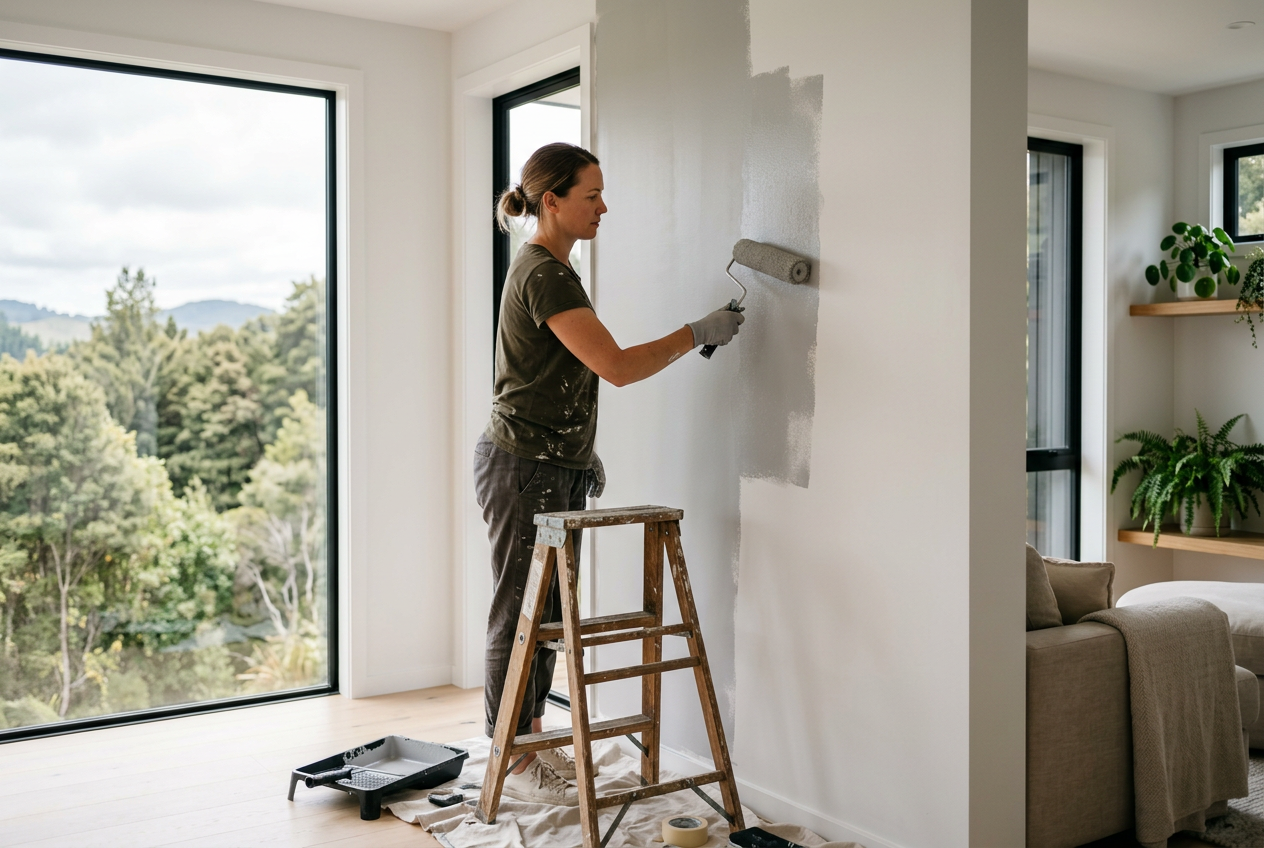
You've rolled on a fresh coat of paint and the old colour is still grinning right back at you. It's one of the most common frustrations for DIY painters, and the good news is there's nearly always a clear reason — and a straightforward fix. Here's what's likely going wrong and how to sort it out.
1. You're Going from Dark to Light (or Vice Versa)
One of the biggest culprits is a dramatic colour change. Painting a pale grey over a deep navy, or a bright white over a rich red, is genuinely hard work — even for professional painters. Dark pigments are stubborn, and light paints simply don't have enough pigment density to block them in a single pass.
The fix: Use a quality primer or a tinted primer matched to your new colour before applying your topcoat. Resene and Dulux both offer primers specifically designed to block strong colours. Ask your paint store to tint the primer partway toward your final colour — this dramatically reduces the number of topcoats needed.
2. The Paint Is Too Thin or Over-Diluted
Adding too much water (or solvent) to stretch your paint is a false economy. Thinning reduces the pigment-to-binder ratio, meaning less colour is deposited per coat. Some painters thin paint to help it roll more smoothly, but there's a limit before coverage suffers badly.
The fix: Follow the manufacturer's dilution guidelines on the tin. For most interior walls, little to no thinning is needed with modern water-based paints. If the paint feels too thick, check you're using the right product for the surface.
3. You're Using the Wrong Sheen Level or Product
Not all paints are created equal. A low-sheen or flat paint typically has higher pigment volume and better hide than a high-gloss product. If you've grabbed a semi-gloss or gloss for a large wall area, you may find it takes more coats to achieve solid coverage.
| Sheen Level | Typical Coverage | Best Use |
|---|---|---|
| Flat / Matt | Excellent hide | Ceilings, low-traffic walls |
| Low Sheen | Very good hide | Living areas, bedrooms |
| Semi-Gloss | Moderate hide | Trims, kitchens, bathrooms |
| Gloss | Lower hide | Doors, joinery |
The fix: Match the sheen to the job. For walls where coverage is a priority, a low-sheen or washable flat is your best bet.
4. Poor Surface Preparation
Paint is only as good as what's underneath it. Surfaces that are dirty, greasy, chalky, or glossy will repel or absorb paint unevenly, making coverage patchy and inconsistent. In New Zealand's humid climate, mould and moisture on walls are also common culprits — especially in older homes or poorly ventilated rooms.
The fix: Clean walls thoroughly with a sugar soap solution before painting. Sand glossy surfaces lightly to give the new paint something to grip. Treat any mould with an appropriate mould killer and allow to dry fully. BRANZ has excellent guidance on surface preparation for different substrates.
5. Applying Too Thin a Film
Rolling paint out too far — trying to cover a large area with a small amount of paint — leaves a film that's too thin to hide what's beneath. This is sometimes called over-spreading.
The fix: Check the spreading rate on the tin (usually listed in square metres per litre) and don't exceed it. Load your roller or brush properly and apply paint with firm, even pressure. Two properly applied coats will always outperform three thin, skimpy ones.
6. Using a Budget or Low-Quality Paint
Bargain-bin paints often contain less pigment and cheaper binders, which directly affects hiding power. This is particularly noticeable when painting over strong colours or bare surfaces.
The fix: Invest in a mid-range or premium paint from a reputable brand. Wattyl and Dulux offer good mid-range options, while Resene's premium lines are well regarded for coverage and durability. The extra cost per litre is usually offset by needing fewer coats.
7. The Surface Is Too Porous
New plasterboard, bare timber, or freshly filled patches are highly porous — they soak up paint like a sponge, leaving the surface looking patchy and under-covered. This is especially common after GIB stopping work or plastering repairs.
The fix: Always apply a sealer or primer to porous surfaces before your topcoat. GIB recommends sealing new plasterboard before painting. A single coat of the right primer can save you two or three extra topcoats.
8. Environmental Conditions
Painting in very hot, dry conditions (common in Canterbury and Hawke's Bay summers) can cause paint to dry too fast, leaving lap marks and uneven coverage. High humidity — familiar to anyone in Auckland or the West Coast — can slow drying and cause the paint to sag or not bond properly.
The fix: Paint in mild conditions where possible — ideally between 10°C and 25°C with moderate humidity. Avoid painting in direct sunlight on hot days.
When to Call a Professional
If you've tried the fixes above and still can't achieve a satisfactory finish, it may be time to bring in a qualified painter. Persistent coverage issues can sometimes point to underlying problems like moisture ingress, substrate failure, or incompatible paint systems that need professional diagnosis. A skilled tradesperson will also have access to professional-grade products and equipment that make a real difference to the final result. You can find experienced local painters on tradedirectory.co.nz.