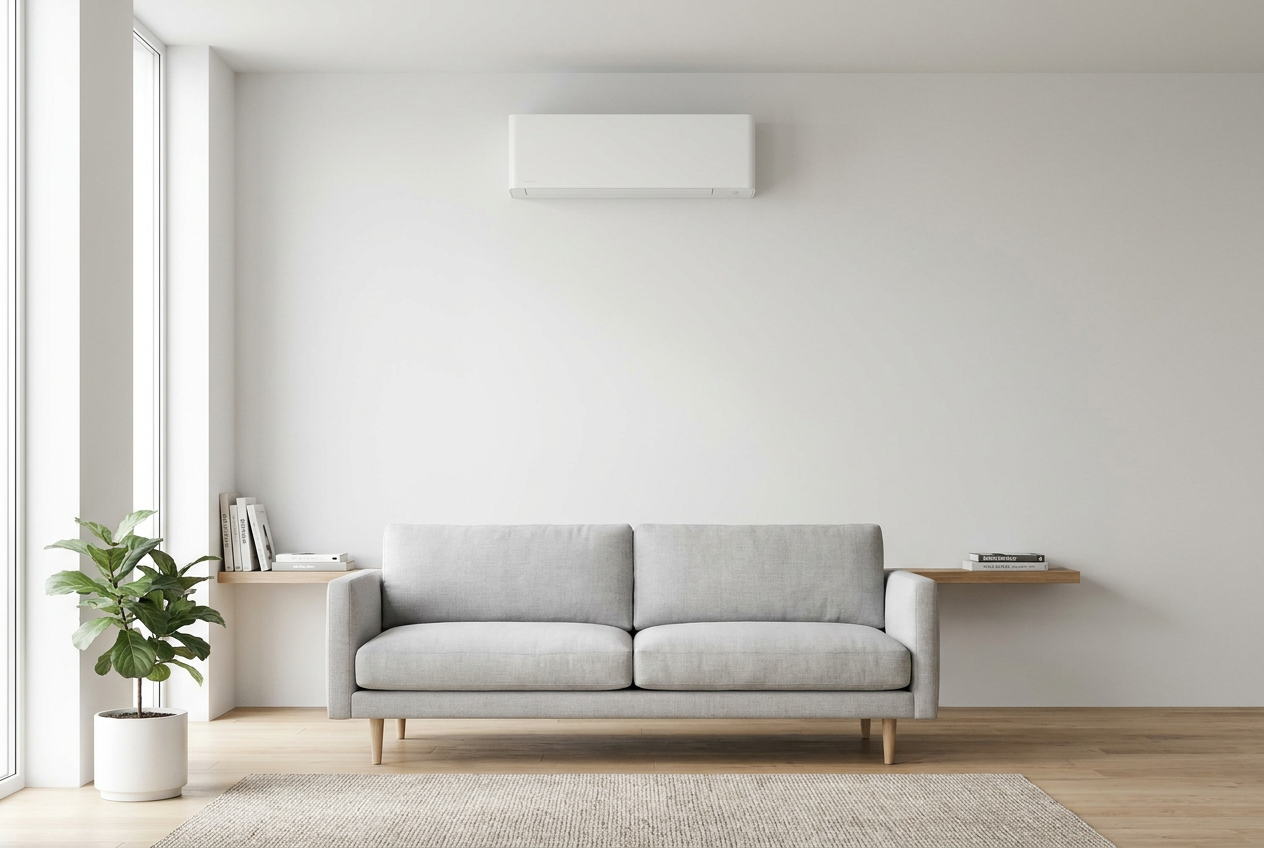
A heat pump that's running but not warming your home properly is one of the most frustrating things on a cold New Zealand winter's day. The good news is that many common causes are straightforward to identify, and some you can even sort out yourself. Here's a practical guide to diagnosing the problem and knowing when to call in a qualified heat pump installer.
Check the Basics First
Before assuming the worst, run through these quick checks:
- Mode setting: Make sure the unit is set to Heat mode, not Cool, Fan, or Auto. It sounds obvious, but it's a surprisingly common culprit.
- Target temperature: Is the set temperature actually higher than the current room temperature? If the room is already at or above the set point, the unit won't heat.
- Remote control batteries: Weak batteries can cause the remote to send incomplete signals, leaving the unit in the wrong mode.
- Timer settings: Check whether a timer has been programmed that's overriding your manual settings.
Dirty or Blocked Filters
This is the single most common reason a heat pump underperforms. Clogged filters restrict airflow, forcing the unit to work harder while delivering less warm air into the room. Most manufacturers recommend cleaning filters every four to six weeks during heavy use.
To clean them:
- Turn the unit off at the wall.
- Open the front panel and slide out the filters.
- Vacuum off loose dust, then rinse under warm water.
- Allow to dry completely before reinserting — never run the unit with wet filters.
Many heat pumps have a filter-cleaning indicator light. If yours is on, this is your first port of call.
Outdoor Unit Issues
The outdoor unit (condenser) is just as important as the indoor head unit. Common problems include:
- Blocked airflow: Overgrown shrubs, fences built too close, or debris like leaves and dirt packed around the unit will starve it of airflow. Clear at least 300–600 mm of clearance around the unit (check your installation manual for the exact requirement).
- Ice build-up: In cold or frosty conditions, the outdoor unit can ice up. Modern heat pumps have a defrost cycle that handles this automatically — you may notice the unit temporarily blowing cooler air or steaming outside. If the unit is completely encased in ice and not defrosting, that's a fault requiring a technician.
- Dirty coils: The outdoor coil can accumulate grime over time. A gentle rinse with a garden hose (unit off at the isolator first) can help, but a professional service will do a more thorough job.
The Heat Pump Is Too Small for the Space
If your heat pump has always struggled on the coldest days, it may simply be undersized for the room or home. Heat pump capacity is measured in kilowatts (kW), and the right size depends on room volume, insulation levels, window area, and your local climate. A home in Queenstown or the Central Plateau needs a more capable unit than the same-sized home in Auckland.
BRANZ provides useful guidance on home heating and insulation that can help you assess whether your setup is appropriate for your climate zone.
Refrigerant Leak
If the filters are clean, airflow is fine, and the unit still isn't heating well, a refrigerant leak could be to blame. Signs include:
- The unit blows air but it's barely warm
- Ice forming on the indoor unit or refrigerant lines
- A hissing sound near the unit
- Higher power bills for less output
Refrigerant handling is restricted work in New Zealand — only a certified refrigeration and air conditioning technician (holding the appropriate EWRB or industry certification) may legally handle refrigerants. Do not attempt to top up refrigerant yourself.
Electrical or Control Board Faults
Faulty capacitors, control boards, or sensors can cause erratic heating behaviour. If your unit is displaying error codes on the display or remote, note them down — they're invaluable for a technician diagnosing the fault. Check your owner's manual for a basic error code list, but most codes will require a professional to resolve.
Any internal electrical work on a heat pump is restricted electrical work under the Electricity Act and must be carried out by a registered electrician. See the Electrical Workers Registration Board for more information.
Poor Home Insulation
Sometimes the heat pump is working perfectly — it's the house that's the problem. New Zealand's older housing stock is notoriously under-insulated, and a heat pump will struggle to maintain warmth if heat is escaping through the ceiling, walls, and floor as fast as it's being generated.
The Energywise website has excellent guidance on insulation standards and available subsidies. Rental properties must also meet Healthy Homes Standards for heating and insulation — landlords can find the requirements at Tenancy Services.
Comparison: DIY Fixes vs Professional Repairs
| Issue | DIY? | Notes |
|---|---|---|
| Dirty filters | ✅ Yes | Clean every 4–6 weeks |
| Wrong mode/settings | ✅ Yes | Check remote and timer |
| Blocked outdoor unit | ✅ Yes | Clear debris, trim plants |
| Iced-up outdoor unit | ⚠️ Maybe | Wait for defrost cycle; call if persistent |
| Refrigerant leak | ❌ No | Restricted work — licensed tech only |
| Electrical/control fault | ❌ No | Restricted electrical work |
| Undersized unit | ❌ No | Requires professional assessment and replacement |
When to Call a Professional
Call a qualified heat pump installer or refrigeration technician if:
- The unit displays persistent error codes
- You suspect a refrigerant leak
- The outdoor unit won't defrost
- The unit trips the circuit breaker
- Performance has gradually declined despite clean filters
- The unit is more than 10–12 years old and struggling
A licensed installer can also advise whether a repair is cost-effective or whether a newer, more efficient unit would serve you better. You can find qualified local heat pump installers on tradedirectory.co.nz.