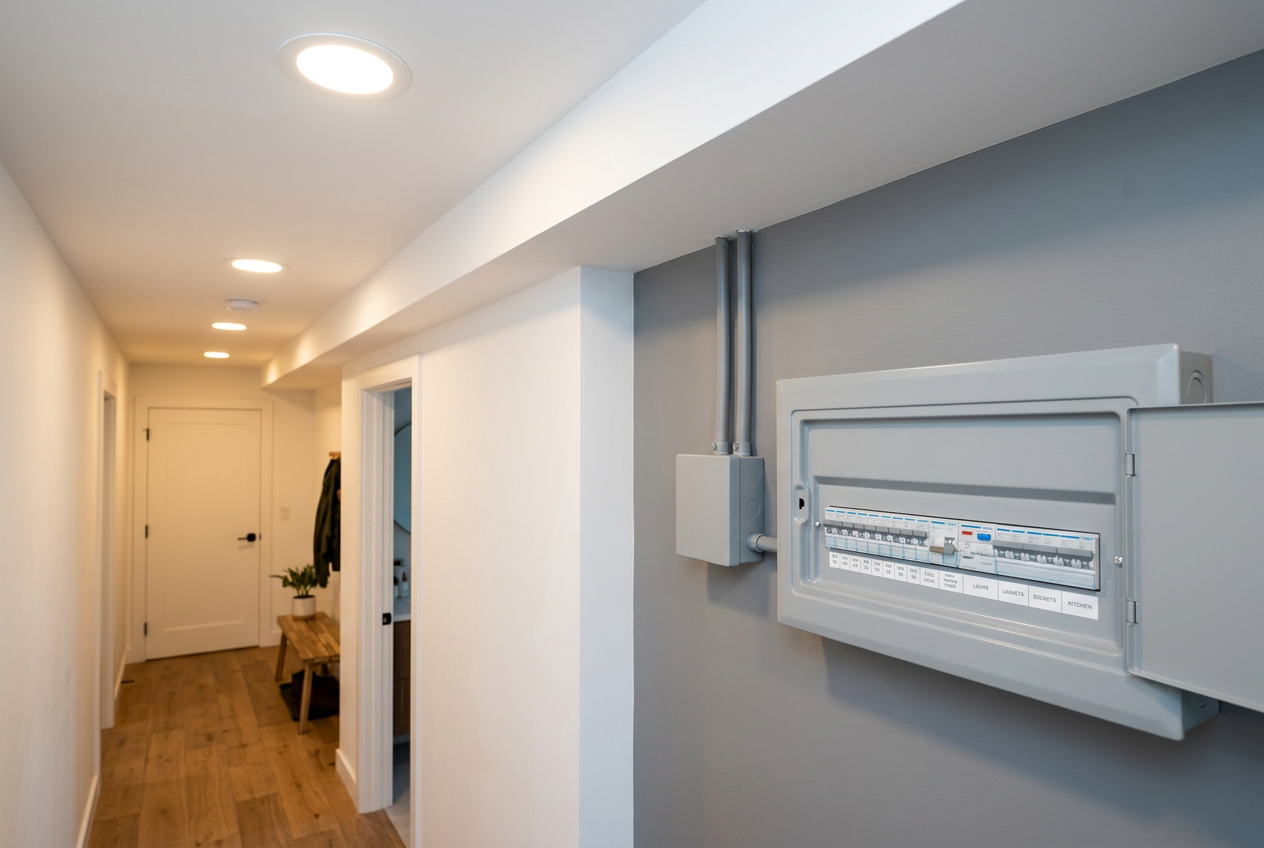
If you've peered inside your switchboard and found a row of small porcelain or ceramic holders with wire running through them, you've got old-style rewirable fuses. These were standard in New Zealand homes built before the late 1970s and early 1980s, and while they did the job for decades, modern homes and modern safety standards have moved well beyond them.
What Are Ceramic Fuses and Why Were They Used?
Ceramic (or porcelain) rewirable fuses were the standard overcurrent protection device for most of the 20th century. Each fuse holder contains a thin piece of fuse wire rated to a specific current — typically 8A, 15A, or 30A. When a circuit is overloaded or a fault occurs, the wire melts and breaks the circuit.
They were cheap, simple, and effective enough for the electrical loads of the time — a few lights, a stove, and maybe a hot water cylinder. Today's homes run significantly more appliances, and the demands on household wiring are far greater.
The Problems With Old Ceramic Fuses
Ceramic fuses have several serious drawbacks compared to modern protection devices:
- Incorrect rewiring is a real danger. When a fuse blows, some homeowners replace the wire with a thicker gauge than specified — or even use copper wire or a nail. This removes the protection entirely and creates a serious fire risk.
- No earth leakage protection. Ceramic fuses only protect against overcurrent. They offer no protection against earth faults or electric shock, unlike modern RCDs (Residual Current Devices).
- Slow to respond. Rewirable fuses are slower to react to faults than modern circuit breakers.
- Insurance and lending implications. Many NZ insurers and mortgage lenders now ask about switchboard type. An old rewirable fuse board can affect your cover or your ability to get a home loan.
- Incompatibility with modern loads. Heat pumps, EV chargers, and modern appliances often require dedicated circuits with appropriate protection that old boards simply can't accommodate.
What Does a Modern Switchboard Include?
A modern NZ switchboard typically contains:
| Device | Purpose |
|---|---|
| MCBs (Miniature Circuit Breakers) | Overcurrent protection — trip automatically and reset with a switch |
| RCDs (Residual Current Devices) | Earth leakage / shock protection — required by NZ regulations |
| RCBO (Combined RCD + MCB) | Dual protection on a single circuit |
| Main switch | Isolates the entire board |
Under the New Zealand Building Code and current wiring rules (AS/NZS 3000, the "Wiring Rules"), RCD protection is mandatory for socket outlet circuits and other specified circuits in new and altered installations. An old ceramic fuse board almost certainly has no RCD protection at all.
Is a Switchboard Upgrade Legally Required?
You are not automatically required by law to upgrade an existing switchboard simply because it's old. However, an upgrade becomes necessary when:
- You carry out alterations or additions to your electrical installation (triggering compliance with current standards for the affected circuits)
- Your insurer or bank requires it
- A licensed electrician identifies it as unsafe during an inspection
- You install new circuits for appliances like a heat pump, EV charger, or spa pool
MBIE Building Performance provides guidance on when building consent and compliance obligations are triggered by electrical work.
What Are the Costs Involved?
As a very rough guide, a full switchboard upgrade by a licensed electrician in New Zealand can range from a few hundred dollars for a small, straightforward job up to $2,000 or more for a larger home with many circuits or where additional work (such as new cabling) is needed. Get at least two or three quotes, as pricing varies by region and complexity. Always ask for a written quote that includes all materials and labour.
What Can a Homeowner Do Themselves?
Very little — and that's important to understand. Electrical work in New Zealand is restricted work under the Electricity Act 1992. This means that connecting, disconnecting, or altering any fixed wiring, switchboards, or electrical fittings must be carried out by a registered electrician and certified with a Certificate of Compliance (CoC).
As a homeowner, you may legally:
- Replace a like-for-like light fitting or socket faceplate (in some circumstances — check with EWRB if unsure)
- Reset a tripped circuit breaker
- Replace a blown fuse wire with the correct rated wire (not a substitute)
You must not attempt to rewire, replace, or modify your switchboard yourself.
Safety Note
If your fuses are blowing frequently, do not simply keep replacing the wire — this is a warning sign of an underlying fault or overloaded circuit. Switch off the affected circuit and call a licensed electrician. Never use incorrect fuse wire or any substitute material. A wiring fault that isn't properly protected can cause a house fire.
WorkSafe NZ has clear guidance on electrical safety in the home.
When to Call a Professional
The answer here is straightforward: all switchboard work requires a licensed electrician. If your home still has ceramic fuses, it's worth having a registered electrician carry out a switchboard inspection. They can assess the condition of your wiring, identify any immediate hazards, and give you a clear recommendation and quote for an upgrade.
You can find qualified, local licensed electricians on tradedirectory.co.nz — look for those who are registered with the Electrical Workers Registration Board (EWRB), which you can verify on their public register.