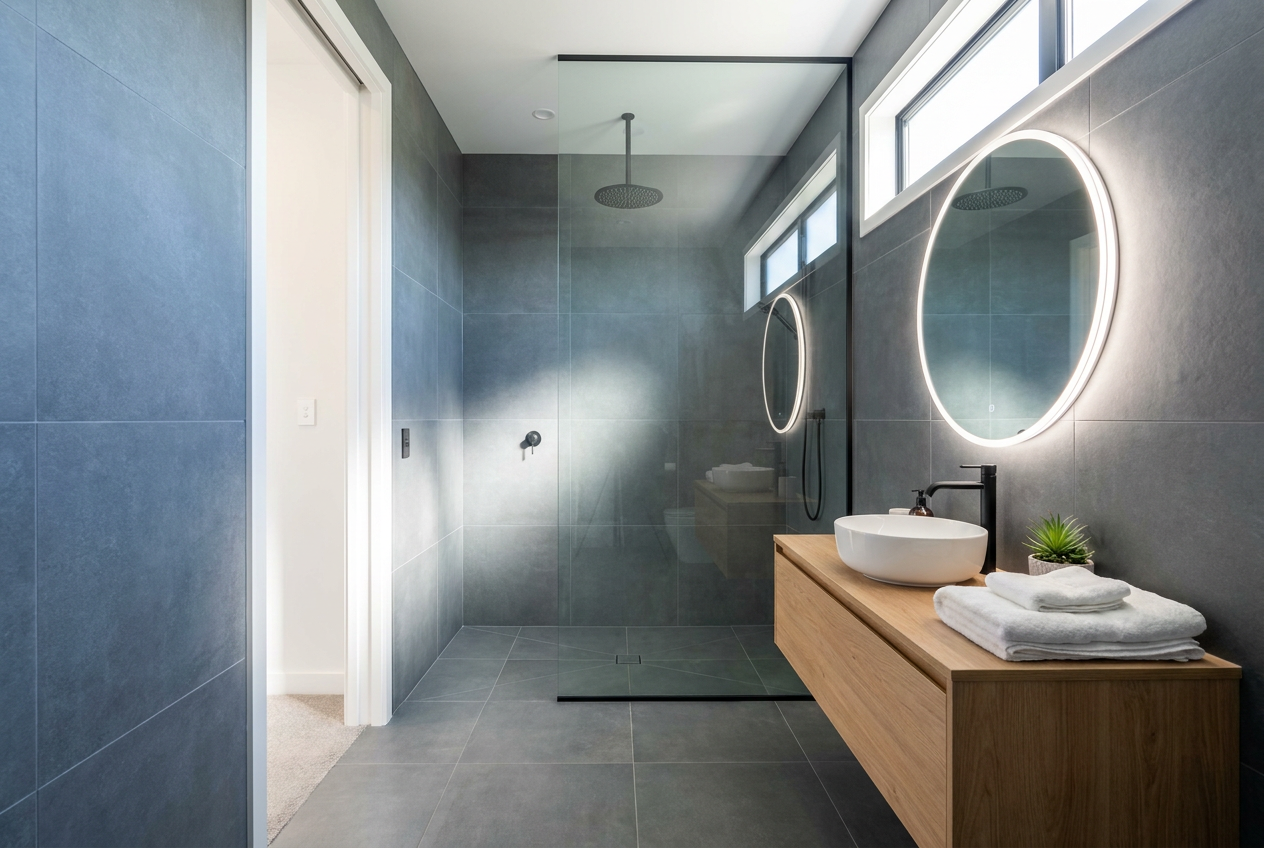
Water and buildings don't mix well. Every time you shower, run a bath, or splash around the vanity, water is looking for somewhere to go — and if your bathroom isn't properly waterproofed, it will find its way into places you really don't want it. Understanding why waterproofing matters can save you from expensive repairs and serious health issues down the track.
What Happens Without Proper Waterproofing?
Without an effective waterproof membrane, water seeps through grout lines, around fixtures, and into the substrate beneath your tiles or wall linings. Over time this leads to:
- Structural damage — timber framing, floor joists, and wall studs absorb moisture and begin to rot, weakening the structure of your home
- Mould and mildew growth — hidden behind tiles and linings, mould can spread extensively before you even notice it
- Delaminating tiles — adhesive breaks down when wet, causing tiles to crack, hollow out, or fall off entirely
- Damage to adjoining rooms — water migrates through walls and floors into bedrooms, living areas, or the ceiling of the room below
- Costly remediation — stripping out a bathroom to fix water damage is far more expensive than waterproofing it correctly in the first place
New Zealand's humid climate — particularly in regions like Auckland, Northland, and the West Coast — makes bathrooms especially vulnerable. Even in drier areas, daily shower use creates a persistently wet environment.
The NZ Building Code Requires It
Waterproofing isn't just good practice — it's a legal requirement. The NZ Building Code, administered by MBIE Building Performance, includes Clause E3 (Internal Moisture), which requires that wet areas like showers and bathrooms are constructed to prevent moisture from penetrating walls and floors and causing damage.
Any building work that requires a building consent must meet these requirements. Even for work that doesn't require consent, the Building Code still sets the minimum standard your home must meet. Getting waterproofing wrong can affect your ability to sell your home, make insurance claims, or obtain a Code Compliance Certificate.
Where Does a Bathroom Need to Be Waterproofed?
Not every surface in a bathroom needs the same level of protection. As a general guide:
| Area | Waterproofing Requirement |
|---|---|
| Shower floor | Full waterproof membrane — critical |
| Shower walls (to full height) | Full waterproof membrane |
| Bath surround | Waterproofing to at least 100–150 mm above the bath rim |
| Bathroom floor (outside shower) | Water-resistant treatment recommended |
| Vanity splashback | Moisture-resistant lining at minimum |
The shower box is the highest-risk zone because it receives direct, sustained water contact every day. A properly installed membrane — typically a liquid-applied or sheet membrane system — forms a continuous barrier that channels water to the drain rather than letting it escape into the structure.
What Materials Are Used?
Professional waterproofers use products specifically rated for wet area use. Common systems in NZ include liquid-applied membranes (painted on in multiple coats), sheet membranes bonded to the substrate, and foam or fibre-reinforced systems. Products from suppliers like Ardex, Mapei, and Sika are widely used by NZ tradespeople and are formulated to meet local conditions and standards.
The substrate matters too. GIB Aqualine (a moisture-resistant plasterboard) or fibre cement sheet is typically used behind tiles in wet areas rather than standard plasterboard, which will deteriorate rapidly when wet. GIB provides specific guidance on appropriate linings for wet areas.
The Healthy Homes Connection
For rental properties, the Healthy Homes Standards require that rental homes are free from moisture ingress and drainage issues. A bathroom that isn't properly waterproofed can contribute to dampness and mould — putting tenants' health at risk and potentially leaving landlords non-compliant. BRANZ research consistently highlights moisture as one of the leading causes of building defects and poor indoor air quality in New Zealand homes.
Can a Homeowner Do Their Own Waterproofing?
Applying a waterproof membrane is not restricted building work in the same way that electrical or plumbing work is — so technically a competent homeowner can do it. However, the consequences of getting it wrong are severe and often hidden for years. Waterproofing is one of those jobs where the skill is in the preparation, the detailing around corners and penetrations, and knowing how to achieve a continuous, pinhole-free membrane.
If your bathroom renovation requires a building consent, the waterproofing must be done to a standard that satisfies your local council inspector. In that case, using a qualified waterproofer is strongly advisable.
When to Call a Professional
You should always engage a qualified waterproofer when:
- You're tiling a new shower or replacing an existing one
- There's any sign of existing water damage (soft floors, stained ceilings below, mouldy grout)
- Your renovation requires a building consent
- You're working on a multi-storey home where a leak could damage the floor below
- You're a landlord wanting to ensure Healthy Homes compliance
A professional waterproofer will know the right products, apply them correctly, and can provide documentation of the work done. You can find qualified local waterproofers on tradedirectory.co.nz.