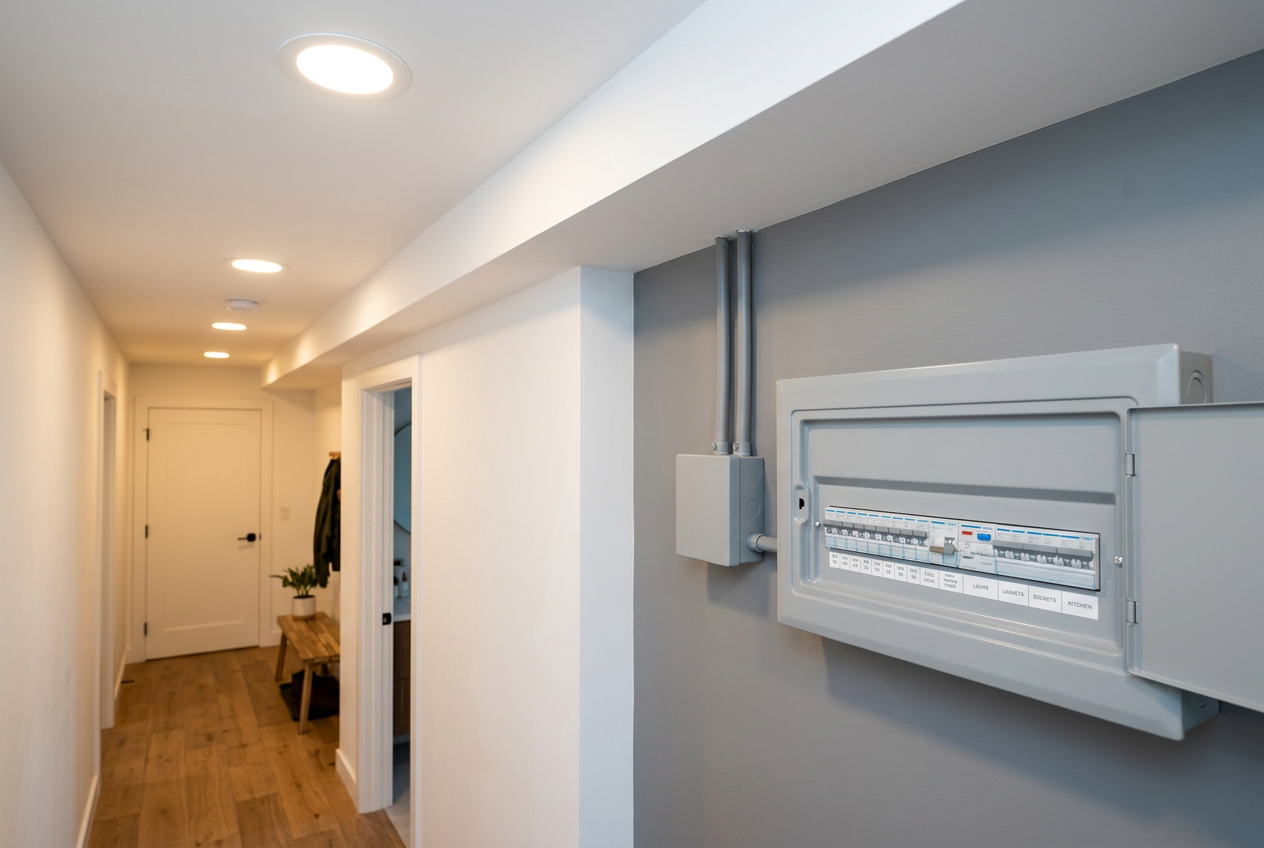
A tripping switchboard is one of the most common electrical complaints in New Zealand homes, and it's your electrical system doing exactly what it's designed to do — protecting you and your property from damage or fire. Understanding why it keeps tripping is the key to fixing it safely and permanently.
How Your Switchboard Protects You
Modern NZ switchboards contain two main types of protective devices:
- Circuit breakers (MCBs) – These trip when a circuit draws more current than it's rated for (an overload) or when there's a short circuit.
- Residual Current Devices (RCDs), also called safety switches – These detect tiny leakage currents to earth (which can indicate a fault or someone receiving a shock) and cut power in milliseconds.
Older homes may still have fuses instead of circuit breakers. If your home has a fuse board, it's worth having a licensed electrician assess whether an upgrade is appropriate — MBIE Building Performance provides guidance on what the NZ Building Code requires for electrical installations.
The Most Common Reasons for Tripping
1. Overloaded Circuit
This is the most frequent cause. Every circuit has a maximum current rating, and if you plug in too many high-draw appliances — heaters, kettles, microwaves — on the same circuit, the breaker will trip to prevent overheating.
Signs: The breaker trips only when multiple appliances are running at once, usually on the same circuit.
What you can do: Spread high-wattage appliances across different circuits (different rooms or different power points on separate circuits). Avoid using multi-board extension leads to run several heaters or cooking appliances simultaneously.
2. A Faulty or Failing Appliance
A single appliance with a damaged element, frayed cord, or internal fault can cause an RCD or breaker to trip every time it's plugged in.
Signs: The trip happens immediately when you turn on or plug in one specific appliance.
What you can do: Unplug all appliances on that circuit, reset the breaker, then plug them back in one at a time to identify the culprit. Remove the faulty appliance from use and have it repaired or replaced.
3. A Wiring Fault or Earth Leakage
Damaged insulation, a loose connection, moisture in a fitting, or deteriorating wiring can cause current to leak to earth, triggering the RCD. This is more common in older homes with ageing wiring, or in wet areas like bathrooms and kitchens.
Signs: The RCD trips randomly, even with no appliances running, or trips as soon as it's reset.
What you can do: This is a job for a licensed electrician. Do not repeatedly reset a breaker or RCD that keeps tripping — this can mask a serious fault.
4. Nuisance Tripping from an Older or Sensitive RCD
Some older RCDs can become overly sensitive with age and trip under normal operating conditions. Certain appliances (some older fridges, pool pumps, or fluorescent lighting) can also cause nuisance trips on sensitive RCDs.
Signs: Tripping seems random, often at night or when certain appliances cycle on.
What you can do: Have a licensed electrician test the RCD and assess whether it needs replacing or whether circuits need to be redistributed.
5. Moisture or Water Ingress
Water and electricity are a dangerous combination. A light fitting with a leaking roof above it, a power point near a splashing sink, or outdoor fittings exposed to rain can all cause RCD trips — and pose a serious safety risk.
Signs: Tripping is worse in wet weather or after using water nearby.
What you can do: Identify and fix the source of moisture, then have an electrician inspect the affected fittings before restoring power to that circuit.
What You Can Safely Do as a Homeowner
Under New Zealand law, electrical work is restricted work and must be carried out by a registered electrician. However, there are a few things homeowners can safely do:
- Reset a tripped breaker or RCD (once, to check if it holds)
- Unplug and test appliances to identify a faulty one
- Replace a like-for-like light bulb
- Install certain plug-in appliances and extension leads
You cannot legally do any wiring, replace outlets or switches, install new circuits, or work inside the switchboard. The Electrical Workers Registration Board (EWRB) maintains the register of licensed electricians in New Zealand.
A Quick Comparison: Circuit Breaker vs RCD Trip
| Symptom | Likely Cause | Action |
|---|---|---|
| Breaker trips under heavy load | Overloaded circuit | Spread appliances across circuits |
| RCD trips when appliance plugged in | Faulty appliance | Isolate and remove appliance |
| RCD trips randomly, nothing running | Wiring fault or earth leakage | Call a licensed electrician |
| Breaker trips immediately on reset | Short circuit or serious fault | Call a licensed electrician |
| Tripping worse in wet weather | Moisture ingress | Fix leak, call electrician |
When to Call a Professional
You should call a licensed electrician promptly if:
- The breaker or RCD won't stay reset
- You notice burning smells, scorch marks, or buzzing from outlets or the switchboard
- Tripping is getting more frequent over time
- Your home has older wiring (aluminium wiring or rubber-insulated cables) or an old fuse board
- You have no RCDs on your switchboard — WorkSafe NZ recommends RCD protection as a key safety measure
For rental properties, landlords should also be aware of Healthy Homes obligations, which include ensuring electrical installations are safe.
A qualified local electrician can carry out a full switchboard inspection, test your RCDs, and identify any underlying faults. You can find licensed electricians in your area on tradedirectory.co.nz.