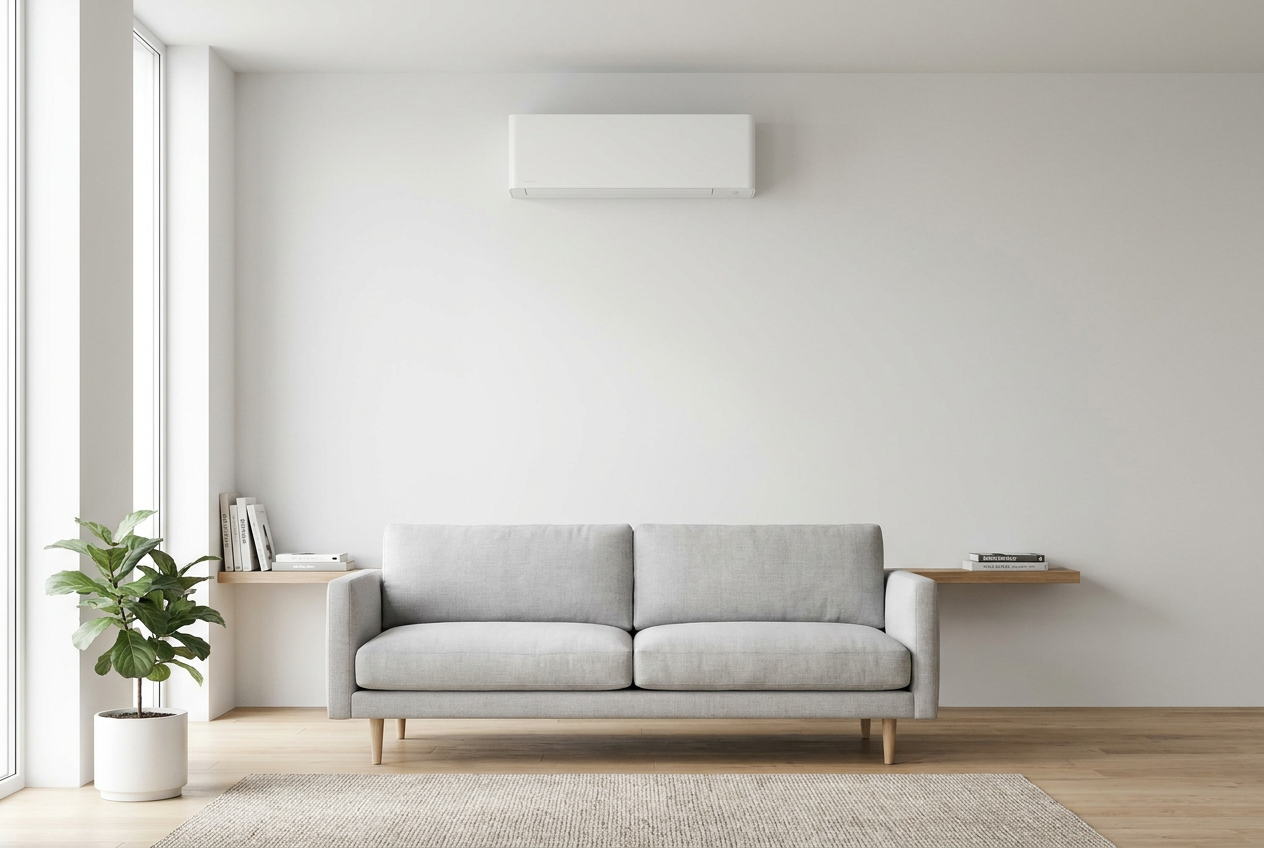
Getting the placement of your heat pump right from the start can mean the difference between a warm, efficient home and one with cold spots, high power bills, and a unit that struggles to keep up. Whether you're installing a new system or replacing an old one, understanding the key placement principles will help you get the most out of your investment.
Where to Position the Indoor Unit
The indoor unit (also called the head unit or evaporator) should be positioned to distribute conditioned air evenly throughout the room. Here are the main considerations:
- Height on the wall: Most wall-mounted units are installed high on an interior wall — typically around 2–2.2 m from the floor — so warm air can fall naturally into the room in heating mode and cool air can circulate effectively in cooling mode.
- Central location: Aim for a position that allows airflow to reach all corners of the room without obstruction. Avoid placing the unit directly above a sofa, bed, or desk where occupants will be in the direct airflow for long periods.
- Away from heat sources: Keep the unit away from direct sunlight, lamps, ovens, or other heat-generating appliances, as these can confuse the thermostat and cause the unit to work harder than necessary.
- Interior walls preferred: Installing on an interior wall reduces the pipe run length to the outdoor unit and minimises heat loss through the wall cavity.
- Clear of obstacles: Curtains, shelving, or furniture directly in front of the unit will block airflow and reduce efficiency significantly.
Choosing the Right Room
In New Zealand's climate, heat pumps are most effective when installed in the main living area — the room where your family spends the most time. Open-plan living, dining, and kitchen spaces benefit greatly from a single well-placed unit.
For bedrooms, a separate smaller unit or a multi-split system may be worth considering. BRANZ research consistently shows that heating the rooms you actually occupy, rather than the whole house, is the most energy-efficient approach for most NZ homes.
If you're renting out a property, note that the Healthy Homes Standards require a fixed heater capable of heating the main living room to at least 18°C — a correctly sized and placed heat pump can meet this requirement.
Where to Position the Outdoor Unit
The outdoor unit (condenser) needs just as much thought as the indoor unit:
- Good airflow: The unit needs clear space around it — generally at least 300–500 mm on the sides and rear, and more at the front discharge. Always follow the manufacturer's specifications.
- Shade where possible: In hot summers (particularly in the upper North Island), a shaded location can improve cooling efficiency. However, avoid spots where leaves, debris, or snow can accumulate around the unit.
- Not in a confined space: Placing the unit in a narrow side passage or enclosed courtyard can cause it to recirculate its own exhaust air, dramatically reducing efficiency.
- Stable, level surface: Mount the unit on a solid concrete pad or purpose-made brackets. In coastal areas, use a unit with a corrosion-resistant coating and consider a raised installation to avoid salt spray and flooding.
- Noise and neighbours: The outdoor unit produces some noise during operation. Position it away from bedroom windows — yours and your neighbours' — and check your local council rules around noise.
- Pipe run length: Shorter pipe runs between indoor and outdoor units are more efficient and cheaper to install. Excessively long runs can reduce performance and may require additional refrigerant.
Key Placement Comparison
| Factor | Good Placement | Poor Placement |
|---|---|---|
| Indoor unit height | 2–2.2 m on interior wall | Low on exterior wall, near floor |
| Airflow path | Open, central, unobstructed | Behind curtains or above furniture |
| Outdoor unit airflow | Open area, good clearance | Enclosed alcove or tight side passage |
| Outdoor unit surface | Solid concrete pad or brackets | Unstable ground, prone to flooding |
| Pipe run | Short and direct | Long, with multiple bends |
| Sun exposure (outdoor) | Partial shade in hot climates | Full western sun all afternoon |
Sizing and the NZ Building Code
Placement and sizing go hand in hand. An undersized unit in the wrong location will never heat or cool your space adequately. A qualified installer will carry out a heat load calculation based on your room dimensions, insulation levels, glazing, and local climate zone.
The MBIE Building Performance guidance and the NZ Building Code set requirements around weathertightness and penetrations through walls and roofs — all of which apply when installing a heat pump. Any wall penetrations for refrigerant pipes and drainage must be properly sealed to comply with clause E2 (External Moisture).
When to Call a Professional
Heat pump installation is restricted electrical work under New Zealand law. This means the electrical connection of the unit must be carried out by a registered electrician — you cannot legally do this yourself. The refrigerant handling is also restricted to certified technicians under the Refrigerant Handling Licence requirements.
The Electrical Workers Registration Board (EWRB) maintains a register of licensed electricians. Always ask your installer for a Certificate of Compliance (CoC) for the electrical work once the job is complete.
A qualified heat pump installer will assess your home, recommend the right unit size and placement, handle all restricted work legally, and ensure the system performs as expected. You can find experienced local heat pump installers on tradedirectory.co.nz to get quotes and compare options.