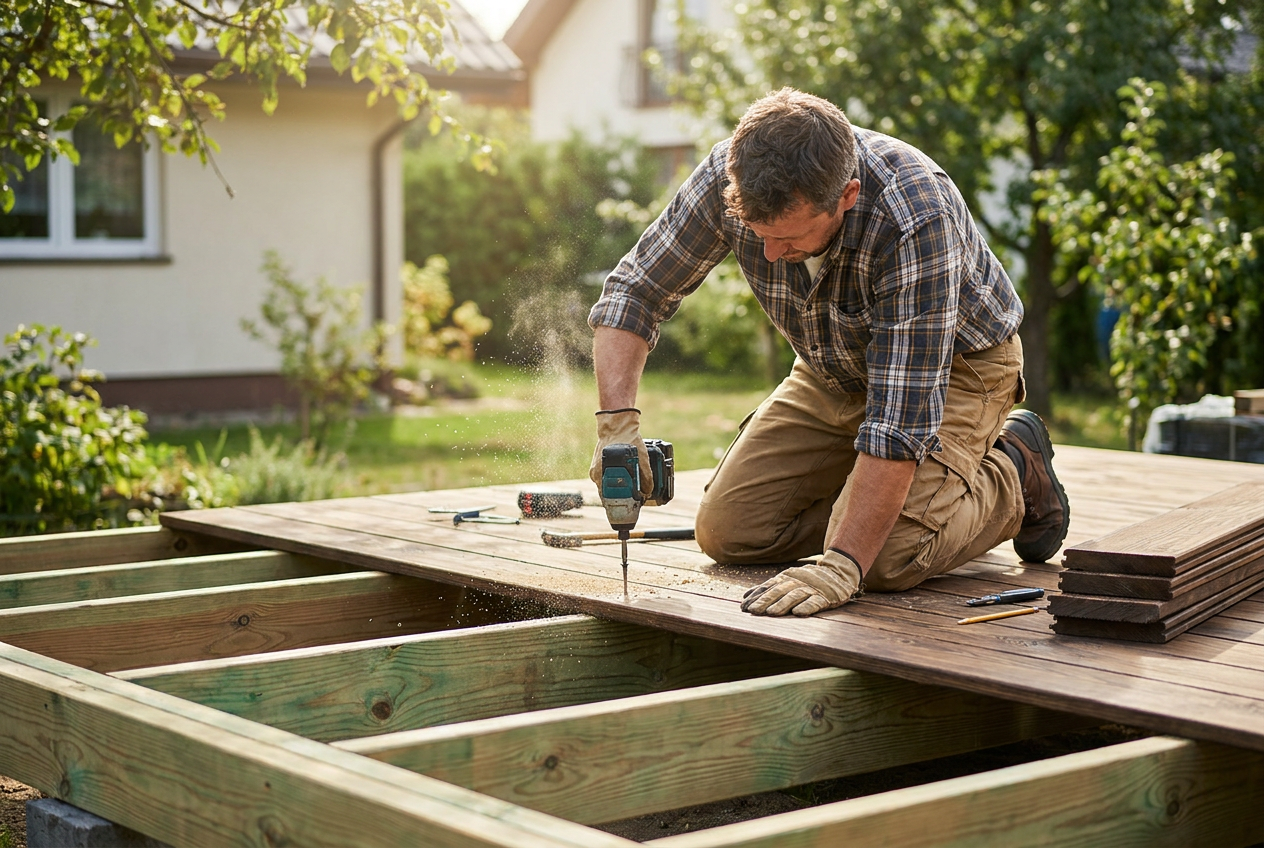
Choosing the right timber for an outdoor project in New Zealand is one of the most important decisions you'll make before picking up a hammer. Our climate varies enormously — from the humid, wet conditions of Northland and the West Coast to the dry, UV-intense summers of Central Otago — and timber that performs well in one region may fail quickly in another. This guide walks you through the main options, what to look for, and how to make a choice that suits your project and your budget.
Why Timber Species and Treatment Matter
Outdoor timber is constantly exposed to moisture, UV radiation, insects (including borer), and in some coastal areas, salt air. The durability class of a timber species tells you how well the heartwood naturally resists decay. In New Zealand, timber durability is rated from Class 1 (very durable) to Class 4 (not durable), following the guidelines referenced in BRANZ research and the NZ Building Code.
For most structural outdoor applications — decking, pergolas, retaining walls — the NZ Building Code and NZS 3604 (Timber-framed buildings) set minimum durability requirements. If your deck is attached to the house or over a certain height, it may require a building consent, so check with your local council first.
Natural Durable Timbers
Some species are naturally resistant to rot and insects without needing chemical treatment:
- Kwila (Merbau): One of the most popular decking timbers in NZ. A Class 1–2 hardwood, it's dense, attractive, and very durable. It does bleed a reddish tannin when new, so seal it promptly and keep it away from light-coloured surfaces. Sourced from tropical forests, so look for FSC-certified product.
- Vitex: A Pacific hardwood with good natural durability (Class 2). A slightly more sustainable alternative to Kwila.
- Jarrah and Spotted Gum: Australian hardwoods available in NZ, both Class 1–2. Hard-wearing and attractive, though they can be harder to work with hand tools.
- Macrocarpa: A NZ-grown softwood with surprisingly good natural durability (Class 2 heartwood). It's a great locally sourced option for garden furniture, raised beds, and rustic fencing. Availability can be patchy — check local sawmills.
- Tōtara: Traditionally prized by Māori for its durability, tōtara heartwood is Class 1. However, it's largely protected and rarely available commercially. You may occasionally find recycled tōtara.
Treated Timber Options
Treated pine (radiata pine) is by far the most widely available and affordable outdoor timber in NZ, stocked at Bunnings, Mitre 10, and PlaceMakers. On its own, radiata pine has very low natural durability, but with the right preservative treatment it becomes a practical choice for most outdoor applications.
Treatment levels are indicated by the Hazard Class (H) system:
| Hazard Class | Typical Use | Example Application |
|---|---|---|
| H3.1 | Above ground, protected | Fascia boards, joinery |
| H3.2 | Above ground, exposed | Decking boards, pergola rafters |
| H4 | Ground contact | Posts, retaining walls, sleepers |
| H5 | In-ground, high decay risk | Piles, posts in wet ground |
| H6 | Marine/saltwater | Jetties, boat ramps |
Always use the correct hazard class for the application — using H3.2 timber in ground contact, for example, will lead to premature failure. Check the end-grain stamp on the timber to confirm its treatment level before purchasing.
Composite and Alternative Decking
Composite decking (wood fibre and recycled plastic) has become increasingly popular in NZ. It requires minimal maintenance, won't rot or splinter, and is available in a range of colours. The trade-off is a higher upfront cost and a less natural appearance. It can also get hot underfoot in direct summer sun — worth considering for north-facing decks.
Matching Timber to Your Project
- Decking: H3.2 treated pine or a Class 1–2 hardwood like Kwila. Boards should be laid bark-side up to reduce cupping.
- Pergolas and overhead structures: H3.2 treated pine for rafters and beams; H4 for any posts going into the ground.
- Fencing: H4 posts are essential for ground contact. Rails can be H3.2. Macrocarpa is a popular natural alternative for rustic fencing.
- Raised garden beds: Macrocarpa is ideal — it's naturally durable and safe around edible plants. Avoid using CCA-treated timber (older green-coloured treated pine) near food gardens, as it contains copper, chromium, and arsenic.
- Retaining walls: H4 or H5 depending on soil moisture. Engineer input may be required for walls over 1.5 m.
Finishing and Maintenance
Even durable timbers benefit from a quality finish. A penetrating oil or decking stain will protect the timber, enhance its appearance, and extend its life. Resene and Dulux both offer exterior timber coating systems suited to NZ conditions. Plan to re-oil or re-stain hardwood decking every one to two years, and treated pine decking every year or two depending on exposure.
Always allow new treated timber to dry out (weather) for several weeks before applying a finish, as the treatment moisture can prevent proper adhesion.
When to Call a Professional
While selecting and laying decking is generally DIY-friendly, some outdoor carpentry work crosses into restricted or consent-required territory. Decks attached to a house, decks over 1.5 m above ground, and structural pergolas may require a building consent and must comply with the NZ Building Code. Structural work on consented projects should be carried out or supervised by a Licensed Building Practitioner (LBP).
If your project involves any electrical work (outdoor lighting, power points), that must be done by a registered electrician — see the Electrical Workers Registration Board for more information. Similarly, any plumbing connections must be handled by a licensed plumber registered with the Plumbers, Gasfitters and Drainlayers Board.
For larger or more complex outdoor builds, it's well worth getting a qualified carpenter involved. You can find experienced local tradespeople on tradedirectory.co.nz.