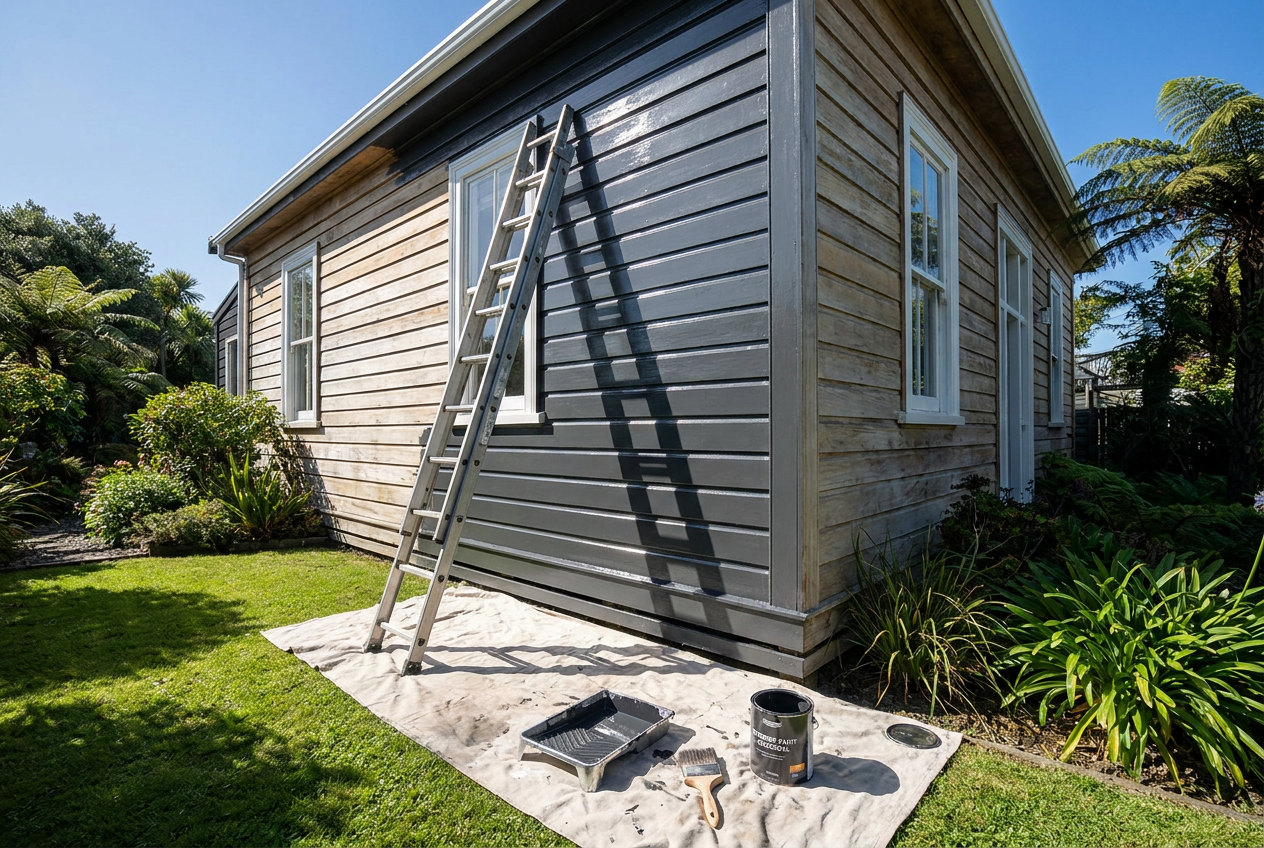
Painting the outside of your home on a crisp New Zealand morning might seem like a good idea, but cold temperatures can seriously compromise your paint job — sometimes in ways you won't notice until it's too late. Understanding the temperature limits for exterior paint will save you time, money, and a lot of frustration.
The General Rule: What's Too Cold?
As a rule of thumb, most exterior paints should not be applied when the air or surface temperature is below 10°C. Many paint manufacturers set their minimum application temperature at 10°C, and some waterborne (water-based) paints require even warmer conditions — closer to 12–15°C — to form a proper film.
Always check the technical data sheet for the specific product you're using. Resene and Dulux both publish detailed product guides that include minimum application temperatures, and these should be your first reference point.
Why Cold Weather Causes Problems
Temperature affects paint in several important ways:
- Film formation: Waterborne paints rely on water evaporating and polymer particles fusing together. Below the minimum film-forming temperature, this process breaks down, leaving a chalky, cracked, or powdery surface.
- Slow drying: Cold air slows evaporation dramatically. Paint that stays wet for too long can sag, run, or pick up dust and insects.
- Frost damage: If temperatures drop overnight before the paint has fully cured, frost can destroy the film entirely — causing bubbling, flaking, or a milky appearance.
- Surface condensation: Cold surfaces attract moisture. Painting over a damp or dewy surface causes adhesion failure.
The Surface Temperature Matters Too
Air temperature alone doesn't tell the whole story. Surface temperature — the actual temperature of the wall, weatherboard, or cladding you're painting — is equally important. A surface in the shade can be several degrees colder than the ambient air temperature, especially on south-facing walls (which get little sun in New Zealand).
Use an inexpensive infrared thermometer to check the surface before you start. If the surface is below 10°C, hold off — even if the air feels comfortable.
NZ Climate Considerations
New Zealand's climate varies enormously. Northland and Auckland rarely see temperatures that rule out painting, but in Otago, Southland, Canterbury, and Central Plateau regions, cold mornings and early frosts can persist well into spring and start again in early autumn. Even in Wellington, southerly blasts can drop temperatures quickly.
BRANZ — New Zealand's building research organisation — provides guidance on exterior painting conditions and notes that temperature, humidity, and surface moisture all interact to affect paint performance.
Humidity and Dew Point
Cold weather often brings high humidity, which is another enemy of a good paint job. If relative humidity is above 85%, most manufacturers recommend you don't paint. In cold conditions, the dew point (the temperature at which moisture condenses on surfaces) can be very close to the air temperature, meaning surfaces may be damp even when they look dry.
A simple rule: don't paint within 2 hours of sunrise or sunset, and stop if you see any sign of condensation forming on the surface.
Oil-Based vs Water-Based Paints in Cold Weather
| Paint Type | Typical Minimum Temp | Cold Weather Performance |
|---|---|---|
| Waterborne (water-based) | 10–15°C | More sensitive to cold; film formation fails below minimum |
| Oil-based / solvent-borne | Around 7–10°C | Slightly more tolerant, but still affected by cold |
| Specialty low-temp paints | As low as 2–5°C | Available for specific applications; check product data |
Note that oil-based paints are less common for residential exterior use in NZ today, and some formulations are being phased out due to VOC regulations. Wattyl offers a range of exterior coatings with product-specific temperature guidance.
Tips for Painting in Cooler NZ Conditions
If you need to paint during the cooler months, here are some practical strategies:
- Paint in the warmest part of the day — typically between 10am and 2pm when surfaces have had time to warm up.
- Work on north-facing walls first — these receive the most sun and warm up quickest.
- Check the forecast — ensure temperatures won't drop below 10°C for at least 24–48 hours after painting, including overnight.
- Avoid painting on frosty mornings — wait until any frost has fully cleared and surfaces are dry.
- Store paint indoors overnight — cold paint is thicker and harder to apply evenly. Bring it inside the night before.
- Use a product rated for cooler conditions — ask your local Mitre 10 or paint specialist for recommendations.
When to Call a Professional
If you're unsure about conditions, or if you're dealing with a large exterior repaint, it's well worth getting a professional painter involved. Experienced painters know how to read the weather, choose the right products, and time their work to get a lasting result. A poor paint job done in the wrong conditions can fail within a season, costing far more to fix than getting it right the first time.
You can find qualified, local painters on tradedirectory.co.nz — look for painters who are familiar with your region's climate and can advise on the best time of year to tackle your project.