A warm, discoloured or sparking power point is never something to ignore. These are classic warning signs of an electrical fault that — left unchecked — can cause electric shock, fire, or serious damage to your home. Here's what every New Zealand homeowner needs to know.
Why Is My Power Point Warm, Discoloured or Sparking?
Power points (also called GPOs — general power outlets) can develop faults for several reasons:
- Loose wiring connections behind the outlet, causing arcing and heat build-up
- Overloaded circuits from too many high-draw appliances on one circuit
- Worn or damaged outlets that have degraded over time
- Faulty appliances drawing excessive current
- Moisture ingress, particularly in kitchens, bathrooms, or older NZ homes with poor weatherproofing
- Age and corrosion, especially in homes wired before the 1990s with older wiring systems
A small, brief spark when you plug something in can be normal — it's caused by the initial surge of current. However, large sparks, persistent sparking, a burning smell, heat you can feel through the faceplate, or brown/black discolouration are all serious warning signs that require immediate action.
What to Do Right Now — Step by Step
1. Stop Using the Outlet Immediately
Unplug any appliances from the affected power point. Do not use it again until it has been inspected and repaired by a licensed electrician.
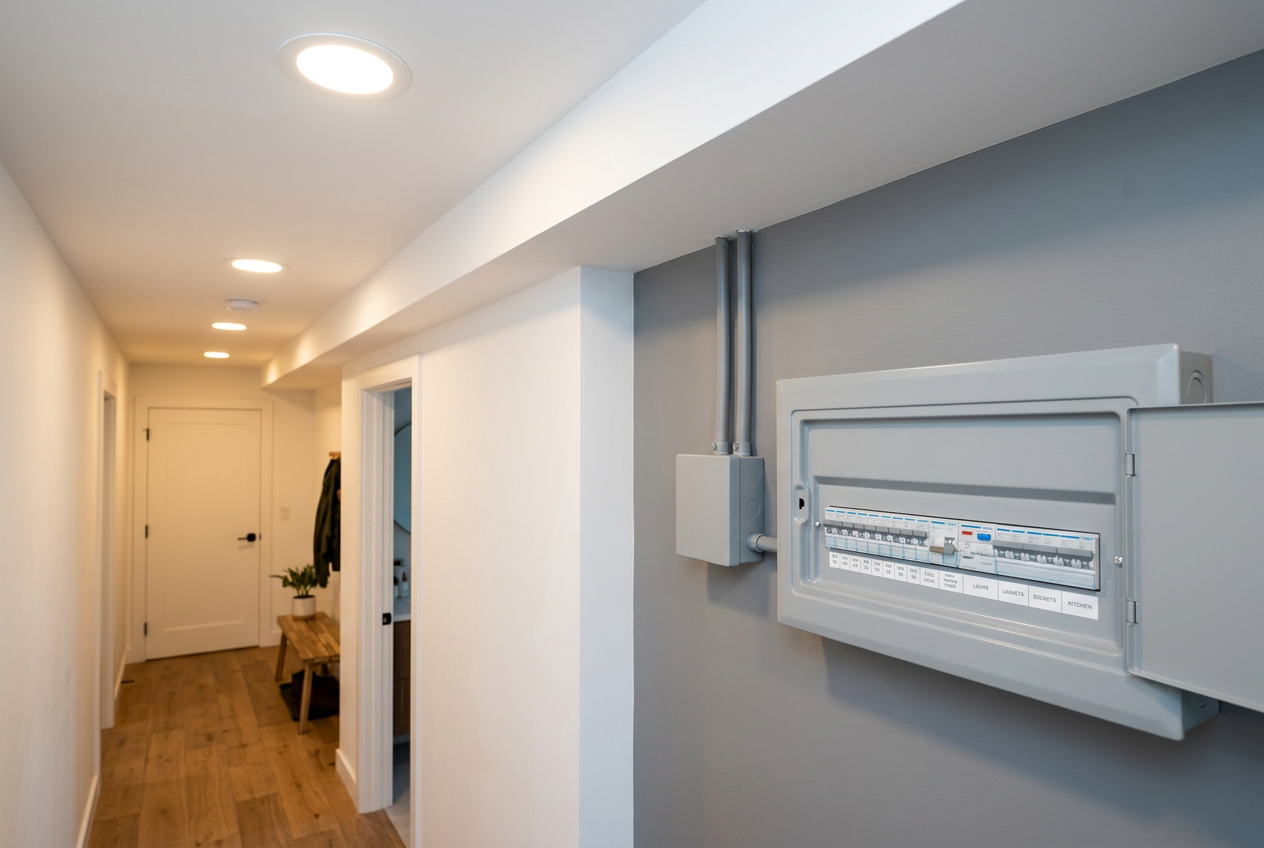
2. Turn Off the Circuit at Your Switchboard
Locate your switchboard (fuse box or consumer unit) and switch off the circuit breaker for the affected area. If you're unsure which breaker controls that outlet, switch off the main breaker. This removes the risk of ongoing arcing or fire while you arrange repairs.
3. Check for Signs of Fire
Look and sniff carefully around the outlet, inside the wall cavity if accessible, and in the ceiling space above. If you smell burning, see smoke, or suspect a fire has started inside the wall, evacuate immediately and call 111.
4. Do Not Attempt DIY Repairs
In New Zealand, all work on fixed wiring — including replacing or repairing power points — is restricted electrical work under the Electricity Act 1992. It must only be carried out by a registered electrician. This is not just best practice; it is the law. Attempting to repair wiring yourself can void your home insurance, create hidden hazards, and put your family at serious risk.
5. Call a Licensed Electrician
Contact a registered electrician as soon as possible. For sparking or burning smells, treat this as urgent. A qualified sparky will inspect the outlet, check the wiring behind it, test the circuit, and carry out any necessary repairs — then issue you a Certificate of Compliance (CoC) for the work done.
You can find licensed local electricians in your area at tradedirectory.co.nz.
Warning Signs Comparison: Normal vs. Fault
| Situation | Normal? | Action Required |
|---|---|---|
| Tiny spark when plugging in | Usually yes | Monitor; replace appliance if it persists |
| Outlet feels slightly warm after heavy use | Borderline | Reduce load; get it checked |
| Outlet warm to the touch at rest | No | Stop use; call electrician |
| Discolouration or scorch marks | No | Stop use immediately; urgent repair |
| Large sparks or arcing | No | Switch off circuit; call electrician urgently |
| Burning smell from outlet | No | Evacuate if needed; call 111 or electrician |
What a Licensed Electrician Will Check
When your sparky arrives, they'll typically:
- Remove the faceplate and inspect the wiring connections and terminals
- Check for signs of arcing, heat damage, or moisture
- Test the circuit with appropriate instruments
- Inspect the switchboard for related faults or overloading
- Replace the outlet and any damaged wiring as needed
- Issue a Certificate of Compliance — keep this with your home records
In older NZ homes (pre-1980s), an electrician may also identify aluminium wiring or older wiring insulation that has become brittle, which can be a wider safety issue worth addressing.
Can I Do Anything Myself Legally?
As a homeowner, you are legally permitted to:
- Switch off circuit breakers at your switchboard
- Unplug appliances from the faulty outlet
- Replace a light bulb (not a fitting)
- Reset a tripped RCD or circuit breaker (once only — if it trips again, call an electrician)
You are not permitted to open an outlet, touch wiring, or replace a power point yourself. All of this is restricted work under NZ law. The Electrical Workers Registration Board (EWRB) maintains the register of licensed electricians — you can verify a sparky's registration there before hiring.
Protecting Your Home Long-Term
- Have your home's wiring inspected every 10 years or when buying an older property
- Ensure your switchboard has RCDs (residual current devices) installed — these cut power in milliseconds if a fault is detected and are now required under the Healthy Homes Standards for rental properties
- Avoid overloading outlets with multi-board adaptors and high-draw appliances on the same circuit
- BRANZ provides excellent guidance on home maintenance and electrical safety for NZ conditions
When to Call a Professional
Always call a licensed electrician for any fault involving a power point. This is not optional — it is a legal requirement in New Zealand. If you notice burning smells, visible scorch marks, or any sparking, treat it as urgent. For an active fire or immediate danger, call 111 first.
Find a trusted, local registered electrician through tradedirectory.co.nz.