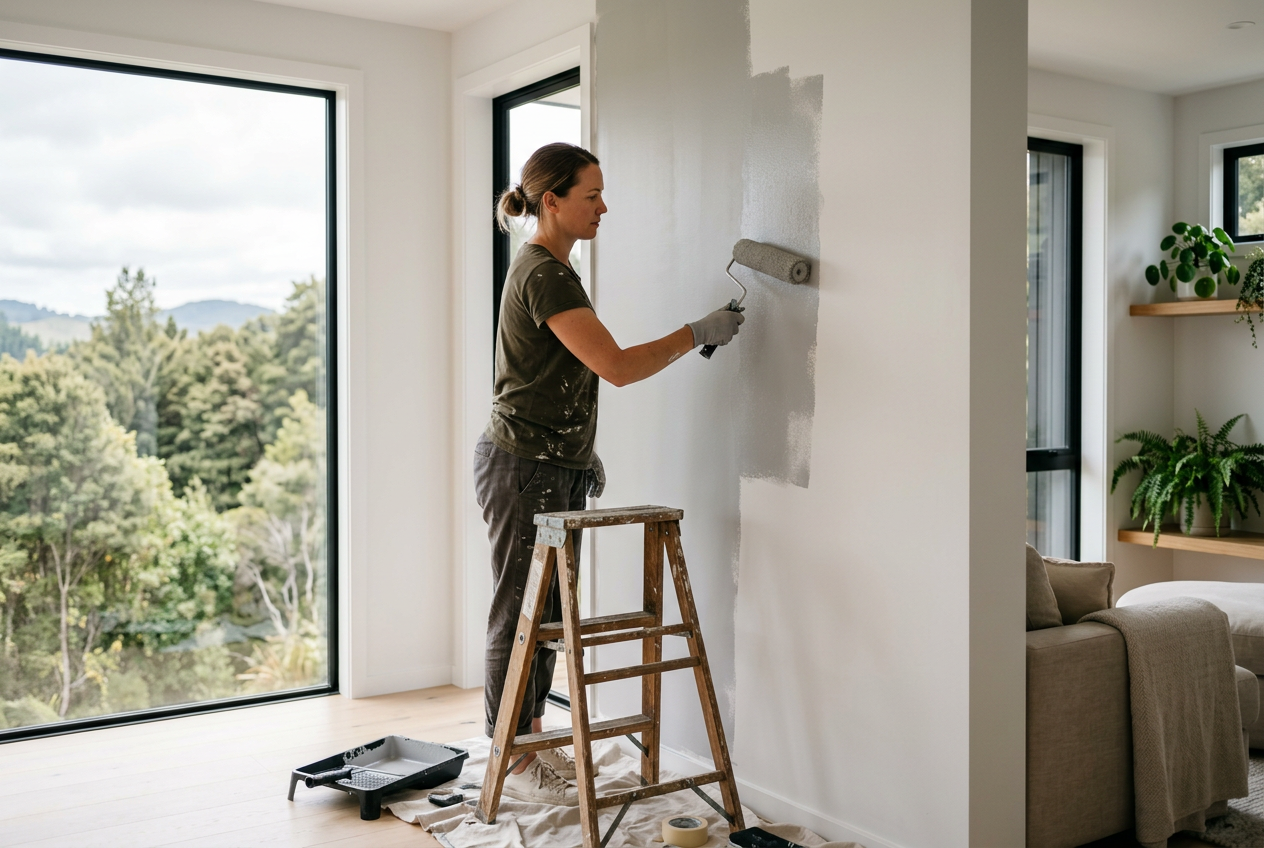
Painting new GIB plasterboard might seem straightforward, but skip the right primer and you'll end up with patchy, uneven results that are expensive to fix. New plasterboard is highly absorbent and the paper face, stopping compound, and joint tape all absorb paint at different rates — so a purpose-made primer is essential before you reach for your topcoat.
Why New Plasterboard Needs a Dedicated Primer
Fresh plasterboard has a porous paper face that soaks up paint unevenly. If you apply a standard wall paint directly, you'll often see flashing — dull, patchy spots where the stopping compound absorbs more paint than the surrounding board. A good primer seals the surface uniformly, giving your topcoat something consistent to bond to and dramatically improving the final appearance.
BRANZ research consistently highlights that surface preparation — including correct priming — is one of the biggest factors in paint system longevity.
The Best Primer Types for New GIB Plasterboard
PVA Sealer / Plasterboard Primer
PVA-based sealers (sometimes labelled as plasterboard primers or drywall sealers) are the most widely recommended first coat for new GIB. They penetrate the paper face and stopping compound, equalising porosity across the whole surface. Look for products specifically labelled for interior plasterboard use.
- Dries quickly (often within an hour in good conditions)
- Water-based, low odour, easy clean-up
- Provides a sound base for water-based topcoats
Acrylic Primer-Undercoat
Once your PVA sealer is dry, or if you're using a premium all-in-one product, an acrylic primer-undercoat builds a film that fills minor surface imperfections and improves topcoat adhesion. Many NZ painters apply a PVA sealer first, then follow with an acrylic undercoat before the finish coats.
What About Tinted Primers?
If you're painting a deep or bold colour, ask your paint supplier about tinted primers. Tinting the primer closer to your topcoat colour can reduce the number of finish coats needed, saving time and money.
Recommended NZ Products
Several well-known NZ paint brands offer suitable products:
- Resene — Resene Quick Dry is a popular water-based primer-undercoat suitable for plasterboard. Resene also offers specific sealer products; ask in-store for their current plasterboard recommendation.
- Dulux — Dulux 1 Step Sealer Undercoat is widely used by NZ painters on new plasterboard and stopping work.
- Wattyl — Wattyl Interior Sealer Undercoat is another common choice available through hardware stores.
You'll find these products at Mitre 10, Bunnings, and PlaceMakers, as well as dedicated paint stores.
Step-by-Step: Priming New GIB Plasterboard
- Check the stopping is fully cured. Stopping compound must be completely dry before priming — it should be uniformly pale with no dark damp patches.
- Sand lightly. Lightly sand any rough spots or ridges in the stopping, then wipe away dust with a slightly damp cloth. Allow to dry.
- Apply PVA sealer. Roll or brush on an even coat of PVA plasterboard sealer. Work methodically and avoid over-rolling, which can lift the paper face.
- Allow to dry fully. Check the manufacturer's recoat time — usually 1–2 hours in normal NZ indoor conditions, longer in cold or humid weather.
- Apply acrylic primer-undercoat. Once the sealer is dry, apply your primer-undercoat. This is also the stage to check for any remaining imperfections — stop and sand again if needed.
- Apply finish coats. Two coats of quality interior paint are typically recommended for a durable result.
Common Mistakes to Avoid
| Mistake | Why It's a Problem | What to Do Instead |
|---|---|---|
| Skipping primer entirely | Severe flashing and uneven sheen | Always use a dedicated plasterboard primer |
| Using an oil-based primer on paper-faced board | Can raise and damage the paper face | Stick to water-based products on GIB |
| Priming over damp stopping | Primer won't bond; may bubble or peel | Wait until stopping is fully cured |
| Applying primer too thickly | Slow drying, possible runs | Apply thin, even coats |
| Sanding too aggressively | Damages the paper face | Use fine-grit paper and a light touch |
Wet Areas and Special Situations
If you're painting GIB in a bathroom or laundry, check that the correct moisture-resistant board (such as GIB Aqualine®) has been installed in accordance with the NZ Building Code's E3 Internal Moisture requirements. In these areas, use a primer and topcoat system rated for wet or high-humidity environments. MBIE Building Performance has guidance on wet area requirements.
When to Call a Professional
Priming and painting plasterboard is well within the scope of a capable DIYer, but if you're dealing with large areas, high ceilings, or you want a Level 5 finish (the highest standard for critical lighting situations), it's worth calling in a qualified painter. A professional will also be able to assess whether the stopping work is up to scratch before paint goes on — poor stopping is the most common cause of a bad paint job on new GIB.
You can find experienced local painters on tradedirectory.co.nz.