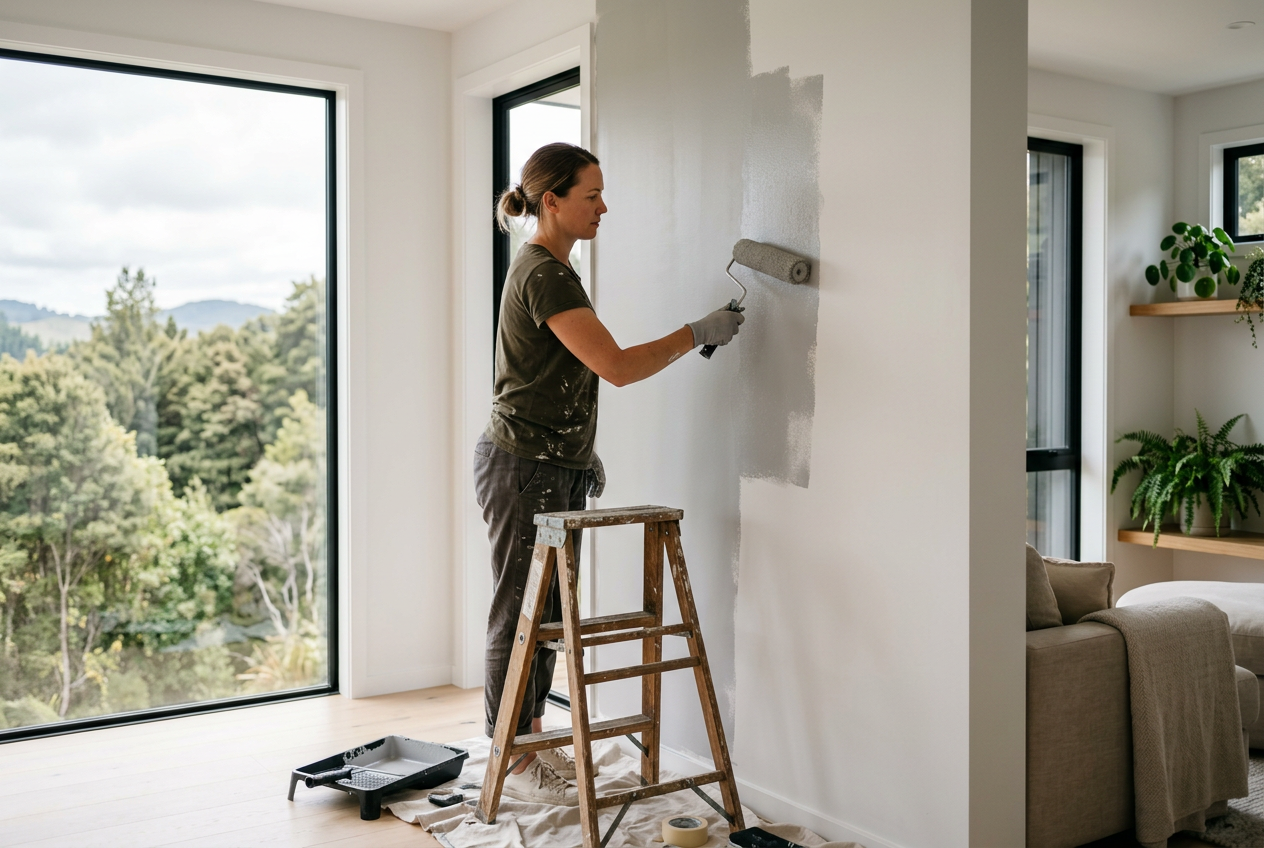
Painting interior brick can completely transform a room — turning a tired fireplace surround or exposed feature wall into a real focal point. But brick is a porous, uneven surface that behaves very differently from plasterboard or timber, so choosing the wrong product can lead to peeling, moisture problems, and a finish that looks patchy. Here's what you need to know before you pick up a brush.
Why Brick Needs a Specialist Approach
Brick and mortar are alkaline, porous materials that absorb moisture and allow vapour to pass through. If you seal them with the wrong paint — particularly a non-breathable, film-forming product — you can trap moisture inside the wall, leading to efflorescence (white salt deposits), bubbling, and eventual paint failure. The goal is to use a paint system that bonds well to masonry and still allows the wall to breathe.
The Best Paint Types for Interior Brick
Masonry Paint (Acrylic or Mineral-Based)
Acrylic masonry paint is the most popular choice for interior brick in New Zealand. It's water-based, low in VOCs, flexible enough to cope with minor movement, and breathable enough for most interior applications. Brands like Resene and Dulux both offer quality acrylic masonry ranges with good coverage and a range of sheens.
Mineral or limewash paints are an excellent traditional option, especially if you want a softer, more textural look. They bond chemically with the masonry rather than sitting on top, making them highly breathable and very durable. They're harder to find but worth considering for heritage homes or a rustic aesthetic.
Chalk-Style or Matte Decorative Paints
For purely decorative interior brick (such as a non-functional fireplace surround or a feature wall that isn't exposed to moisture), a chalk-style or flat acrylic paint can work well and gives a beautiful matte finish. However, these are less durable in high-traffic or damp areas, so use them selectively.
What to Avoid
- Gloss or semi-gloss oil-based paints — these form a non-breathable film and are prone to peeling on masonry.
- Standard interior wall paints — most are formulated for smooth, sealed surfaces and won't bond reliably to raw brick.
- Epoxy coatings — generally overkill for interior feature brick and very difficult to remove later.
Choosing the Right Sheen
| Sheen Level | Best For | Notes |
|---|---|---|
| Flat/Matte | Feature walls, low-traffic areas | Hides imperfections, less washable |
| Low Sheen/Satin | Living areas, hallways | Good balance of durability and appearance |
| Semi-Gloss | Not recommended for brick | Can highlight surface irregularities |
For most interior brick, a flat or low-sheen finish looks the most natural and suits the texture of the surface.
Surface Preparation — The Most Important Step
No matter how good your paint is, poor prep will ruin the result. Follow these steps:
- Clean thoroughly — Remove dust, cobwebs, grease, and any old flaking paint. A stiff brush and a vacuum work well. For greasy surfaces (e.g., near a kitchen), wash with sugar soap and rinse well.
- Check for efflorescence — White powdery deposits mean moisture is moving through the wall. Brush off the deposits and identify the moisture source before painting. Painting over active efflorescence will cause failure.
- Repair mortar joints — Rake out any crumbling mortar and repoint with a suitable mortar mix before painting.
- Allow to dry completely — Brick must be fully dry before you apply any paint or primer. In New Zealand's more humid regions (Northland, West Coast), allow extra drying time.
- Apply a masonry sealer or primer — This is critical. A dedicated masonry primer (such as those available from Wattyl or Resene) fills the pores, reduces paint absorption, and improves adhesion. Skipping this step often means you'll need far more topcoat and may still get an uneven finish.
How Many Coats Do You Need?
Brick is thirsty. Even with a good primer, expect to apply two topcoats as a minimum, and possibly three if the brick is very porous or you're going from a dark surface to a light colour. Use a thick-nap roller (18–20 mm) to get paint into the texture, and a brush to work paint into the mortar joints.
Fireplace Surrounds — Special Considerations
If you're painting brick around a working fireplace, you must use a heat-resistant masonry paint rated for high temperatures. Standard acrylic masonry paint will discolour and blister when exposed to radiant heat. Ask your paint supplier specifically for a high-heat product. Note that painting the inside of a firebox is a different matter again — use only products specifically rated for direct flame exposure.
When to Call a Professional
While painting interior brick is a manageable DIY project for a capable homeowner, there are times when it pays to bring in a qualified painter:
- The brick has significant moisture issues or rising damp — a professional can diagnose the cause and recommend the right system.
- You're working on a large area or a heritage property where the wrong product could cause lasting damage.
- You want a flawless, even finish on a prominent feature wall.
- The surface has multiple layers of old paint that need stripping or assessment.
A qualified painter will also know which products perform best in your specific region's climate. You can find experienced local painters on tradedirectory.co.nz.