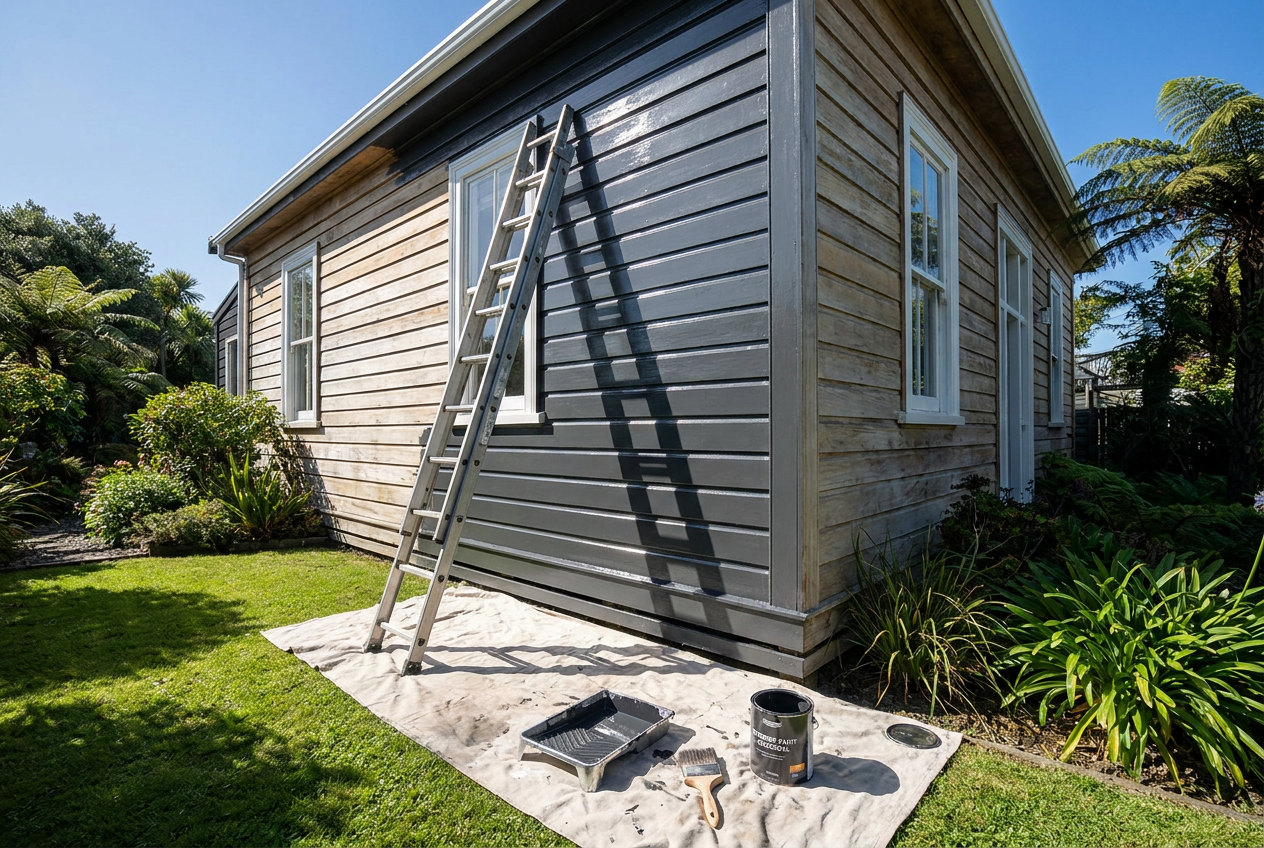
Exterior concrete block walls are a common sight across New Zealand — from 1970s homes in South Auckland to retaining walls in Wellington's hilly suburbs. Painting them correctly isn't just about looks; it's about protecting the block from moisture ingress, efflorescence, and the kind of UV punishment our climate dishes out year-round. Get the paint system right from the start and you'll enjoy a finish that lasts many years rather than peeling within a season or two.
Why Concrete Block Is a Challenging Surface to Paint
Concrete block (also called concrete masonry unit or CMU) is highly porous and alkaline, especially when new. These two properties cause real problems for paint:
- Porosity means paint soaks in unevenly, leading to a patchy finish and high paint consumption.
- Alkalinity can cause saponification — a chemical reaction that breaks down oil-based paints and causes peeling.
- Efflorescence (white salt deposits) pushes through from inside the block and lifts paint off the surface.
- Moisture movement through the wall can cause blistering if the wrong paint system is used.
Understanding these challenges helps you choose a system that works with the substrate rather than against it.
Surface Preparation: The Most Important Step
No paint system will perform well on a poorly prepared surface. Before you open a single tin, do the following:
- Clean thoroughly — Remove dirt, moss, lichen, and mould with a stiff brush and a suitable fungicidal wash. A water blaster (kept at a reasonable distance to avoid damaging mortar joints) is very effective.
- Treat efflorescence — Brush off white salt deposits with a dry stiff brush. If it keeps returning, investigate and fix the source of moisture first.
- Repair cracks and spalled mortar — Use a suitable exterior filler or re-point mortar joints. Allow repairs to cure fully before painting.
- Allow to dry — Concrete block must be thoroughly dry before painting. In damp NZ conditions, allow several fine days after rain.
- Check pH — New or recently rendered block can be very alkaline. Test with pH strips; if above pH 10, allow more curing time or use an alkali-resistant primer.
BRANZ has excellent technical guidance on painting masonry surfaces if you want to dig deeper into the science.
Choosing the Right Primer
A masonry sealer or alkali-resistant primer is non-negotiable on concrete block. It:
- Seals the porous surface so topcoats go on evenly
- Blocks alkali from attacking the finish coat
- Improves adhesion dramatically
Look for products specifically labelled for masonry or concrete block. Resene offers dedicated masonry primers, as does Dulux and Wattyl — all widely available across New Zealand. Follow the manufacturer's dilution and application instructions carefully; some masonry primers are applied thinned down to penetrate deeply.
The Best Topcoat Options
For exterior concrete block in New Zealand, water-based acrylic paints are the go-to choice for most situations. Here's a comparison of the main options:
| Paint Type | Pros | Cons | Best For |
|---|---|---|---|
| Exterior Acrylic | Flexible, breathable, UV resistant, easy clean-up | Needs good primer | Most NZ exterior block walls |
| Elastomeric Masonry Paint | Bridges hairline cracks, very waterproof | More expensive, less breathable | Walls with minor cracking or high rain exposure |
| Texture Coat | Hides surface imperfections, durable | Hard to repaint, can trap moisture if applied wrong | Rough or patchy block |
| Oil-Based Paint | Hard finish | Saponifies on alkaline surfaces, not recommended | Not recommended for block |
For most NZ homeowners, a quality exterior acrylic in a low-sheen or satin finish is the best all-round choice. It allows the wall to breathe (important for moisture management), resists UV fading, and is straightforward to apply and touch up later.
Elastomeric paints are worth considering if your walls are exposed to heavy driving rain — common on west-facing walls in many parts of New Zealand — or if there are hairline cracks you want to bridge.
Application Tips for a Long-Lasting Finish
- Apply two topcoats — One coat is rarely sufficient on porous block. Two coats ensure even coverage and proper film build.
- Use a thick-nap roller (around 18–20 mm nap) to work paint into the texture of the block. Follow up with a brush to work paint into mortar joints.
- Don't paint in direct hot sun — Paint dries too fast, leading to lap marks and poor adhesion. Early morning on a fine, still day is ideal.
- Check the weather forecast — Avoid painting if rain is expected within a few hours, or if temperatures are below about 10°C.
- Follow recoat times — Don't rush between coats. Check the tin for minimum recoat times.
Colour Considerations for NZ Conditions
Dark colours absorb more heat, which can accelerate paint breakdown on sun-exposed walls and may cause thermal movement in the block. In hotter, sunnier regions — Hawke's Bay, Nelson, Canterbury — consider mid-tones or lighter shades for south-facing walls that get intense afternoon sun. Your local Resene or Dulux colour consultant can advise on heat-reflective options.
When to Call a Professional
While painting concrete block is within reach of a capable DIYer, there are situations where hiring a qualified painter makes sense:
- Large areas — Scaffolding, spray equipment, and sheer volume make professional application more cost-effective.
- Persistent moisture or efflorescence problems — A professional can diagnose the root cause rather than just painting over the symptom.
- Heritage or complex surfaces — Some older block walls have unusual coatings or contamination that needs expert assessment.
- Texture coat or spray-applied systems — These require specialist equipment and technique.
A qualified painter will also know which products perform best in your specific region and can guarantee their workmanship. You can find experienced local painters on tradedirectory.co.nz.