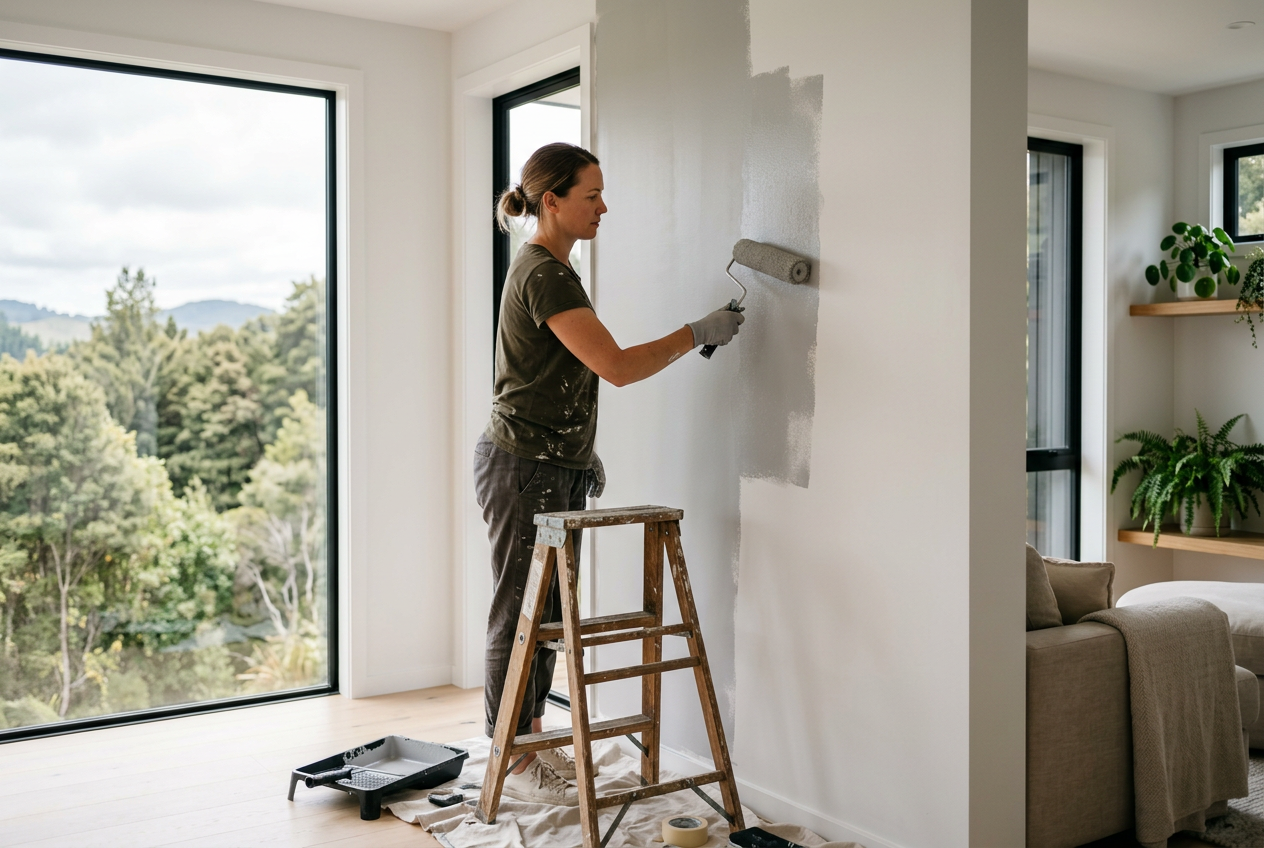
Laundries and garages are two of the hardest-working spaces in any New Zealand home. They're exposed to steam, splashes, grease, dust, and the occasional scuff from a wheelbarrow or washing basket. Using the wrong paint in these areas means you'll be repainting far sooner than you'd like — so it pays to choose wisely from the start.
Why These Rooms Need a Tougher Paint
Standard flat or low-sheen interior wall paints are designed for living areas where conditions are relatively stable. Laundries generate steam and humidity every time you run a hot wash or dryer, while garages cop dust, exhaust fumes, oil mist, and physical knocks. Both environments can cause ordinary paint to peel, blister, or grow mould if it isn't up to the job.
The key properties to look for are:
- Moisture resistance — resists condensation and steam without blistering
- Washability — can be scrubbed clean without the surface breaking down
- Mould and mildew inhibitors — especially important in laundries
- Durability and hardness — stands up to knocks and abrasion in garages
Choosing the Right Sheen Level
Sheen (or gloss level) is one of the most important decisions you'll make. Higher sheen means a harder, more washable surface — ideal for utility spaces.
| Sheen Level | Best For | Washability |
|---|---|---|
| Flat / Matt | Living rooms, ceilings | Low |
| Low Sheen | Bedrooms, hallways | Moderate |
| Semi-Gloss | Laundries, bathrooms | High |
| Gloss | Trims, garage walls, high-wear areas | Very High |
For a laundry, a semi-gloss finish is the sweet spot — it reflects light in what's often a small space, wipes down easily, and resists moisture well. For a garage, you can go semi-gloss or even full gloss on the walls, particularly if the space doubles as a workshop.
Best Paint Types for Laundries
Look for paints specifically labelled as bathroom and laundry, wet area, or kitchen and bathroom formulations. These contain mould inhibitors and are engineered to cope with high humidity.
Resene offers products like their SpaceCote Low Sheen Kitchen & Bathroom, which is a popular choice for NZ laundries. Dulux has their Aquanamel and Wash & Wear Kitchen & Bathroom ranges, while Wattyl produces interior paints suited to wet-area conditions. Always check the product datasheet to confirm the paint is rated for high-humidity environments.
Water-based (acrylic) paints are the go-to for most NZ homeowners — they dry quickly, have low odour, and clean up with water. Oil-based paints offer excellent hardness but take longer to dry and have stronger fumes, so they're less commonly used indoors these days.
Best Paint Types for Garages
Garage walls are a different beast. If your garage is unlined (bare concrete block or timber framing), you'll need to address that before painting. For lined garage walls (plasterboard or fibre cement), a semi-gloss or gloss acrylic is ideal.
For concrete block or masonry walls, use a dedicated masonry paint or a concrete sealer followed by a masonry topcoat. These are formulated to bond to porous surfaces and resist efflorescence (the white salt deposits common on concrete).
If the garage floor is also on your list, that's a separate product category — look for epoxy floor coatings or concrete floor paint, available at Bunnings or Mitre 10.
Surface Preparation — Don't Skip This Step
No matter how good your paint is, it will fail if the surface isn't properly prepared. This is especially true in laundries and garages.
Laundry walls
- Clean walls thoroughly to remove soap residue, grease, and any mould
- Treat any existing mould with a mould killer before painting (don't just paint over it)
- Fill cracks and holes with a suitable interior filler, sand smooth
- Apply a quality primer if painting over bare plasterboard or a dramatically different colour
Garage walls
- Remove dust, cobwebs, oil residue, and any flaking paint
- For masonry, check for damp coming through the wall — fix the source before painting
- Use a masonry primer on bare concrete or block
- For previously painted surfaces in good condition, a light sand and clean may be all that's needed
BRANZ has excellent technical guidance on surface preparation and paint selection for different substrates if you want to dig deeper.
Ventilation and the NZ Healthy Homes Standard
If your laundry is in a rental property, it's worth knowing that the Healthy Homes Standards require adequate ventilation in certain rooms. Good ventilation also helps your paint last longer by reducing condensation. Make sure extractor fans are working before you paint — fixing ventilation issues after painting risks trapping moisture behind the new coat.
How Many Coats Do You Need?
As a general rule:
- Two coats of topcoat over a primed surface gives the best result
- If you're going from a dark colour to a light one (or vice versa), a tinted primer saves you needing extra topcoats
- Always allow full drying time between coats as specified on the tin — rushing this is one of the most common DIY mistakes
When to Call a Professional
Most painting in laundries and garages is well within DIY reach for a capable homeowner. However, consider calling a qualified painter if:
- There is significant mould damage that may indicate a structural moisture problem
- The walls are in poor condition and need extensive repair
- You're dealing with a large garage or complex surfaces like textured masonry
- You want a guaranteed, long-lasting finish — a professional will know exactly which products suit your specific substrate and conditions
You can find qualified local painters on tradedirectory.co.nz who are familiar with NZ conditions and products.
Safety note: Always ensure good ventilation when painting indoors, even with water-based paints. Keep children and pets out of the area until the paint is fully dry and the smell has cleared.