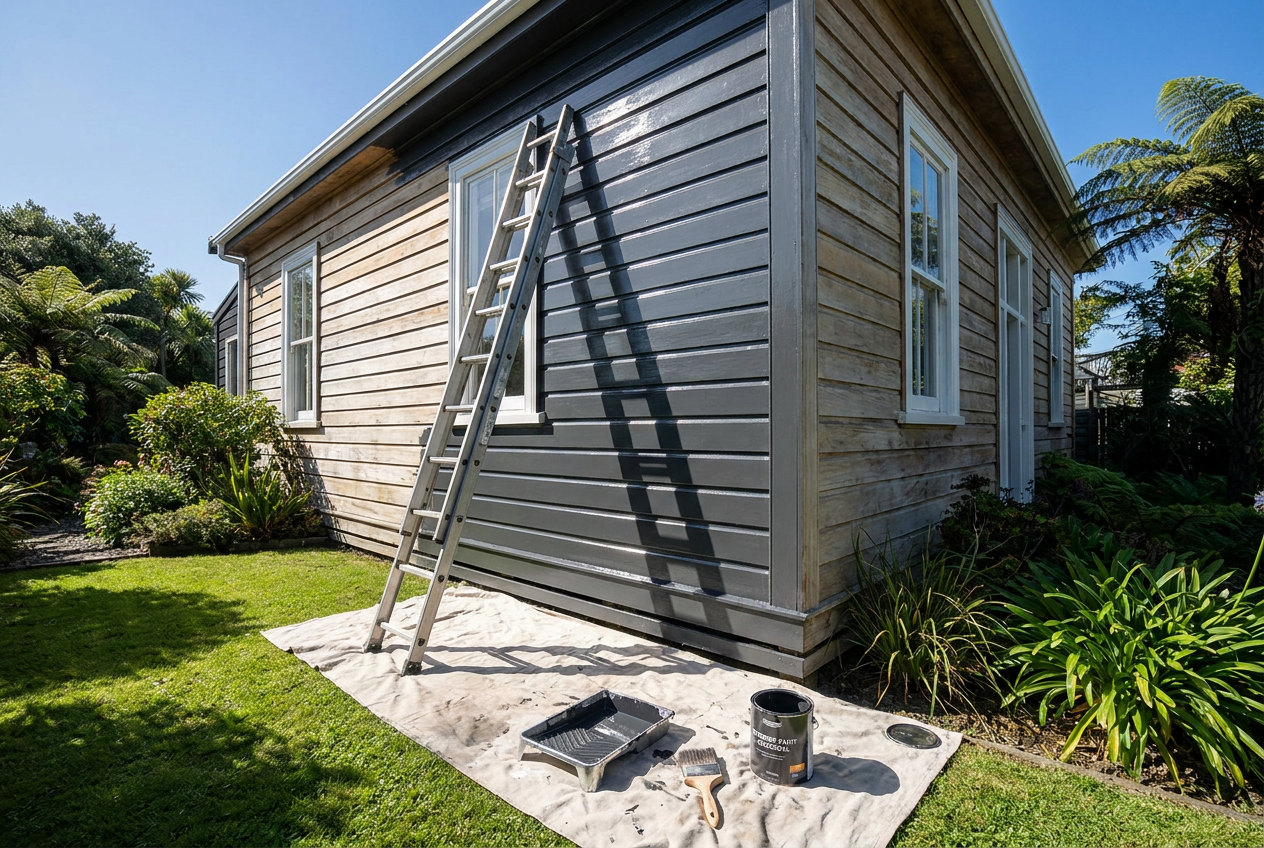
Fibre cement cladding — often called Hardie board after the dominant brand James Hardie — is one of the most popular exterior cladding choices in New Zealand. It's durable, low-maintenance, and handles our variable climate well, but it does need the right paint system to perform at its best. Get the paint choice wrong and you risk peeling, cracking, or moisture getting in behind the cladding.
Why Fibre Cement Needs Special Consideration
Fibre cement is a porous, alkaline substrate. Fresh or bare boards can contain residual moisture and high pH levels, which can cause certain paints — particularly oil-based products — to saponify (turn soapy and lose adhesion). This is why surface preparation and primer selection are the two most critical steps before you even open a topcoat tin.
James Hardie recommends that their products be painted within a specific timeframe after installation, and many boards come factory-primed. Always check whether your boards are pre-primed or raw, as this affects your starting point.
Choosing the Right Primer
If your boards are raw (unprimed), you must apply a suitable primer before any topcoat. For fibre cement, look for:
- Alkali-resistant water-based primers — these cope with the high pH of fresh fibre cement and are the industry standard in NZ.
- Acrylic-based primers — flexible enough to move with the board through seasonal temperature changes.
Brands like Resene and Dulux both offer dedicated exterior primers suited to fibre cement. Ask your paint store specifically for a product recommended for alkaline or fibre cement substrates — don't just grab a generic undercoat.
If your boards are factory-primed, lightly sand any damaged primer areas, spot-prime bare patches, and then proceed to your topcoat. Always follow the manufacturer's overcoating times.
Best Topcoat Paint Types for Fibre Cement
100% acrylic water-based exterior paints are the go-to choice for fibre cement cladding in New Zealand. Here's why:
- They remain flexible as the substrate expands and contracts with temperature and humidity changes — important in NZ's varied climate.
- They allow the substrate to breathe, reducing the risk of moisture being trapped behind the paint film.
- They resist UV degradation better than many solvent-based alternatives.
- Cleanup is easy with water.
Avoid oil-based (alkyd) paints on fibre cement. The alkalinity of the substrate causes saponification, leading to premature paint failure.
Recommended Product Ranges (as a guide)
| Brand | Product Range | Notes |
|---|---|---|
| Resene | Lumbersider, X-200 | Long-standing NZ favourite for weatherboards and fibre cement |
| Dulux | Weathershield, Aquanamel Exterior | Good UV and weather resistance |
| Wattyl | Solagard | Popular in NZ for exterior timber and fibre cement |
Always confirm with your local paint store that the specific product is suitable for fibre cement — ranges do get updated.
How Many Coats Do You Need?
For a raw, unprimed board: one coat of alkali-resistant primer plus two coats of topcoat is the standard system. For factory-primed boards in good condition: two coats of topcoat is generally sufficient. Skimping on coats is a false economy — a full paint system protects your cladding and your home's weathertightness.
BRANZ research consistently shows that correct surface preparation and applying the full recommended number of coats dramatically extends the life of an exterior paint job.
Surface Preparation — Don't Skip This Step
Good prep is what separates a paint job that lasts 10+ years from one that starts peeling in two. Before painting fibre cement:
- Clean thoroughly — wash down with a mild detergent solution or a purpose-made exterior cleaner to remove dirt, mould, and chalking from old paint. A low-pressure wash works well; avoid high-pressure washing directly into joints.
- Allow to dry completely — fibre cement holds moisture. Give it adequate drying time, especially after rain or washing.
- Sand rough areas — lightly sand any rough patches or factory primer damage with 120-grit sandpaper.
- Fill gaps and cracks — use a flexible, paintable exterior sealant (such as products from Sika) around windows, joints, and penetrations. This is critical for weathertightness under the NZ Building Code.
- Prime bare areas — spot-prime any raw fibre cement exposed by sanding or damage.
Colour and Sheen Considerations
Fibre cement can absorb heat, so dark colours on north- and west-facing walls can cause the boards to expand and contract more dramatically. James Hardie publishes a Light Reflectance Value (LRV) limit for their products — using colours below this threshold on certain profiles can void the product warranty. Check the James Hardie technical documentation or ask your paint supplier before choosing a very dark colour.
For sheen level, a low-sheen or satin finish is the most popular choice for NZ exteriors — it hides surface imperfections better than gloss and still provides good washability.
When to Call a Professional
Painting fibre cement is within the capability of a competent DIYer, but there are situations where hiring a qualified painter makes sense:
- Two-storey or high walls — working at height carries serious fall risks. WorkSafe NZ sets clear requirements around working safely at height.
- Large areas or full re-paints — a professional painter will have spray equipment and the experience to achieve a consistent, high-quality finish efficiently.
- Weathertightness concerns — if you notice cracking, swelling, or moisture damage in the boards, get a building professional to assess before painting over the problem.
- Warranty requirements — some James Hardie product warranties specify that painting must be carried out to their technical guidelines; a professional painter will be familiar with these.
You can find qualified, local painters on tradedirectory.co.nz who have experience with fibre cement cladding.