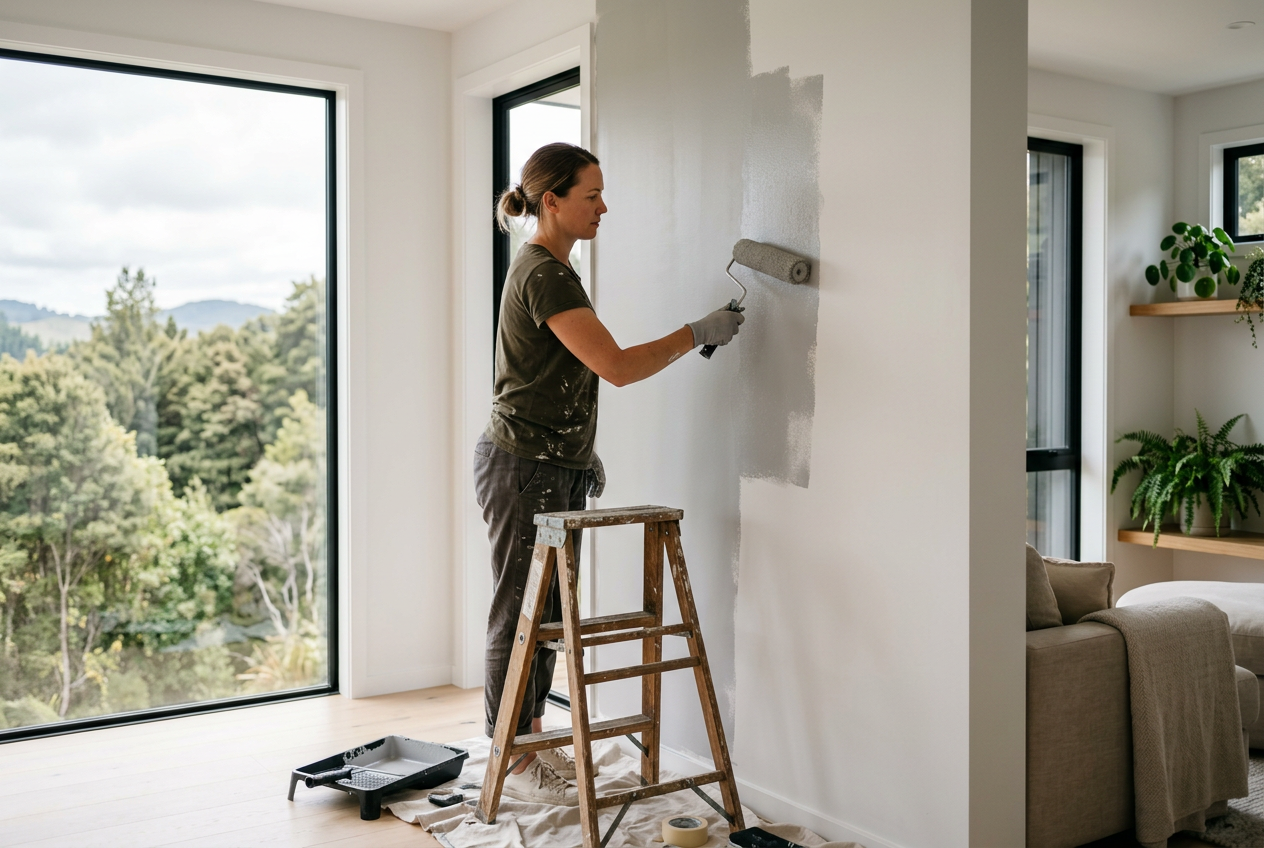
Choosing the right paint for your living room can feel overwhelming with so many products on the shelf — but once you understand a few key factors, the decision becomes much simpler. In New Zealand, our climate, housing styles, and available brands all influence what works best. Whether you're refreshing a tired rental or transforming your forever home, this guide will help you pick the right product and get a great result.
Why Sheen Level Matters Most
Before you even think about colour, you need to choose the right sheen level (also called finish). This affects how the paint looks, how easy it is to clean, and how well it hides imperfections on your walls.
| Sheen Level | Appearance | Washability | Best For |
|---|---|---|---|
| Flat / Matt | No shine | Low | Ceilings, low-traffic areas |
| Low Sheen | Subtle glow | Moderate | Living rooms, bedrooms |
| Semi-Gloss | Noticeable shine | High | Trims, doors, skirting |
| Gloss | High shine | Very high | Doors, furniture |
For most living rooms, a low sheen or satin finish is the sweet spot. It's forgiving on walls that aren't perfectly smooth, gives a warm, inviting look, and is easy enough to wipe down if someone brushes against it with a dirty hand.
Water-Based vs Oil-Based Paint
The vast majority of modern interior wall paints in NZ are water-based (acrylic). They dry faster, have lower odour, clean up with water, and have improved enormously in durability over the years. Oil-based paints are now mostly reserved for trims and speciality applications.
For living room walls, stick with a quality water-based acrylic — you'll get excellent coverage, a durable finish, and far less fuss.
Top NZ Paint Brands to Consider
New Zealand has several excellent paint brands available at your local hardware store or paint specialist.
- Resene is a proudly NZ-owned brand with an outstanding reputation. Their SpaceCote Low Sheen is a popular choice for living rooms — it's durable, washable, and comes in thousands of colours. Resene also has excellent colour consultants at their ColorShops.
- Dulux offers a wide range of interior paints including their Wash & Wear range, which is well-regarded for family living areas where walls take a bit of a beating.
- Wattyl is another trusted option, with products like Solagard Interior providing good coverage and durability at a competitive price point.
All three brands are widely available at Mitre 10, Bunnings, and PlaceMakers, as well as dedicated paint stores.
How Many Coats Do You Need?
As a general rule, plan for two coats of your chosen paint, especially if you're changing colour significantly or painting over a dark shade. A single coat rarely gives full, even coverage and can look patchy once dry. Premium paints often have better hide (coverage), meaning you may get away with two coats more easily than with a budget product — making the higher upfront cost worthwhile.
Don't Skip the Prep
Even the best paint won't look great on poorly prepared walls. Good prep includes:
- Filling holes and cracks with a suitable interior filler (available at any hardware store)
- Sanding any rough patches smooth once filler has dried
- Cleaning walls to remove dust, grease, or mould before painting
- Priming bare or patched areas — most paint brands offer a compatible primer or undercoat
If your walls have any mould staining, treat them with an appropriate mould wash first. BRANZ has useful guidance on dealing with moisture and mould in NZ homes, which is particularly relevant in our more humid regions like Northland, the West Coast, or older homes with limited ventilation.
Choosing the Right Colour
Colour choice is deeply personal, but a few practical tips help:
- Always test your colour on the actual wall using a sample pot and view it at different times of day — NZ light varies significantly between north- and south-facing rooms.
- Lighter colours make smaller rooms feel more spacious; deeper tones can add warmth and drama.
- Consider the undertones of your colour — a white that looks crisp in the store can appear pink or yellow on your walls depending on your lighting and flooring.
- Resene and Dulux both offer free or low-cost colour chips and sample pots to help you decide before committing.
How Much Paint Will You Need?
Most interior paints cover roughly 10–12 square metres per litre per coat (check the product data sheet for the specific figure). Measure your wall area (length × height, minus doors and windows), then divide by the coverage rate and multiply by the number of coats. It's always worth buying a little extra so you have touch-up paint on hand later.
When to Call a Professional
Painting interior walls is one of the more DIY-friendly home improvement tasks — there's no restricted or licensed work involved. However, hiring a qualified painter is well worth considering if:
- Your walls have significant damage, water staining, or extensive mould that needs professional assessment
- You want a truly flawless finish (professional painters have the tools and technique to achieve results that are hard to replicate at home)
- The job is large, time-sensitive, or involves high stud heights requiring scaffolding
- You're unsure about the cause of any cracking or moisture issues (which could indicate a building defect)
A professional painter will also know the right products for your specific situation and can advise on prep work. You can find qualified local painters on tradedirectory.co.nz.